Exclusive: Ripple to Welcome 7 More XRP ETF Filings by Year-End 2025
The post Exclusive: Ripple to Welcome 7 More XRP ETF Filings by Year-End 2025 appeared first on Coinpedia Fintech News XRP, as we are all aware, powers fast, low-cost cross-border payments and maintains a multi-billion-dollar market capitalization. While XRP Ledger has been one of Ripple’s […]
Research report
Real World Asset (RWA) Tokenization Could Reach $30 Trillion by 2030 | Exclusive Report
The post Real World Asset (RWA) Tokenization Could Reach $30 Trillion by 2030 | Exclusive Report appeared first on Coinpedia Fintech News The Real-World Asset (RWA) tokenization market has been booming following several regulatory implementations and positive approach of the SEC toward crypto. This has […]
Research report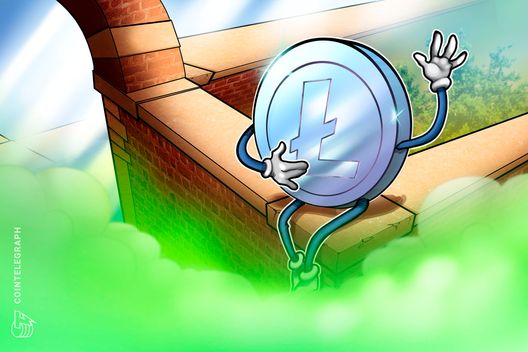
Litecoin feuds with influencer, trades barbs over price… and hairline
After Benjamin Cowen mocked Litecoin’s price action, Litecoin jabbed at his hairline, joking it “reminds me of the great recession.”
Litecoin
Litecoin ETF has 90% chance to get SEC approval in 2025: Analysts
Bloomberg exchange-traded fund (ETF) analysts have tipped a 90% chance that the US securities regulator will approve a spot Litecoin ETF before the end of the year. Bloomberg’s James Seyffart and Eric Balchunas see its chances of being approved in 2025 as higher than other […]
Litecoin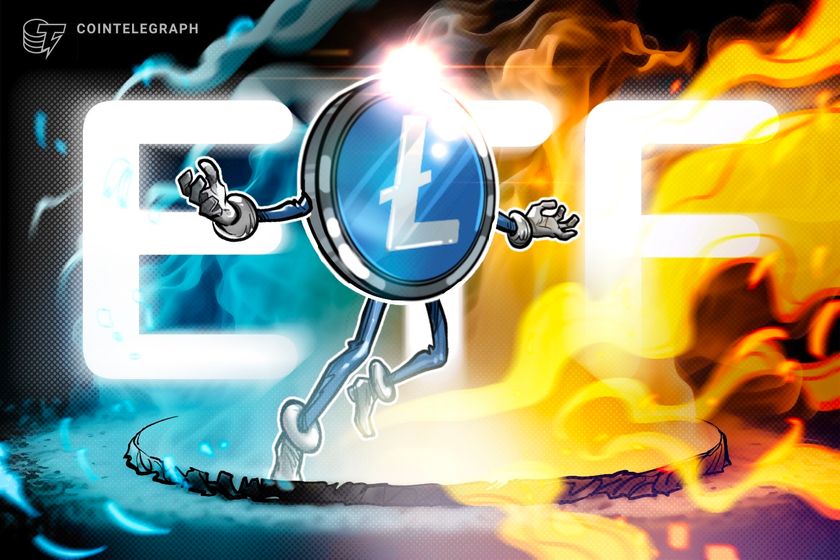
Bloomberg exchange-traded fund (ETF) analysts have tipped a 90% chance that the US securities regulator will approve a spot Litecoin ETF before the end of the year.
Bloomberg’s James Seyffart and Eric Balchunas see its chances of being approved in 2025 as higher than other ETFs currently proposed, including a spot XRP (XRP), Solana (SOL) and Dogecoin (DOGE) ETF — which they see as having a 65%, 70% and 75% chance respectively.
Litecoin (LTC), which was created as a faster alternative to Bitcoin (BTC) in 2011, shares a similar proof-of-work consensus mechanism to Bitcoin.
Posting on X, the pair said that Litecoin’s path toward SEC approval may be the most straightforward as S-1 and 19b-4 forms have already been filed and acknowledged, while the SEC also likely views it as a commodity.
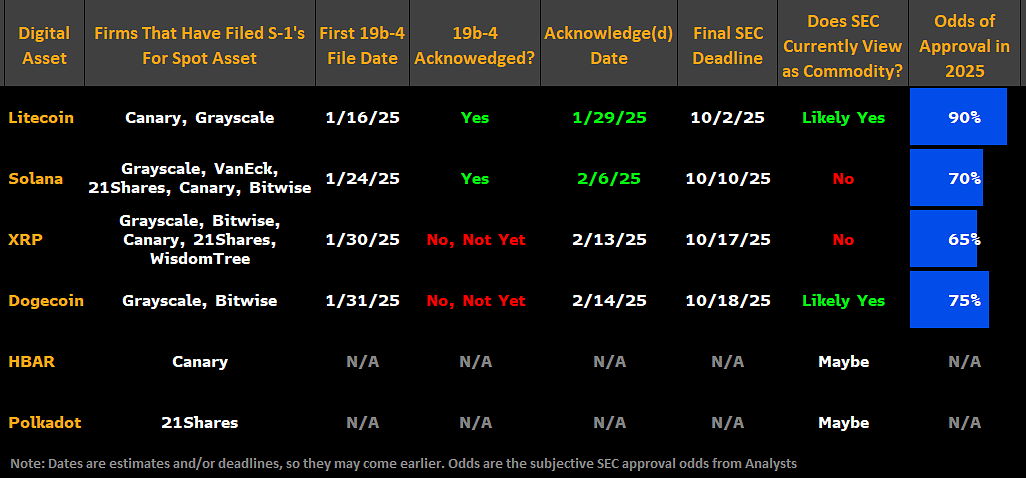
List of candidate crypto ETFs vying for SEC approval. Source: James Seyffart
The race for more crypto ETFs follows strong demand from the spot Bitcoin and Ether (ETH) ETFs, which have chalked up $40.7 billion and $3.18 billion worth of net inflows since launching in January and July 2024, respectively, Farside Investors data shows.
While Seyffart doesn’t think a Litecoin ETF would attract that much demand, he said it could still be worthwhile for fund companies with as little as $50 million in some cases.
“They don’t have to hit it out of the park on a flows basis to be worthwhile from an issuer perspective,” Seyffart told Cointelegraph.
Related: Crypto markets tried to stay calm… then Trump happened
The final deadline for the SEC to decide on the Litecoin, Solana, XRP and Dogecoin ETFs is between Oct. 2 and Oct. 18, Seyffart’s chart shows. A Litecoin ETF could launch before then, Seyffart said.
Seyffart and Balchunas also acknowledged that ETFs for Hedera (HBAR) and Polkadot (DOT) had been filed by Canary Capital and 21Shares but have not yet placed any approval odds at the time of writing.
Expect to see more crypto ETF filings
Seyffart said more crypto ETFs could be proposed, too, predicting US-based ETF issuers to follow a “spaghetti cannon approach.”
“Issuers will try to launch many many different things and see what sticks,” Seyffart said.
“You will probably see a long tail of ETFs holding digital assets in the long run and the ones that don’t garner interest or flows will simply liquidate.”
Balchunas noted that the odds for all of these crypto ETFs — except Litecoin — were below 5% before US President Donald Trump won the US election on Nov. 5, 2024.
Regulatory work still needs to be done with XRP, Solana
Meanwhile, questions remain over Solana and XRP’s security status, with Seyffart predicting that an XRP ETF wouldn’t be approved until the SEC’s lawsuit against Ripple is fully resolved.
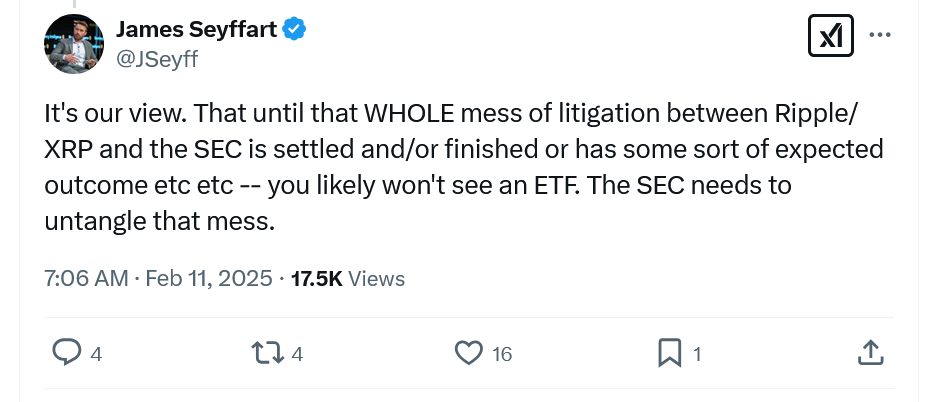
Source: James Seyffart
Ripple scored a partial victory in August 2023, when it was ruled that XRP isn’t a security when sold on secondary markets — however, the SEC appealed this court decision, claiming that Ripple breached securities laws when it sold XRP to retail investors.
However, these actions were taken under the Gary Gensler-led SEC, and Ripple is now hoping that the new SEC leadership, currently led by acting chair Mark Uyeda, will withdraw the enforcement case.
The security status of Solana will also need to be resolved before the SEC can analyze Solana under a “commodities ETF wrapper,” Seyffart said last month.
Magazine: How crypto laws are changing across the world in 2025

SEC acknowledges Grayscale Solana ETF filing in ‘notable’ step
The US Securities and Exchange Commission has made a “notable” step toward approving spot Solana exchange-traded funds in the US after acknowledging Grayscale’s amended application — in what analysts say is a first for SOL ETFs. “This is actually newsworthy because the SEC had refused […]
Litecoin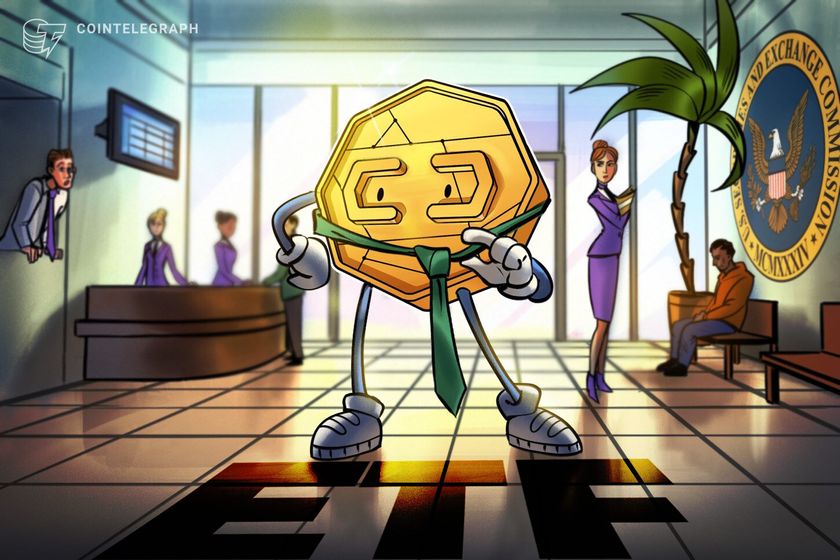
The US Securities and Exchange Commission has made a “notable” step toward approving spot Solana exchange-traded funds in the US after acknowledging Grayscale’s amended application — in what analysts say is a first for SOL ETFs.
“This is actually newsworthy because the SEC had refused to do this in recent filing attempts for SOL,” Bloomberg ETF analyst James Seyffart said of Grayscale’s Feb. 6 amended 19b-4 filing for a spot Solana (SOL) ETF.
Fellow Bloomberg ETF analyst Eric Balchunas said it was a “notable” development, adding: “We are now in new territory, albeit just a baby step, but seemingly the direct result of leadership change.”
The SEC reportedly refused these spot Solana ETFs under Gensler’s watch because they believed they were incorrectly filed as commodity trust shares, finance lawyer Scott Johnsson explained.
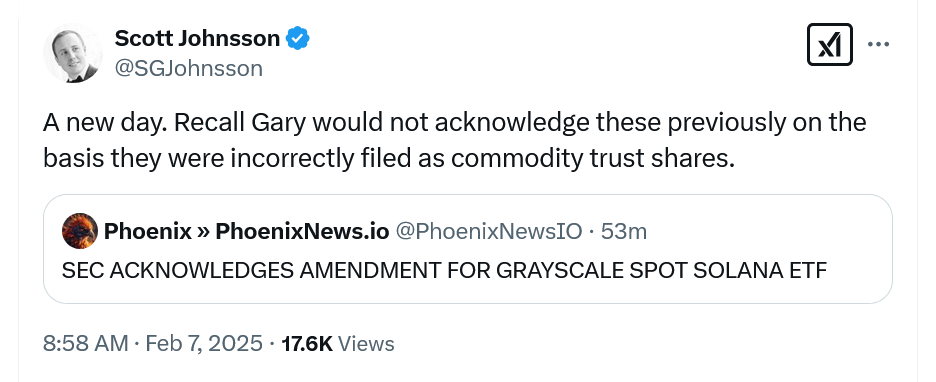
Source: Scott Johnsson
In January, Seyffart said it may take until 2026 for the SEC to approve a spot Solana ETF, and that the review process was further complicated by ongoing lawsuits against the likes of Binance and Coinbase, which alleges SOL constitutes an unregistered security.
“The SEC’s Division of Enforcement is calling Solana a security, which prevents other SEC divisions from analyzing it for a commodities ETF wrapper,” Seyffart said at the time.
The final deadline for Grayscale’s spot Solana ETF application is now around Oct. 11, Seyffart said.
A spree of crypto ETF filings has hit the SEC’s desk over the last few weeks as ETF issuers test which products could be approved under the Mark Uyeda-led SEC.
21Shares, Bitwise, VanEck and Canary Capital are also in the running to list spot Solana ETF after Cboe BZX Exchange refiled 19b-4s on their behalf on Jan. 28, while Bitwise even proposed to list a spot Dogecoin (DOGE) ETF on the same day.
Cboe BZX also filed forms for Canary Capital, WisdomTree, 21Shares and Bitwise to list a spot XRP (XRP) ETF in the US on Feb. 6.
Litecoin still looks like it’s next in line
The SEC on Feb. 6 acknowledged Grayscale’s 19b-4 filing to list a spot Litecoin (LTC) ETF, which Seyffart believes is next in line to win SEC approval, following Bitcoin and Ethereum.
The Bloomberg ETF analysts hold this view because Canary’s S-1 filing for a spot Litecoin ETF is already being actively reviewed by the regulator, while applicants for other crypto ETFs have been slower to submit their S-1s.
Related: Inside Trump’s crypto agenda: Memecoins, SEC task force and Bitcoin reserve plans
Financial services firm JPMorgan estimated an approved spot Solana ETF could attract between $3 billion and $6 billion in net assets over the first year — a prediction Balchunas said was a fairly “reasonable guess.”
Predictions market platform Polymarket estimates there’s a 39% chance that a spot Solana ETF will be approved by the SEC before July 31.
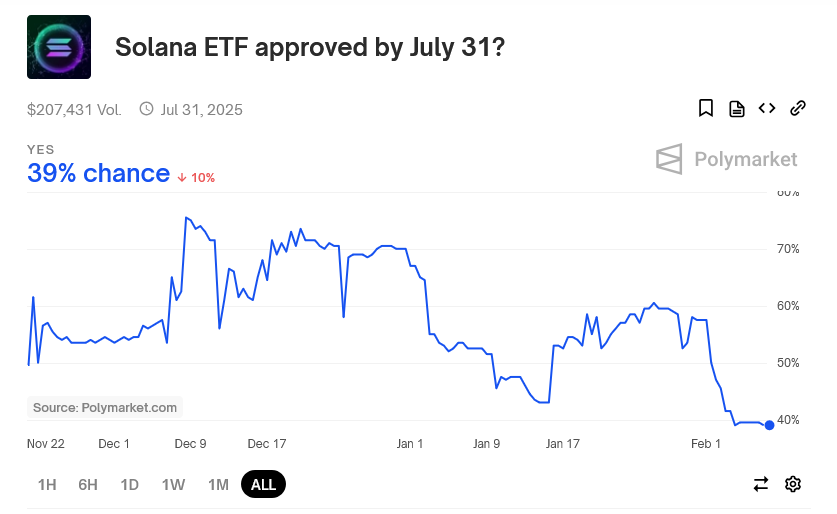
Betting markets on the odds of a spot Solana ETF approval in the US by July 31. Source: Polymarket
Magazine: Trump’s crypto ventures raise conflict of interest, insider trading questions
America’s Bitcoin Era Begins as Trump Creates Crypto Working Group
The post America’s Bitcoin Era Begins as Trump Creates Crypto Working Group appeared first on Coinpedia Fintech News On January 23, 2025, President Donald Trump ordered the creation of a cryptocurrency working group to propose digital asset regulations and explore a national cryptocurrency stockpile. The […]
Research report
The post America’s Bitcoin Era Begins as Trump Creates Crypto Working Group appeared first on Coinpedia Fintech News
On January 23, 2025, President Donald Trump ordered the creation of a cryptocurrency working group to propose digital asset regulations and explore a national cryptocurrency stockpile. The move aims to overhaul U.S. crypto policy, ensuring innovation, security, and global leadership in the rapidly evolving digital asset space.
Could this initiative change how countries view reserve assets and redefine the global financial system? Bitcoin’s potential to alter power dynamics in the financial world is becoming more apparent.
What Is the Bitcoin Reserve Bill?
The Strategic Bitcoin Reserve Bill is a legislative proposal aimed at establishing a national reserve of Bitcoin for the United States. The primary objectives of the bill include:
- Acquisition of Bitcoin: The federal government would systematically purchase Bitcoin to build a substantial reserve.
- Strategic Asset Development: Positioning Bitcoin as a strategic asset to enhance national financial security and leverage its potential for future economic benefits.
Key Provisions of the Bitcoin Reserve Bill
The Bitcoin Reserve Bill lays out a comprehensive strategy to incorporate Bitcoin into the U.S. financial system. Here are the major components of the law:
Establishing a National Bitcoin Reserve
The U.S. government will aim to acquire 1 million bitcoins over a five-year period. This would account for 5% of Bitcoin’s total supply, making the U.S. one of the largest holders of the cryptocurrency.
Annual Bitcoin Purchases
To reach the target, the federal government will purchase 200,000 bitcoins annually for 5 years. The funding for these purchases will come from:
- Profits generated from existing Federal Reserve deposits.
- Sales of a portion of the national gold reserves.
Creation of the Digital Asset Oversight Committee
A Digital Asset Oversight Committee will be established to oversee the acquisition, storage, and management of the Bitcoin reserve. The committee will:
- Ensure secure storage solutions for Bitcoin.
- Develop a comprehensive risk management strategy to address Bitcoin’s price volatility.
- Provide annual reports to Congress on the status and performance of the reserve.
Regulatory Clarity
The Bitcoin Reserve bill emphasizes creating a clear and consistent regulatory framework for Bitcoin and other digital assets. This includes:
- Recognizing Bitcoin as a legitimate reserve asset.
- Implementing anti-fraud and anti-money laundering measures.
- Encouraging private-sector innovation in the cryptocurrency space.
Bitcoin Reserve Stats: A Snapshot
As of January 2025, here are some key statistics to help assess the potential of the U.S. Bitcoin reserve:
- Bitcoin Market Capitalization: Approximately $2 trillion. It signifies a considerable and liquid market compared to other growing classes.
- Bitcoin Circulating Supply: About 19.8 million Bitcoins in total of 21 million; This scarce supply is one typical characteristic that is why Bitcoin is attractive as an inflation hedge.
- US GDP: The approximate US GDP for the year 2025 is around $25 trillion. This helps put the potential scale of a Bitcoin reserve into perspective in terms of the US economy.
- US National Debt: The US national debt now stands at more than $30 trillion. In the long run, this can easily be paid off by mixing the reserves with Bitcoin; however, this approach is debatable.
These are dynamic numbers. The economy changes regularly and its benchmarks change over time.
El Salvador’s Bitcoin Journey
While the US Bitcoin Reserve Bill is a landmark, the first country was El Salvador which, in September 2021, became the first country that adopted Bitcoin to be used legally. This new move has, in turn, reshaped its entire financial world. A blueprint perhaps, and a cautionary case study for many other nations wanting to do this.
Why Do El Salvador Need Bitcoin?
El Salvador had several economic issues that compelled it to turn towards Bitcoin adoption:
Remittances Dependence
Remittances make up 23% of El Salvador’s GDP, with millions of citizens receiving money from abroad. Traditional remittance services like Western Union charge high fees, reducing the amount families receive. Bitcoin offers a cheaper and faster way to transfer money.
Limited Financial Inclusion
Over 70% of Salvadorans lacked access to banking services. This meant that a majority of the population was not engaged with any form of financial system. Bitcoin and digital wallets like Chivo allow unbanked citizens to send, receive, and store money digitally. Therefore, financial services became more accessible.
El Salvador uses the U.S. dollar as its official currency, which limits the control of the monetary policy of the country. By using Bitcoin, the government was seeking to diversify its financial system and gain more independence.
El Salvador’s Steps to Implement Bitcoin
To adopt Bitcoin, El Salvador took several significant actions:
- Bitcoin Law: Passed in 2021, this law made Bitcoin legal tender alongside the U.S. dollar. Businesses were required to accept Bitcoin, but citizens could choose whether to use it.
- Chivo Wallet: The government introduced a digital wallet called Chivo, providing each user $30 in Bitcoin to encourage adoption.
- Volcano Bonds: A $1 billion Bitcoin-backed bond was launched to finance infrastructure projects, including the proposed Bitcoin City powered by geothermal energy.
- Bitcoin Purchases: The government actively bought Bitcoin for reserves, accumulating over 6,000 bitcoins by 2025.
Impact of Bitcoin Adoption in El Salvador
El Salvador’s Bitcoin adoption has had both positive and negative effects:
Benefits
- Sending money home became cheaper, saving families millions of dollars. For example, transferring $100 through Bitcoin costs less than $1, while the traditional way costs $10–15.
- Bitcoin adoption attracted Bitcoin enthusiasts and investors, increasing tourism by 30% in 2022.
- Bitcoin investments reduced dependence on the U.S. dollar and diversified the economy.
- Bitcoin adoption created tech jobs and attracted foreign businesses.
Challenges
- Despite efforts by the government, 92% of citizens rarely use Bitcoin because of skepticism and lack of understanding.
- The value of Bitcoin fluctuates, causing losses in the country’s reserves.
- Most citizens did not have the internet, making it hard to use digital wallets.
- The IMF criticized El Salvador’s Bitcoin strategy, which exposed the country to financial risks.
Comparing the U.S. and El Salvador’s Bitcoin Strategies
| Aspect | United States | El Salvador |
| Bitcoin Use Case | Strategic reserve asset | Legal tender |
| Bitcoin Holdings | 200,000 BTC ($21 billion value) | 6,044 BTC ($610 million value) |
| Annual Purchases | 200,000 BTC | No specific target |
| GDP Impact | Target reserve: 0.57% of GDP | Bitcoin holdings: 1.6% of GDP |
| Key Challenges | Market volatility, regulation | Public mistrust, infrastructure issues |
What Can the U.S. Learn from El Salvador?
El Salvador’s experience provides key lessons for the U.S.:
- Education: Many Salvadorans remain unfamiliar with Bitcoin. The U.S. must educate its citizens to ensure widespread understanding and acceptance.
- Price Volatility: Bitcoin’s price swings pose a risk to national reserves. A solid risk management strategy is crucial.
- Infrastructure: Limited internet access was a challenge in El Salvador. The U.S. must ensure it has the infrastructure to support digital asset adoption.
- Global Cooperation: The U.S. has more influence than El Salvador, but it must collaborate with international organizations to build a supportive environment for Bitcoin.
Impact on the Crypto Market and the U.S. Dollar
Crypto Market Impact
The U.S. Bitcoin Reserve is likely to have significant effects on the crypto market:
- Increased demand for Bitcoin could drive its price up, as governments buy and hold Bitcoin in their treasuries.
- Official government adoption would further legitimize Bitcoin, encouraging wider use by individuals and businesses.
- A clear regulatory framework would provide more clarity and foster further innovation in the crypto space.
Impact on the US Dollar
The concept of a potential Bitcoin reserve has implications for the US dollar, appears to be quite complex and up for debate. There are different viewpoints:
- Strengthening the Dollar: The one argument is that acceptance of Bitcoin and becoming a leader in the digital asset space would further strengthen the prestige and influence of the dollar. It would attract more investment and reinforce the dollar as a global reserve currency.
- Weakening the Dollar: Others believe that the increased use of Bitcoin as a parallel currency will weaken the dollar. If people and businesses increasingly use Bitcoin for transactions and store value in it, demand for dollars could decrease.
The actual impact will depend on various factors, including the scale of the Bitcoin reserve, the regulatory environment, and how widely Bitcoin is adopted by individuals and businesses.
What’s Next for the U.S. and Bitcoin?
The US Bitcoin Reserve Bill sets the stage for a transformative era in the U.S. financial system. By incorporating Bitcoin into its national reserves, the U.S. could:
- Strengthen its position as a global leader in cryptocurrency innovation.
- Provide stability and legitimacy to the volatile cryptocurrency market.
- Encourage further adoption of digital assets across sectors.
.article-inside-link {
margin-left: 0 !important;
border: 1px solid #0052CC4D;
border-left: 0;
border-right: 0;
padding: 10px 0;
text-align: left;
}
.entry ul.article-inside-link li {
font-size: 14px;
line-height: 21px;
font-weight: 600;
list-style-type: none;
margin-bottom: 0;
display: inline-block;
}
.entry ul.article-inside-link li:last-child {
display: none;
}
- Also Read :
- Donald Trump’s Crypto Portfolio, Policy Changes, & Top Blockchain Projects: Full Report
- ,
Conclusion
The Strategic Bitcoin Reserve Bill is a significant step in the discussion about digital assets and their future role in the global financial system. However, it comes with challenges, including price volatility, regulatory uncertainty, and security concerns. The impact on the U.S. dollar remains a complex issue, with opinions divided.
.article_register_shortcode {
padding: 18px 24px;
border-radius: 8px;
display: flex;
align-items: center;
margin: 6px 0 22px;
border: 1px solid #0052CC4D;
background: linear-gradient(90deg, rgba(255, 255, 255, 0.1) 0%, rgba(0, 82, 204, 0.1) 100%);
}
.article_register_shortcode .media-body h5 {
color: #000000;
font-weight: 600;
font-size: 20px;
line-height: 22px;
text-align:left;
}
.article_register_shortcode .media-body h5 span {
color: #0052CC;
}
.article_register_shortcode .media-body p {
font-weight: 400;
font-size: 14px;
line-height: 22px;
color: #171717B2;
margin-top: 4px;
text-align:left;
}
.article_register_shortcode .media-body{
padding-right: 14px;
}
.article_register_shortcode .media-button a {
float: right;
}
.article_register_shortcode .primary-button img{
vertical-align: middle;
width: 20px;
margin: 0;
display: inline-block;
}
@media (min-width: 581px) and (max-width: 991px) {
.article_register_shortcode .media-body p {
margin-bottom: 0;
}
}
@media (max-width: 580px) {
.article_register_shortcode {
display: block;
padding: 20px;
}
.article_register_shortcode img {
max-width: 50px;
}
.article_register_shortcode .media-body h5 {
font-size: 16px;
}
.article_register_shortcode .media-body {
margin-left: 0px;
}
.article_register_shortcode .media-body p {
font-size: 13px;
line-height: 20px;
margin-top: 6px;
margin-bottom: 14px;
}
.article_register_shortcode .media-button a {
float: unset;
}
.article_register_shortcode .secondary-button {
margin-bottom: 0;
}
}
Never Miss a Beat in the Crypto World!
Stay ahead with breaking news, expert analysis, and real-time updates on the latest trends in Bitcoin, altcoins, DeFi, NFTs, and more.
.subscription-options li {
display: none;
}
.research-report-subscribe{
background-color: #0052CC;
padding: 12px 20px;
border-radius: 8px;
color: #fff;
font-weight: 500;
font-size: 14px;
width: 96%;
}
.research-report-subscribe img{
vertical-align: sub;
margin-right: 2px;
}
var templateIds = “6”;
var listOfSubscribed = [];
function subscribed_popupmodal(template_id) {
var templateId = ‘6’;
getAllSubscriberCategoryList([templateId]);
var subcribemodal = window.parent.document.getElementById(‘subscribe-modal-design’);
if (subcribemodal) {
var modalContent = `


Never Miss a Beat in the Crypto World!
Stay informed and gain the edge you need to navigate the crypto world. Select your subscription now
`;
subcribemodal.innerHTML = modalContent;
}
subscribe_unsubscribe_status(template_id);
//getAllSubscriberCategoryList(template_id);
}
function toggleSubscription(subscription, template_id) {
var subscriptionCheckbox = document.getElementById(subscription + ‘_’ + template_id);
var li = document.getElementById(subscription + ‘Selected_’ + template_id);
if (subscriptionCheckbox.checked) {
li.classList.add(‘active’);
} else {
li.classList.remove(‘active’);
}
}
function getAllSubscriberCategoryList(getcategoryId) {
jQuery.ajax({
url: ‘https://coinpedia.org/wp-admin/admin-ajax.php’,
type: ‘GET’,
data: {
action: ‘subscribe_api_ajax_request’,
apiurl: ‘/app/email_newsletter/list’,
},
success: function(response) {
var result = JSON.parse(response.message);
if (result.status === true) {
var idstosubscribed = []
// Populate listOfSubscribed with subscribed category IDs
result.message.forEach(listofcategory => {
if (listofcategory.subscribe_status === 1) {
if (!listOfSubscribed.includes(listofcategory._id)) {
listOfSubscribed.push(listofcategory._id);
}
if (!idstosubscribed.includes(listofcategory.news_cp_category_row_id)) {
idstosubscribed.push(listofcategory.news_cp_category_row_id);
}
}
});
idstosubscribed.forEach(id => {
var subscribeButton = document.getElementById(‘subscribe_’ + id);
var unsubscribeButton = document.getElementById(‘unsubscribe_’ + id);
if (subscribeButton && unsubscribeButton) {
subscribeButton.style.display = ‘none’;
unsubscribeButton.style.display = ‘block’;
var showDownloadReport = document.getElementById(‘download_report’);
if (showDownloadReport) {
showDownloadReport.style.display = ‘block’;
}
}
});
}
},
error: function(xhr, status, error) {
console.error(‘Error:’, error);
}
});
}
function subscribe_unsubscribe_status(getcategoryId) {
var elementTounsubscribe = parent.document.getElementById(‘unsubscribe_’ + getcategoryId);
var elementTosubscribe = parent.document.getElementById(‘subscribe_’ + getcategoryId);
jQuery.ajax({
url: ‘https://coinpedia.org/wp-admin/admin-ajax.php’,
type: ‘POST’,
data: {
action: ‘subscribe_api_ajax_request’,
apiurl: ‘/app/email_newsletter/list?category_row_id=’ + getcategoryId,
},
success: function(response) {
var result = JSON.parse(response.message);
if (result.status === true) {
parent.jQuery(‘.skeliton-loader-block’).hide();
var hasSubscribeStatusOne = false;
result.message.forEach(subscribeStatus => {
if (listOfSubscribed.includes(subscribeStatus._id) && subscribeStatus.subscribe_status === 1) {
hasSubscribeStatusOne = true;
}
if (subscribeStatus.notification_type === 3) {
parent.document.getElementById(‘monthlySelected_’ + getcategoryId).style.display = ‘block’;
parent.document.getElementById(‘monthly_’ + getcategoryId).setAttribute(‘data-id’, subscribeStatus._id);
if (subscribeStatus.subscribe_status === 1) {
parent.document.getElementById(‘monthly_’ + getcategoryId).checked = true;
}
} else if (subscribeStatus.notification_type === 2) {
parent.document.getElementById(‘weeklySelected_’ + getcategoryId).style.display = ‘block’;
parent.document.getElementById(‘weekly_’ + getcategoryId).setAttribute(‘data-id’, subscribeStatus._id);
if (subscribeStatus.subscribe_status === 1) {
parent.document.getElementById(‘weekly_’ + getcategoryId).checked = true;
}
} else if (subscribeStatus.notification_type === 1) {
parent.document.getElementById(‘dailySelected_’ + getcategoryId).style.display = ‘block’;
parent.document.getElementById(‘daily_’ + getcategoryId).setAttribute(‘data-id’, subscribeStatus._id);
if (subscribeStatus.subscribe_status === 1) {
parent.document.getElementById(‘daily_’ + getcategoryId).checked = true;
}
}
if (subscribeStatus.subscribe_status === 1) {
listOfSubscribed.push(subscribeStatus._id);
}
});
if (hasSubscribeStatusOne) {
elementTosubscribe.style.display = ‘none’;
elementTounsubscribe.style.display = ‘block’;
} else {
elementTosubscribe.style.display = ‘block’;
elementTounsubscribe.style.display = ‘none’;
}
}
},
error: function(xhr, status, error) {
console.error(‘Error:’, error);
}
});
}
function logSelectedSubscriptions(categoryid) {
var unsubscribemodal = document.querySelector(‘.unsubscribed-popup-modal .modal’);
var subscribedmodal = document.querySelector(‘.subscribed-popup-modal .modal’);
unsubscribemodal.innerHTML=”;
subscribedmodal.innerHTML=”;
var selectedSubscriptions = [];
var storeCheckedId = [];
var checkboxes = document.querySelectorAll(‘#subscription-options-‘ + categoryid + ‘ input[type=”checkbox”]’);
var errorMessage = document.getElementById(‘error-message-select’);
// Use a Set to handle unique data-ids
var uniqueSubscribedIds = new Set(listOfSubscribed);
checkboxes.forEach(function(checkbox) {
var dataId = parseInt(checkbox.getAttribute(‘data-id’));
if (checkbox.checked) {
selectedSubscriptions.push(checkbox.id);
storeCheckedId.push(dataId);
} else {
uniqueSubscribedIds.delete(dataId); // Remove unchecked data-id
}
});
// Update listOfSubscribed with unique values
listOfSubscribed = Array.from(uniqueSubscribedIds);
var selectedSubscriptionsString = selectedSubscriptions.join(‘, ‘);
var concatinateSubscribeId = […new Set(storeCheckedId.concat(listOfSubscribed))];
var categoryData = {
‘subscribed_categories’: concatinateSubscribeId
};
var requestSubscriberData = {
action: ‘handle_dynamic_api_request_with_headers’,
security: ‘57069acd88’,
endpoint: ‘/app/email_newsletter/update_categories’,
token: ”,
data: categoryData
};
jQuery.ajax({
url: ‘https://coinpedia.org/wp-admin/admin-ajax.php’,
type: ‘POST’,
data: requestSubscriberData,
beforeSend: function(xhr) {
xhr.setRequestHeader(‘X-Requested-With’, ‘XMLHttpRequest’);
},
success: function(response) {
try {
response = response.data;
if (storeCheckedId.length === 0) {
var unsubcribedPopUpmodal =
`

You’ve Unsubscribed Successfully
We’re sorry to see you go! Your subscription has been canceled. If you change your mind, you can re-subscribe anytime. Thank you for being part of our community!
`;
unsubscribemodal.innerHTML = unsubcribedPopUpmodal;
document.querySelector(‘#subscribe-modal-design .modal’).style.display = ‘none’;
unsubscribemodal.style.display = ‘block’;
unsubscribemodal.classList.remove(‘hide’);
unsubscribemodal.classList.add(‘show’);
document.getElementById(‘subscribe_’ + categoryid).style.display = ‘block’;
document.getElementById(‘unsubscribe_’ + categoryid).style.display = ‘none’;
var showDownloadReport = document.getElementById(‘download_report’);
if (showDownloadReport) {
showDownloadReport.style.display = ‘none’;
}
} else {
var subscribedPopupModal =
`

Thank you for subscribing!
Thank you for subscribing to our crypto and blockchain newsletter! You’ll now receive the latest news, insights, and updates straight to your inbox. Welcome to our community!
`;
let selectedSubscriptionsArray = selectedSubscriptionsString.split(‘,’);
let subscribedCategories = selectedSubscriptionsArray.map(subscription => subscription.split(‘_’)[0]);
let subscribedCategoriesString = subscribedCategories.join(‘, ‘);
subscribedmodal.innerHTML = subscribedPopupModal;
if (document.getElementById(‘selectidname’)) {
document.getElementById(‘selectidname’).textContent = subscribedCategoriesString;
}
document.querySelector(‘#subscribe-modal-design .modal’).style.display = ‘none’;
subscribedmodal.style.display = ‘block’;
subscribedmodal.classList.remove(‘hide’);
subscribedmodal.classList.add(‘show’);
document.getElementById(‘subscribe_’ + categoryid).style.display = ‘none’;
document.getElementById(‘unsubscribe_’ + categoryid).style.display = ‘block’;
var showDownloadReport = document.getElementById(‘download_report’);
if (showDownloadReport) {
showDownloadReport.style.display = ‘block’;
}
}
} catch (e) {
console.error(‘Error parsing response:’, e);
}
},
});
}
function closeModal(template_id) {
var modalId = template_id;
var modal = document.querySelector(‘#’ + modalId); // Using querySelector to find the modal
if (modal) {
modal.classList.add(‘hide’);
modal.classList.remove(‘show’);
setTimeout(function() {
modal.style.display = ‘none’;
}, 500);
} else {
console.warn(‘Modal not found:’, modalId);
}
}
function closeunsubscribemodal() {
var unsubscribemodal = document.querySelector(‘.unsubscribed-popup-modal .modal’);
if (unsubscribemodal) {
unsubscribemodal.classList.add(‘hide’);
unsubscribemodal.classList.remove(‘show’);
}
setTimeout(function() {
unsubscribemodal.style.display = ‘none’;
}, 500);
}
function closesubscribemodal() {
var subscribedmodal = document.querySelector(‘.subscribed-popup-modal .modal’);
setTimeout(function() {
subscribedmodal.style.display = ‘none’;
}, 500);
if (subscribedmodal) {
subscribedmodal.classList.add(‘hide’);
subscribedmodal.classList.remove(‘show’);
}
}
function withoutLoginClicked(withoutlogin_id) {
localStorage.setItem(‘subscribe_without_Login’, ‘true’);
localStorage.setItem(‘subscribe_clicked_id’, withoutlogin_id);
}
document.addEventListener(‘DOMContentLoaded’, function() {
const subscribewithoutData = localStorage.getItem(‘subscribe_without_Login’);
const subscribe_clicked_cat_id = localStorage.getItem(‘subscribe_clicked_id’);
// Function to get cookies
function getCookie(name) {
let value = “; ” + document.cookie;
let parts = value.split(“; ” + name + “=”);
if (parts.length == 2) return parts.pop().split(“;”).shift();
}
// Get user token from cookies
const userToken = getCookie(‘user_token’);
if (subscribewithoutData === ‘true’ && userToken) {
// Call the modal function with the category ID
subscribed_popupmodal(subscribe_clicked_cat_id);
// Remove the flag and category ID from localStorage
localStorage.removeItem(‘subscribe_without_Login’);
localStorage.removeItem(‘subscribe_clicked_id’);
}
});
/************************** update susbcriber content **************************** */
function initializeSubscriptionButton() {
var initialListItems = document.querySelectorAll(‘.subscription-options input[type=”checkbox”]’);
initialListItems.forEach(function(item) {
console.log(item.checked, ‘Initial Checkbox checked status’);
});
var listItems = document.querySelectorAll(‘.subscription-options li’);
if (listItems.length === 0) return;
var anyActive = false;
listItems.forEach(function(item) {
var checkbox = item.querySelector(‘input[type=”checkbox”]’);
if (checkbox) {
if (checkbox.checked) {
item.classList.add(‘active’);
anyActive = true; // Set anyActive to true
} else {
item.classList.remove(‘active’); // Remove ‘active’ class if checkbox is unchecked
}
}
});
}
function updateButtonText(anyActive) {
var subscribeButtonSpan = document.querySelector(‘.subscribe-submit .changeBtnText’);
if (subscribeButtonSpan) {
if (anyActive) {
subscribeButtonSpan.textContent = ‘Subscribe Now’;
} else {
subscribeButtonSpan.textContent = ‘Unsubscribe’;
}
}
}
function updateSubscriptionButton() {
var listItems = document.querySelectorAll(‘.subscription-options li’);
if (listItems.length === 0) return;
var anyActive = false;
listItems.forEach(function(item) {
var checkbox = item.querySelector(‘input[type=”checkbox”]’);
if (checkbox) {
if (checkbox.checked) {
item.classList.add(‘active’);
anyActive = true; // Set anyActive to true
} else {
item.classList.remove(‘active’); // Remove ‘active’ class if checkbox is unchecked
}
}
});
// Update the button text based on whether any list item has the ‘active’ class
updateButtonText(anyActive);
}
document.addEventListener(‘click’, function(event) {
var clickedItem = event.target.closest(‘.subscription-options li’);
if (clickedItem) {
var checkbox = clickedItem.querySelector(‘input[type=”checkbox”]’);
if (checkbox) {
checkbox.checked = !checkbox.checked;
updateSubscriptionButton();
}
}
});
FAQs
What is the Strategic Bitcoin Reserve Bill?
The Strategic Bitcoin Reserve Bill is a U.S. law to establish a national Bitcoin reserve, acquiring 1M BTC over five years to boost financial security.
How much Bitcoin does the U.S. have?
The U.S. plans to hold 1M BTC by 2030. Currently, it has acquired 200,000 BTC as part of its five-year Strategic Bitcoin Reserve strategy.
How many Bitcoin ATMs are in the USA?
As of 2025, there are over 30,000 Bitcoin ATMs in the United States, making it the country with the highest concentration of Bitcoin machines.
Donald Trump’s Crypto Portfolio, Policy Changes, & Top Blockchain Projects: Full Report
The post Donald Trump’s Crypto Portfolio, Policy Changes, & Top Blockchain Projects: Full Report appeared first on Coinpedia Fintech News Donald Trump’s changing stance on cryptocurrencies is a fascinating story of transformation. From being a vocal critic to actively supporting blockchain innovation, his shift has […]
Research report
The post Donald Trump’s Crypto Portfolio, Policy Changes, & Top Blockchain Projects: Full Report appeared first on Coinpedia Fintech News
Donald Trump’s changing stance on cryptocurrencies is a fascinating story of transformation. From being a vocal critic to actively supporting blockchain innovation, his shift has had a significant impact on the digital asset world. His policies, personal investments, and crypto-focused initiatives have positioned him as an influential figure in the crypto space.
How did it all happen? Time for a deep dive. Join in.
Evolution of Trump’s Crypto Stance
Trump’s journey with cryptocurrencies has evolved dramatically, starting from skepticism and shifting toward strong advocacy.
2019: Active Critic of Cryptocurrencies
In July 2019 Donald Trump 


Donald Trump
Donald Trump is an American former president politician, businessman, and media personality, who served as the 45th president of the U.S. between 2017 to 2021. Trump earned a Bachelor of science in economics from the University of Pennsylvania in 1968. Trump won the 2016 presidential election as the Republican Party nominee against Democratic Party nominee Hillary Clinton while losing the popular vote. As president, Trump ordered a travel ban on citizens from several Muslim-majority countries, diverted military funding toward building a wall on the U.S.–Mexico border, and implemented a family separation policy. Trump has remained a prominent figure in the Republican Party and is considered a likely candidate for the 2024 presidential election
President
made several strong criticisms against Bitcoin and other cryptocurrencies. He tweeted:
“I am not a fan of Bitcoin and other Cryptocurrencies, which are not money, and whose value is highly volatile and based on thin air. Unregulated crypto assets can facilitate unlawful behavior, including drug trade and other illegal activities.”
During that time, Trump’s administration also proposed tighter regulations on digital currencies, claiming that illicit activities were being conducted.
2021-2023: Gradual Shift Toward Acceptance
As time passed, Trump softened his stance. After leaving the White House, he spoke positively about blockchain in interviews, suggesting it could help modernize the financial system. While still cautious about Bitcoin’s volatility, he became more open to blockchain’s potential for innovation.
2024: Campaign Messages: Pro-Crypto
In his 2024 presidential election, Trump made a direct move to be pro-crypto. In his agenda, he promised to enhance blockchain innovation, relax the regulations, and be the first in the digital economy in the United States.
2025: “The First Crypto President”
By 2025, Trump had fully embraced cryptocurrency and was known as the “First Crypto President.” His policies and personal investments reflected a push for the widespread adoption of blockchain in the U.S. economy.
Donald Trump’s Crypto Portfolio
According to the data from crypto intelligence firm Arkham, as of January 2025, Trump’s cryptocurrency portfolio has experienced multiplying growth. His holdings reveal a strategic approach to digital asset investments.
Portfolio Overview
- Total Value: $15.8 million (up from $1.3 million in January 2024).
Key Assets:
- TROG Tokens: 210 billion tokens valued at $9.5 million.
- Trump Coins: 579,000 tokens valued at $1.66 million.
- Ethereum (ETH): Approximately $1.60 million in value.
Market Performance
In January 2025, Trump’s portfolio increased by $2.7 million. This was due to an increase in investor confidence after the announcements of crypto-friendly policies from his administration.
Donald Trump’s Crypto Project: WLFI
One of Trump’s most ambitious crypto projects is World Liberty Finance, which aims to create a global financial ecosystem powered by blockchain.
Project Overview
- Token Name: WLFI (World Liberty Finance Token).
- Total Token Supply: 100 billion WLFI tokens.
- First Raise: $300 million, 20% of tokens sold.
- Current Token Sale: Sold an additional 5 billion tokens at $0.05.
- Projected Additional Raise: $250 million.
Key Investors
- Justin Sun: TRON founder who has invested $75 million in WLFI:
- Initial investment: $30 million.
- Additional investment: $45 million.
- Transaction Volume: The platform has processed more than $889 million through its Safe Protocol institutional account, which shows a lot of activity within its ecosystem.
The platform has processed over $889 million through its Safe Protocol institutional account, indicating substantial activity within its ecosystem.
World Liberty Finance aims to simplify global transactions, lending, and investments by decentralizing financial systems. This project is designed to assist underbanked communities and make financial growth more accessible.
Trump Cryptocurrency Tokens: $TRUMP and $MELANIA Memecoins
In January 2025, President Donald Trump and First Lady Melania Trump launched two memecoins: $TRUMP and $MELANIA. It was a great entry into the cryptocurrency market.
$TRUMP Memecoin
- Blockchain: It was launched on the Solana blockchain. It is a high-speed transactional blockchain and scalable.
- Market Capitalization: The market cap crossed over $9 billion in two days after the launch.
- Launch Price: Sold at $0.18 per token.
- Peak Price: The two days topped it at $75.35 since the market had a lot of interest in it.
- Ownership: The tokens are held by Trump-affiliated entities, especially CIC Digital LLC and Fight Fight Fight LLC, about 80%.
$MELANIA Memecoin
After the release of $TRUMP, first lady Melania Trump launched the $MELANIA memecoin.
- Market Cap: Within days, it reached a market cap of about $810 million.
- Rapid Adoption: Its prices skyrocketed in no time after its creation.
Trump Administration’s New Cryptocurrency Regulations
President Donald Trump’s administration has introduced several initiatives to position the United States as a leader in blockchain and cryptocurrency innovation:
Establishment of the U.S. DOGE Service
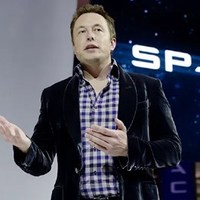
In early 2025, President Trump signed an executive order renaming the U.S. Digital Service to the U.S. DOGE Service, integrating it within the Executive Office of the President. This move aims to reduce federal spending and bureaucracy, with elon musk
elon musk
Elon Musk Is the Co-founder of Tesla, an investor and entrepreneur. He was born on the 28th of June,1971, and is based in Pretoria, South Africa. He graduated from the University of Pennsylvania, earning a bachelor's degree in Arts and physics, and the Wharton School, earning a bachelor's degree in science, and economics. In 2003 Musk founded Tesla, an electric vehicle and clean energy company. Elon Musk is a crypto enthusiast, he has a complex relationship with cryptocurrency. He purchased $1.5 billion in the cryptocurrency. Musk was honored with Axel Springer Award, an award given to innovative people, who build new markets, change markets, and contribute to society. He was also listed on Forbes Billionaire with a total net worth of $2 Billion.
NAsales@teslamotors.com
EntrepreneurInvestorChief Executive Officer


appointed to lead the department.
Presidential Council on Cryptocurrencies
According to Forbes report, President Trump plans to sign executive orders to elevate cryptocurrency to a national policy priority and form a Presidential Council on Cryptocurrencies. This council is expected to provide guidance on integrating digital assets into the U.S. financial system.
Support for ‘Made in USA’ Crypto Projects
The administration is anticipated to promote domestic blockchain projects, encouraging innovation within the United States. This initiative aligns with the broader goal of establishing the U.S. as the “crypto capital of the planet.”
These actions reflect a strategic effort to integrate cryptocurrencies into the national economy, fostering innovation while addressing regulatory challenges.
Problems and Ethical Issues in Trump’s Crypto Policies
While Trump’s pro-crypto policies have generated excitement, they’ve also raised ethical concerns.
Critics have pointed out potential conflicts of interest, particularly with the launch of the $TRUMP and $MELANIA memecoins. They argue that Trump’s policies may unfairly benefit him personally. Additionally, the volatility of $TRUMP’s price raised concerns about market speculation and manipulation.
.article-inside-link {
margin-left: 0 !important;
border: 1px solid #0052CC4D;
border-left: 0;
border-right: 0;
padding: 10px 0;
text-align: left;
}
.entry ul.article-inside-link li {
font-size: 14px;
line-height: 21px;
font-weight: 600;
list-style-type: none;
margin-bottom: 0;
display: inline-block;
}
.entry ul.article-inside-link li:last-child {
display: none;
}
Outlook
Donald Trump’s journey into the world of cryptocurrency has been nothing short of remarkable, transforming from a skeptic to a vocal supporter. Through his investments and ambitious projects like World Liberty Finance, he’s helping to shape the future of U.S. crypto policy.
While his approach has sparked both excitement and ethical concerns, it highlights the rising influence of blockchain technology in global finance. If Trump continues backing cryptocurrency, his legacy could play a major role in making the U.S. a leader in blockchain innovation for years to come. A story for the books!
.article_register_shortcode {
padding: 18px 24px;
border-radius: 8px;
display: flex;
align-items: center;
margin: 6px 0 22px;
border: 1px solid #0052CC4D;
background: linear-gradient(90deg, rgba(255, 255, 255, 0.1) 0%, rgba(0, 82, 204, 0.1) 100%);
}
.article_register_shortcode .media-body h5 {
color: #000000;
font-weight: 600;
font-size: 20px;
line-height: 22px;
text-align:left;
}
.article_register_shortcode .media-body h5 span {
color: #0052CC;
}
.article_register_shortcode .media-body p {
font-weight: 400;
font-size: 14px;
line-height: 22px;
color: #171717B2;
margin-top: 4px;
text-align:left;
}
.article_register_shortcode .media-body{
padding-right: 14px;
}
.article_register_shortcode .media-button a {
float: right;
}
.article_register_shortcode .primary-button img{
vertical-align: middle;
width: 20px;
margin: 0;
display: inline-block;
}
@media (min-width: 581px) and (max-width: 991px) {
.article_register_shortcode .media-body p {
margin-bottom: 0;
}
}
@media (max-width: 580px) {
.article_register_shortcode {
display: block;
padding: 20px;
}
.article_register_shortcode img {
max-width: 50px;
}
.article_register_shortcode .media-body h5 {
font-size: 16px;
}
.article_register_shortcode .media-body {
margin-left: 0px;
}
.article_register_shortcode .media-body p {
font-size: 13px;
line-height: 20px;
margin-top: 6px;
margin-bottom: 14px;
}
.article_register_shortcode .media-button a {
float: unset;
}
.article_register_shortcode .secondary-button {
margin-bottom: 0;
}
}
Never Miss a Beat in the Crypto World!
Stay ahead with breaking news, expert analysis, and real-time updates on the latest trends in Bitcoin, altcoins, DeFi, NFTs, and more.
.subscription-options li {
display: none;
}
.research-report-subscribe{
background-color: #0052CC;
padding: 12px 20px;
border-radius: 8px;
color: #fff;
font-weight: 500;
font-size: 14px;
width: 96%;
}
.research-report-subscribe img{
vertical-align: sub;
margin-right: 2px;
}
var templateIds = “6”;
var listOfSubscribed = [];
function subscribed_popupmodal(template_id) {
var templateId = ‘6’;
getAllSubscriberCategoryList([templateId]);
var subcribemodal = window.parent.document.getElementById(‘subscribe-modal-design’);
if (subcribemodal) {
var modalContent = `
Never Miss a Beat in the Crypto World!
Stay informed and gain the edge you need to navigate the crypto world. Select your subscription now
`;
subcribemodal.innerHTML = modalContent;
}
subscribe_unsubscribe_status(template_id);
//getAllSubscriberCategoryList(template_id);
}
function toggleSubscription(subscription, template_id) {
var subscriptionCheckbox = document.getElementById(subscription + ‘_’ + template_id);
var li = document.getElementById(subscription + ‘Selected_’ + template_id);
if (subscriptionCheckbox.checked) {
li.classList.add(‘active’);
} else {
li.classList.remove(‘active’);
}
}
function getAllSubscriberCategoryList(getcategoryId) {
jQuery.ajax({
url: ‘https://coinpedia.org/wp-admin/admin-ajax.php’,
type: ‘GET’,
data: {
action: ‘subscribe_api_ajax_request’,
apiurl: ‘/app/email_newsletter/list’,
},
success: function(response) {
var result = JSON.parse(response.message);
if (result.status === true) {
var idstosubscribed = []
// Populate listOfSubscribed with subscribed category IDs
result.message.forEach(listofcategory => {
if (listofcategory.subscribe_status === 1) {
if (!listOfSubscribed.includes(listofcategory._id)) {
listOfSubscribed.push(listofcategory._id);
}
if (!idstosubscribed.includes(listofcategory.news_cp_category_row_id)) {
idstosubscribed.push(listofcategory.news_cp_category_row_id);
}
}
});
idstosubscribed.forEach(id => {
var subscribeButton = document.getElementById(‘subscribe_’ + id);
var unsubscribeButton = document.getElementById(‘unsubscribe_’ + id);
if (subscribeButton && unsubscribeButton) {
subscribeButton.style.display = ‘none’;
unsubscribeButton.style.display = ‘block’;
var showDownloadReport = document.getElementById(‘download_report’);
if (showDownloadReport) {
showDownloadReport.style.display = ‘block’;
}
}
});
}
},
error: function(xhr, status, error) {
console.error(‘Error:’, error);
}
});
}
function subscribe_unsubscribe_status(getcategoryId) {
var elementTounsubscribe = parent.document.getElementById(‘unsubscribe_’ + getcategoryId);
var elementTosubscribe = parent.document.getElementById(‘subscribe_’ + getcategoryId);
jQuery.ajax({
url: ‘https://coinpedia.org/wp-admin/admin-ajax.php’,
type: ‘POST’,
data: {
action: ‘subscribe_api_ajax_request’,
apiurl: ‘/app/email_newsletter/list?category_row_id=’ + getcategoryId,
},
success: function(response) {
var result = JSON.parse(response.message);
if (result.status === true) {
parent.jQuery(‘.skeliton-loader-block’).hide();
var hasSubscribeStatusOne = false;
result.message.forEach(subscribeStatus => {
if (listOfSubscribed.includes(subscribeStatus._id) && subscribeStatus.subscribe_status === 1) {
hasSubscribeStatusOne = true;
}
if (subscribeStatus.notification_type === 3) {
parent.document.getElementById(‘monthlySelected_’ + getcategoryId).style.display = ‘block’;
parent.document.getElementById(‘monthly_’ + getcategoryId).setAttribute(‘data-id’, subscribeStatus._id);
if (subscribeStatus.subscribe_status === 1) {
parent.document.getElementById(‘monthly_’ + getcategoryId).checked = true;
}
} else if (subscribeStatus.notification_type === 2) {
parent.document.getElementById(‘weeklySelected_’ + getcategoryId).style.display = ‘block’;
parent.document.getElementById(‘weekly_’ + getcategoryId).setAttribute(‘data-id’, subscribeStatus._id);
if (subscribeStatus.subscribe_status === 1) {
parent.document.getElementById(‘weekly_’ + getcategoryId).checked = true;
}
} else if (subscribeStatus.notification_type === 1) {
parent.document.getElementById(‘dailySelected_’ + getcategoryId).style.display = ‘block’;
parent.document.getElementById(‘daily_’ + getcategoryId).setAttribute(‘data-id’, subscribeStatus._id);
if (subscribeStatus.subscribe_status === 1) {
parent.document.getElementById(‘daily_’ + getcategoryId).checked = true;
}
}
if (subscribeStatus.subscribe_status === 1) {
listOfSubscribed.push(subscribeStatus._id);
}
});
if (hasSubscribeStatusOne) {
elementTosubscribe.style.display = ‘none’;
elementTounsubscribe.style.display = ‘block’;
} else {
elementTosubscribe.style.display = ‘block’;
elementTounsubscribe.style.display = ‘none’;
}
}
},
error: function(xhr, status, error) {
console.error(‘Error:’, error);
}
});
}
function logSelectedSubscriptions(categoryid) {
var unsubscribemodal = document.querySelector(‘.unsubscribed-popup-modal .modal’);
var subscribedmodal = document.querySelector(‘.subscribed-popup-modal .modal’);
unsubscribemodal.innerHTML=”;
subscribedmodal.innerHTML=”;
var selectedSubscriptions = [];
var storeCheckedId = [];
var checkboxes = document.querySelectorAll(‘#subscription-options-‘ + categoryid + ‘ input[type=”checkbox”]’);
var errorMessage = document.getElementById(‘error-message-select’);
// Use a Set to handle unique data-ids
var uniqueSubscribedIds = new Set(listOfSubscribed);
checkboxes.forEach(function(checkbox) {
var dataId = parseInt(checkbox.getAttribute(‘data-id’));
if (checkbox.checked) {
selectedSubscriptions.push(checkbox.id);
storeCheckedId.push(dataId);
} else {
uniqueSubscribedIds.delete(dataId); // Remove unchecked data-id
}
});
// Update listOfSubscribed with unique values
listOfSubscribed = Array.from(uniqueSubscribedIds);
var selectedSubscriptionsString = selectedSubscriptions.join(‘, ‘);
var concatinateSubscribeId = […new Set(storeCheckedId.concat(listOfSubscribed))];
var categoryData = {
‘subscribed_categories’: concatinateSubscribeId
};
var requestSubscriberData = {
action: ‘handle_dynamic_api_request_with_headers’,
security: ‘57069acd88’,
endpoint: ‘/app/email_newsletter/update_categories’,
token: ”,
data: categoryData
};
jQuery.ajax({
url: ‘https://coinpedia.org/wp-admin/admin-ajax.php’,
type: ‘POST’,
data: requestSubscriberData,
beforeSend: function(xhr) {
xhr.setRequestHeader(‘X-Requested-With’, ‘XMLHttpRequest’);
},
success: function(response) {
try {
response = response.data;
if (storeCheckedId.length === 0) {
var unsubcribedPopUpmodal =
`
You’ve Unsubscribed Successfully
We’re sorry to see you go! Your subscription has been canceled. If you change your mind, you can re-subscribe anytime. Thank you for being part of our community!
`;
unsubscribemodal.innerHTML = unsubcribedPopUpmodal;
document.querySelector(‘#subscribe-modal-design .modal’).style.display = ‘none’;
unsubscribemodal.style.display = ‘block’;
unsubscribemodal.classList.remove(‘hide’);
unsubscribemodal.classList.add(‘show’);
document.getElementById(‘subscribe_’ + categoryid).style.display = ‘block’;
document.getElementById(‘unsubscribe_’ + categoryid).style.display = ‘none’;
var showDownloadReport = document.getElementById(‘download_report’);
if (showDownloadReport) {
showDownloadReport.style.display = ‘none’;
}
} else {
var subscribedPopupModal =
`
Thank you for subscribing!
Thank you for subscribing to our crypto and blockchain newsletter! You’ll now receive the latest news, insights, and updates straight to your inbox. Welcome to our community!
`;
let selectedSubscriptionsArray = selectedSubscriptionsString.split(‘,’);
let subscribedCategories = selectedSubscriptionsArray.map(subscription => subscription.split(‘_’)[0]);
let subscribedCategoriesString = subscribedCategories.join(‘, ‘);
subscribedmodal.innerHTML = subscribedPopupModal;
if (document.getElementById(‘selectidname’)) {
document.getElementById(‘selectidname’).textContent = subscribedCategoriesString;
}
document.querySelector(‘#subscribe-modal-design .modal’).style.display = ‘none’;
subscribedmodal.style.display = ‘block’;
subscribedmodal.classList.remove(‘hide’);
subscribedmodal.classList.add(‘show’);
document.getElementById(‘subscribe_’ + categoryid).style.display = ‘none’;
document.getElementById(‘unsubscribe_’ + categoryid).style.display = ‘block’;
var showDownloadReport = document.getElementById(‘download_report’);
if (showDownloadReport) {
showDownloadReport.style.display = ‘block’;
}
}
} catch (e) {
console.error(‘Error parsing response:’, e);
}
},
});
}
function closeModal(template_id) {
var modalId = template_id;
var modal = document.querySelector(‘#’ + modalId); // Using querySelector to find the modal
if (modal) {
modal.classList.add(‘hide’);
modal.classList.remove(‘show’);
setTimeout(function() {
modal.style.display = ‘none’;
}, 500);
} else {
console.warn(‘Modal not found:’, modalId);
}
}
function closeunsubscribemodal() {
var unsubscribemodal = document.querySelector(‘.unsubscribed-popup-modal .modal’);
if (unsubscribemodal) {
unsubscribemodal.classList.add(‘hide’);
unsubscribemodal.classList.remove(‘show’);
}
setTimeout(function() {
unsubscribemodal.style.display = ‘none’;
}, 500);
}
function closesubscribemodal() {
var subscribedmodal = document.querySelector(‘.subscribed-popup-modal .modal’);
setTimeout(function() {
subscribedmodal.style.display = ‘none’;
}, 500);
if (subscribedmodal) {
subscribedmodal.classList.add(‘hide’);
subscribedmodal.classList.remove(‘show’);
}
}
function withoutLoginClicked(withoutlogin_id) {
localStorage.setItem(‘subscribe_without_Login’, ‘true’);
localStorage.setItem(‘subscribe_clicked_id’, withoutlogin_id);
}
document.addEventListener(‘DOMContentLoaded’, function() {
const subscribewithoutData = localStorage.getItem(‘subscribe_without_Login’);
const subscribe_clicked_cat_id = localStorage.getItem(‘subscribe_clicked_id’);
// Function to get cookies
function getCookie(name) {
let value = “; ” + document.cookie;
let parts = value.split(“; ” + name + “=”);
if (parts.length == 2) return parts.pop().split(“;”).shift();
}
// Get user token from cookies
const userToken = getCookie(‘user_token’);
if (subscribewithoutData === ‘true’ && userToken) {
// Call the modal function with the category ID
subscribed_popupmodal(subscribe_clicked_cat_id);
// Remove the flag and category ID from localStorage
localStorage.removeItem(‘subscribe_without_Login’);
localStorage.removeItem(‘subscribe_clicked_id’);
}
});
/************************** update susbcriber content **************************** */
function initializeSubscriptionButton() {
var initialListItems = document.querySelectorAll(‘.subscription-options input[type=”checkbox”]’);
initialListItems.forEach(function(item) {
console.log(item.checked, ‘Initial Checkbox checked status’);
});
var listItems = document.querySelectorAll(‘.subscription-options li’);
if (listItems.length === 0) return;
var anyActive = false;
listItems.forEach(function(item) {
var checkbox = item.querySelector(‘input[type=”checkbox”]’);
if (checkbox) {
if (checkbox.checked) {
item.classList.add(‘active’);
anyActive = true; // Set anyActive to true
} else {
item.classList.remove(‘active’); // Remove ‘active’ class if checkbox is unchecked
}
}
});
}
function updateButtonText(anyActive) {
var subscribeButtonSpan = document.querySelector(‘.subscribe-submit .changeBtnText’);
if (subscribeButtonSpan) {
if (anyActive) {
subscribeButtonSpan.textContent = ‘Subscribe Now’;
} else {
subscribeButtonSpan.textContent = ‘Unsubscribe’;
}
}
}
function updateSubscriptionButton() {
var listItems = document.querySelectorAll(‘.subscription-options li’);
if (listItems.length === 0) return;
var anyActive = false;
listItems.forEach(function(item) {
var checkbox = item.querySelector(‘input[type=”checkbox”]’);
if (checkbox) {
if (checkbox.checked) {
item.classList.add(‘active’);
anyActive = true; // Set anyActive to true
} else {
item.classList.remove(‘active’); // Remove ‘active’ class if checkbox is unchecked
}
}
});
// Update the button text based on whether any list item has the ‘active’ class
updateButtonText(anyActive);
}
document.addEventListener(‘click’, function(event) {
var clickedItem = event.target.closest(‘.subscription-options li’);
if (clickedItem) {
var checkbox = clickedItem.querySelector(‘input[type=”checkbox”]’);
if (checkbox) {
checkbox.checked = !checkbox.checked;
updateSubscriptionButton();
}
}
});
FAQs
What is World Liberty Finance (WLFI)?
WLFI is Trump’s blockchain project aiming to simplify global financial systems and promote decentralized finance innovation.
What are Donald Trump’s crypto holdings in 2025?
Trump holds TROG tokens ($9.5M), Trump Coins ($1.66M), and Ethereum ($1.6M), totaling $15.8M in value.
What pro-crypto policies has Trump implemented in 2025?
Trump introduced a Presidential Council on Cryptocurrencies and promoted domestic blockchain projects to position the U.S. as a crypto leader.
Inside MicroStrategy’s Bitcoin Holdings Over the Years: 447,470 BTC and Counting!
The post Inside MicroStrategy’s Bitcoin Holdings Over the Years: 447,470 BTC and Counting! appeared first on Coinpedia Fintech News The report discusses microstrategy microstrategy – Business Intelligence strategies for acquiring Bitcoins since 2019, its history of purchases, funding methods, stock performance, measures taken for custodianship, […]
Research report
The post Inside MicroStrategy’s Bitcoin Holdings Over the Years: 447,470 BTC and Counting! appeared first on Coinpedia Fintech News
The report discusses microstrategy

microstrategy
–
Business Intelligence

strategies for acquiring Bitcoins since 2019, its history of purchases, funding methods, stock performance, measures taken for custodianship, and whether it is really challenged by big regulatory hurdles.
Key Findings:
- Total Bitcoins: 447,470 as of January 2025
- Total Investment: $27.97 billion.
- Market Value: $16.5 billion (at $36,900 per BTC).
- Cost per Bitcoin averaged: $ 62,503
- Market value today: Approximately $ 16.5 billion on a trading value of $36,900 per Bitcoin.
- Stock Performance: MicroStrategy’s stock price has shown extraordinary growth since the company adopted a Bitcoin-focused strategy in August 2020. Over the past 4.5 years, the share price has increased by 1,600%, far outperforming the S&P 500 technology index.
- Unique Positioning: Bitcoin is the biggest corporate holder in the world, beating its peers like Tesla and Square.
The Evolution of MicroStrategy
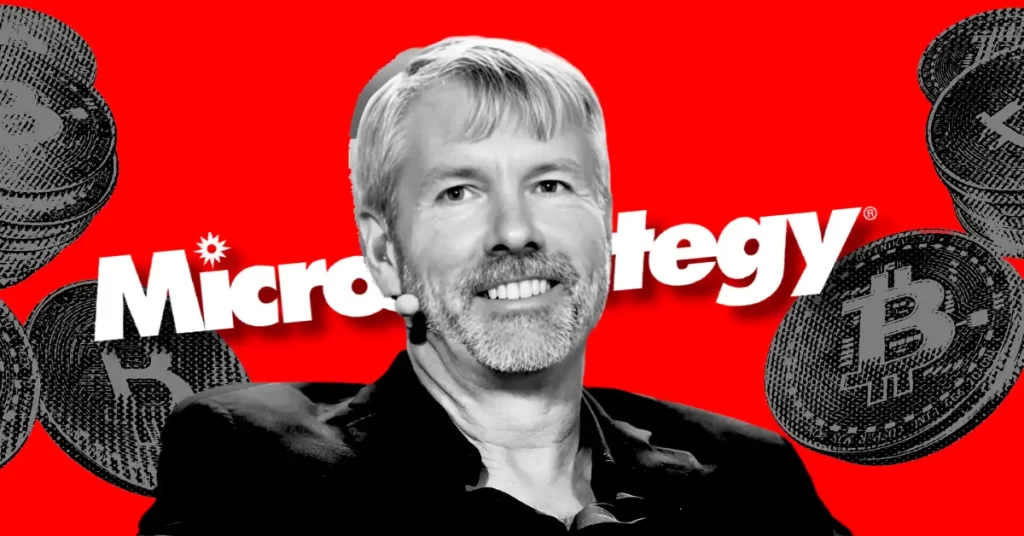
Founded by Michael Saylor

Michael Saylor
Michael Saylor is a co-founder of Strategy (formerly MicroStrategy). Before founding Microstrategy, he was a rocket scientist and studied aeronautics and astronautics at MIT on an Air Force scholarship. He dubs Bitcoin 'Digital Gold'.
He made some early investment in Bitcoin as soon as he realized it was going to be the next big thing in shaping decentralized finance from traditional finance. His firm Strategy has made Bitcoin their primary treasure reserve.
Quick Facts
Full Name
Michael J. Saylor
Birth
04-02-1965 in Lincoln, Nebraska
Education
BSc from MIT
Marital Status
To be updated / Unmarried
Nationality
American
Net Worth
$8.4B (Feb. 20205, Refer for realtime)
As per Forbes, Saylor bought another 17,732 bitcoins for $175 million in October 2020. Forbes covered Michael Saylor on its front page and called him "The Bitcoin Alchemist" as the latter's Net Worth hit a whopping $7.6B in January 2025.
Michael Saylor – Career Timeline
1983–1987: Studied Aeronautics & Astronautics and Science, Technology & Society at Massachusetts Institute of Technology (MIT).
1989: Co-founded MicroStrategy (Strategy).
1998: MicroStrategy IPO – Took MicroStrategy public on the NASDAQ at $12 per share.
2000: Accounting Scandal & Crash – MicroStrategy's stock plunged 62% in a day due to an accounting misstatement, wiping out billions in valuation.
2004–2019: MicroStrategy Rebuilds – Worked towards cloud-based analytics and AI-driven business intelligence, regaining stability.
2020: Bitcoin Strategy & Investment – Led MicroStrategy’s $425M Bitcoin investment. He made it the first publicly traded company to adopt Bitcoin.
2021: Bitcoin Evangelism – Became one of Bitcoin’s most vocal advocates, encouraging corporations and institutions to adopt BTC and blockchain.
2022: Stepped Down as CEO – Transitioned to Executive Chairman to focus entirely on Bitcoin strategy.
With a major focus on blockchain network growth, Saylor is considered one of the architects in shaping the growth of decentralized finance.
Useful Links to connect with Michael Saylor
Platform
Link to connect
Twitter (X)
Michael Saylor
MicroStrategy (Strategy) Official Website
MicroStrategy
Michael Saylor’s YouTube Channel
https://www.youtube.com/c/MichaelSaylor
Hope.com (Bitcoin Education by Saylor)
Bitcoin is Hope
msaylor@microstrategy.com
EntrepreneurCrypto and Blockchain ExpertAuthor

and Sanju Bansal in 1989, MicroStrategy began as a company that provided business intelligence and analytics software. The company was recognized for its innovative enterprise analytics, cloud solutions, and data insights products and services. By 2020, MicroStrategy, struggling in software sales under Saylor, made a dramatic transition into Bitcoin investment.
- Headquarters: Tysons Corner, Virginia, USA.
- Core Business: Enterprise software development and data intelligence solutions.
- Annual Revenue: $500 million (2024 estimate).
Michael Saylor
A self-proclaimed Bitcoin advocate, Michael Saylor has been a strong force behind MicroStrategy’s turn towards cryptocurrency. He, as the Executive Chairman and earlier CEO of the company, led its efforts in this direction, referring to Bitcoin as the superior asset class that could protect shareholder value during an unstable economy and inflation.
Switch to Bitcoin Treasury Strategy
Why Bitcoin?
- Inflation Hedge: Saylor said that fiat currencies risk devaluation due to aggressive monetary policies undertaken during the COVID-19 pandemic.
- Reserve Asset Innovation: Bitcoin represented a digital equivalent of gold and thus had strong potential for appreciation.
- Corporate Strategy: The goal was to make shareholder returns by investing in Bitcoins.
Timeline of Strategic Bitcoin Announcements
Key Events in Bitcoin Adoption:
1. August 2020: Initial Bitcoin Purchase
- Details: Purchased 21,454 BTC for $250 million, with an average price of $11,653 per Bitcoin.
Reasoning:
- Hedge against inflation.
- Preserve corporate treasury value.
- Anticipate Bitcoin’s long-term appreciation.
2. September 2020: Bitcoin Becomes Reserve Asset
- CEO Michael Saylor announced Bitcoin as the company’s new reserve asset, replacing traditional strategies.
Motivation:
- Growing distrust in fiat currencies due to macroeconomic uncertainty, exacerbated by the COVID-19 pandemic.
- Saylor’s personal belief in Bitcoin’s potential as a “digital gold.”
3. December 2020: Increased Investment
- Purchased 29,646 BTC for $650 million at an average price of $21,925 per Bitcoin.
- Funded the acquisition using convertible senior notes.
4. Subsequent Acquisitions (2021-2025)
- The company continued acquiring Bitcoin using proceeds from share sales and debt issuances.
- Purchases were guided by extensive internal research and consultations with financial experts.
MicroStrategy Bitcoin Holdings
| Year | BTC Purchased | Cumulative Holdings | Total Investment (USD) | Average Purchase Price (USD) | Market Context |
| 2020 | 29,646 | 51,100 | $650 million | $21,925 | Year-end strategic investment |
| 2021 | 13,005 | 83,557 | $489 million | $37,617 | Mid-year investment expansion |
| 2022 | 24,000 | 107,557 | $1.4 billion | $52,093 | Leveraging market opportunities |
| 2023 | 16,796 | 136,686 | $825 million | $68,324 | Continued aggressive acquisition |
| 2024 | 52,000 | 225,686 | $4.6 billion | $88,461 | Record quarterly purchase |
| 2025 | 1,070 | 447,470 | $101 million | $94,392 | Continued strategic accumulation |
Public Disclosures & Transparency
Disclosure mechanisms set forth by MicroStrategy cover the company’s Bitcoin acquisition and holding strategy entirely and transparently:
Quarterly Earnings calls
Earnings call transcripts feature detailed discussions through which stakeholders find updates on acquiring Bitcoins, raising funds, as well as associated impacts on overall financial performance. The calls may also indicate what Bitcoin investments intend to do as part of company-wide goals and objectives.
SEC Filings
- 8-Ks and 10-Qs make SEC filings under which there have been disclosures
- Number of Bitcoin acquired.
- Total acquisition cost.
- Accounting accounting provisions for holding (f. Ex. impairment costs U.S. GAAP).
- Risks of Bitcoin investments.
Press Releases and social media
Major bitcoin acquisitions are done through press releases and widely shared on social media platforms. MicroStrategy’s Executive Chairman, Michael Saylor, usually gives moment-by-moment updates to X, formerly Twitter.
Regulatory Considerations
MicroStrategy follows the SEC requirements for material disclosing, such as:
- Prompt reporting of significant purchases of Bitcoin.
- All-in expenses, market price, and accounting principle of financial statement.
- Impairment charges are reported transparently in the financial statement whenever the market price of Bitcoin goes below its cost.
Funding & Capital-Raising Methods
Convertible Debt Offerings
MicroStrategy has made several convertible notes to fund Bitcoin purchases. These include:
- Dec 2020: $650 million at 0.75% interest due in 2025.capital
- Feb 2021: $1.05 billion at a conversion price of $1,432.50 per share.
Equity Offerings
Stock issuances, including ATM programs, have provided additional :
- 2022: Raised $500 million.
- 2024: Will raise $2 billion in ATM offerings.
- Corporate Cash Flow Utilization
Financing Approaches
MicroStrategy has taken a balanced approach to fund its Bitcoin purchases:
1. Internal Cash Balances:
- Used $250 million of existing treasury balances in its first purchase.
- Tapped operational cash flow from its profitable enterprise software business to augment purchases.
2. Creative Financing:
- Convertible Notes: Issued convertible debt, raising billions of dollars at low interest rates, taking advantage of market conditions.
- At-the-Market (ATM) Equity Sales: Sold shares to raise additional capital for Bitcoin purchases.
- Perpetual Preferred Stock: Issued equity instruments to diversify funding sources.
Financial Breakdown
Total Investment in Bitcoin: $27.97 billion (as of 2024).
Sources of Funding:
- 40% from internal reserves.
- 35% from debt financing.
- 25% from equity offerings.
Impact on Balance Sheet
- Leverage Ratio: The debt-to-equity ratio increased significantly post-2020.
- Liquidity: Keep $800 million cash on hand to run the business.
Stock Implication for MSTR
Stock Performance
- MicroStrategy shares increased from $124 in August 2020 to $1,982 in January 2025.
- There is a direct relationship between the stock price and the price of Bitcoin.
- The share price peaked at $2,456 in November 2024.
Investor Psychology
Market Attitude
- Institutional Buyers: The institutional investors do not buy much because they prefer to invest in MicroStrategy as a long-term proxy for Bitcoin, with the name reflecting the business relationship between the two.
- Retail Investors: There is high demand from retail investors who view MicroStrategy’s stock (MSTR) as a proxy for holding Bitcoin directly.
Stock Performance:
- MSTR had a 244% return in 2024 and 1,600% over four years.
- It currently trades at a premium of 2.783 times Bitcoin-equivalent net asset value.
Risk Factors
- Impairment Losses: Accounting standards require MicroStrategy to recognize unrealized losses when the price of Bitcoin falls.
- Regulatory Scrutiny: Legal risks are still present due to the ambiguous regulatory environment of cryptocurrency.
Wallet Addresses & Custody Strategy
Security Protocols
- Primary Custodian: The firm owns its Bitcoins with Coinbase Custody, which provides institutional-grade custody and cold storage.
- Multi-Signature Wallets: These require multiple private keys to sign transactions, improving security and reducing the risk of unauthorized access.
- Geographical Dispersion of Storage: Private keys are stored in various geographically dispersed vaults to avoid single points of failure.
Risk Mitigation
- Insurance Coverage: Wider ranges of insurance cover all risks posed by theft or loss of Bitcoin.
- Security Audits: Internal audits and third-party audits are carried out regularly to ensure compliance with institutional security standards.
Security Measures
- Private keys are kept in geographical dispersion vaults.
- Insurance covers theft or loss.
- Publicly Known Wallets
- MicroStrategy keeps its wallet information private to avoid security weaknesses.
Corporate Governance
Leadership Dynamics
- Michael Saylor: Being the one to design the Bitcoin strategy at MicroStrategy, Saylor has played a big role in how the company operates. His aggressive public presence helped bolster the confidence for enthusiasts and investors.
- Board of Directors: This board has nine independent directors. It has made an open announcement supporting the Bitcoin strategy while maintaining concerns over the shareholders’ apprehension.
Shareholder Considerations
Equity offerings to support Bitcoin purchases cause shareholders to be concerned about dilution.
Shareholders continue to be concerned with the firm’s reliance on Bitcoin as the market is very volatile.
Possible Regulatory and Market Trends
Regulatory Environment
- Higher Scrutiny: The SEC has been watching public companies that own cryptocurrencies, specifically the accounting treatment and reporting of digital assets.
- New Accounting Principles: The Financial Accounting Standards Board is set to adopt changes in impairment loss, which would allow firms to include the fair market value of cryptocurrencies in their balance sheets.
Compliance Strategy
- Proactively interacting with regulatory agencies in response to any issues.
- Tailoring reporting formats to change over time based on new guidance.
- Providing ample disclosures for the sake of clarity.
Bitcoin Market Trend
According to analysts, Bitcoin will increase to $200,000 in 2025, giving MicroStrategy substantial benefits. Inflation and monetary policies will dictate Bitcoin’s path.
- Bitcoin Position: MicroStrategy will own 447,470 BTC by 2024, which is the biggest corporate treasury in Bitcoin.
- Funding Modes: The use of innovative financing modes, including convertible notes and ATM equity sales, has made it possible to maintain the acquisition strategy.
- Implication for MSTR Stock: MSTR stock tends to mirror the performance of Bitcoin in its market dynamics and thus offers the investor a singular exposure to the cryptocurrency market.
.article-inside-link {
margin-left: 0 !important;
border: 1px solid #0052CC4D;
border-left: 0;
border-right: 0;
padding: 10px 0;
text-align: left;
}
.entry ul.article-inside-link li {
font-size: 14px;
line-height: 21px;
font-weight: 600;
list-style-type: none;
margin-bottom: 0;
display: inline-block;
}
.entry ul.article-inside-link li:last-child {
display: none;
}
Future Outlook
- Continuation of Bitcoin Accumulation Strategy: The company would continue to accrete Bitcoins while using existing and novel financing modes.
- Market Impact: MicroStrategy’s aggressive move may become a template for other firms looking to embrace cryptocurrencies as their reserve assets.
Market Volatility
- Bitcoin’s price is known for significant fluctuations, with potential quarterly variations of 40-50%.
- A substantial portion of MicroStrategy’s assets is tied to Bitcoin, exposing the company to financial instability during downturns.
Regulatory Risks
- Regulatory uncertainty looms over the cryptocurrency market, with:
- Potential SEC scrutiny of corporate crypto holdings.
- Differences in regulations across countries, complicating compliance.
Strategic Vulnerabilities
- Overconcentration: With most of its treasury invested in a single volatile asset, MicroStrategy faces liquidity risks.
- The firm is highly dependent on Bitcoin’s performance, leaving it vulnerable to market downturns.
Risk Mitigation Strategies
To address these challenges, MicroStrategy could implement the following measures:
1. Diversification
- Gradually diversify treasury holdings into other cryptocurrencies or traditional assets like bonds and equities.
- Maintain higher levels of cash reserves for liquidity.
2. Hedging Strategies
- Use financial derivatives such as options or futures to hedge against Bitcoin price declines.
- Conduct regular risk assessments to balance exposure.
3. Governance and Transparency
- Increase transparency through frequent updates to stakeholders.
- Strengthen board oversight of Bitcoin-related decisions.
Expert Opinions on MicroStrategy’s Strategy
- Many financial experts caution against overreliance on a single asset, emphasizing the need for balanced investment strategies.
- Critics warn of potential liquidity constraints and reputational risks in the event of prolonged Bitcoin price declines.
- Analysts suggest that MicroStrategy should adopt a multi-asset investment framework to ensure long-term sustainability.
MicroStrategy’s transformation from a software company into a Bitcoin-focused company speaks volumes about the value of cryptocurrencies for corporate treasury management. While there are certain risks associated with the operation, it has helped the company generate value worth millions of dollars and become a trendsetter in its very own venture of digital assets. Its strategy might lead other companies to include cryptocurrencies in their financial paradigm as well.
FAQs
How much Bitcoin does MicroStrategy hold?
MicroStrategy holds 447,470 BTC as of January 2025, making it the largest corporate holder of Bitcoin.
What is the total investment of MicroStrategy in Bitcoin?
MicroStrategy’s total Bitcoin investment is $27.97 billion as of 2024, reflecting its aggressive acquisition strategy
How does MicroStrategy fund its Bitcoin purchases?
MicroStrategy funds Bitcoin purchases through convertible notes, equity offerings, and internal cash reserves, diversifying financing sources.
Who Owns the Most Government Bitcoin Holdings in 2025? Top 9 Players Revealed
The post Who Owns the Most Government Bitcoin Holdings in 2025? Top 9 Players Revealed appeared first on Coinpedia Fintech News As of January 2025, governments around the world collectively hold approximately 471,000 Bitcoin (BTC), a staggering 2.5% of the total Bitcoin supply. With the […]
Research report
The post Who Owns the Most Government Bitcoin Holdings in 2025? Top 9 Players Revealed appeared first on Coinpedia Fintech News
As of January 2025, governments around the world collectively hold approximately 471,000 Bitcoin (BTC), a staggering 2.5% of the total Bitcoin supply. With the current market price sitting at $34,750 per Bitcoin, this amounts to a mind-blowing $16.37 billion. But how did these governments come to own such vast amounts of Bitcoin?
Governments have acquired Bitcoin in various ways, including criminal asset seizures, strategic purchases, and public donations. Increasingly, they are exploring how to use Bitcoin as both a financial asset and a tool for modernizing economic systems.
Top Government Bitcoin Holdings in 2025
| Rank | Country | Bitcoin Holdings (BTC) | Approximate Value (USD) | Primary Acquisition Method | Notes |
| 1 | United States | 212,000 | $7.37 billion | Criminal seizures (Silk Road, Bitfinex, etc.) | Largest holder; reserves impact the market significantly. |
| 2 | China | 194,000 | $6.74 billion | Seized from the PlusToken Ponzi Scheme | Retains Bitcoin despite crypto trading ban. |
| 3 | United Kingdom | 61,000 | $2.12 billion | Seizures from money laundering and fraud operations | Proactively auctions Bitcoin to fund law enforcement efforts. |
| 4 | Bhutan | 13,029 | $780 Million | Bitcoin Mining | Bitcoin mining through renewable hydropower |
| 5 | El Salvador | 5,800 | $201 million | Actively purchased for national adoption strategy | First country to adopt Bitcoin as legal tender. |
| 6 | Ukraine | 1,200 | $41.7 million | Public donations during the Russia-Ukraine conflict | Bitcoin used for humanitarian and military funding. |
| 7 | Finland | 1,890 | $65.6 million | Seized during narcotics trafficking investigations | Sold some Bitcoin to fund social programs. |
| 8 | Germany | 0 | $0 | Seizures from cybercrime (previously held 46,359 BTC) | Exploring the potential use of Bitcoin for a national digital asset fund. |
| 9 | India | 450 | $15.6 million | Seized in crypto fraud investigations | Exploring potential use of Bitcoin for a national digital asset fund. |
1. United States
The U.S. holds the largest government Bitcoin reserve, mostly obtained through enforcement actions against cybercriminals and dark web markets.
- Bitcoin Holdings: 212,000 BTC
- Approximate Value: $7.37 billion
Accumulation Source:
- Silk Road shutdown that led to the seizure of 69,370 BTC.
- Bitfinex hack case where the government recovered 94,636 BTC from hackers in 2022.
- Jimmy Zhong’s arrest in 2022 where 50,676 BTC were seized.
Current Status: The U.S. typically auctions off part of its holdings, while retaining a significant portion for long-term storage or study. These actions can influence the market, as past sales have affected Bitcoin prices.
2. China
China holds the second-largest Bitcoin reserve, thanks to its crackdown on fraudulent schemes.
- Bitcoin Reserves: 194,000 BTC
- Estimated Worth: $6.74 billion
Accumulation Source: China’s Bitcoin was mainly acquired through the PlusToken Ponzi Scheme, where the scam made off with more than $2 billion in Bitcoins and Ethers.
Current Status: Although it has banned all crypto trading activities, China is keeping its confiscated Bitcoin rather than liquidating it and may be hoarding it to hedge against the continued rise of digital currency as a global currency.
3. United Kingdom
Due to the forceful effort to curb financial crimes related to using digital assets, the United Kingdom has become one of the leading powers.
- Bitcoin Holdings: 61,000 BTC
- Estimated Worth: About $2.12 billion in value
Accumulation Source: Bitcoin seized from illegal money laundering and fraud activities, including cases related to Chinese operators running illegal exchanges.
Current Status: The UK government often auctions seized Bitcoin, using the proceeds to fund law enforcement efforts.
4. Bhutan
Bhutan now accounts for the sum of 13,029 BTC which is worth over $780 million, being considered the world’s fourth biggest state Bitcoin owner. This portfolio in terms of shares makes it equate to about 25% of Bhutan’s GDP, where the big BTC reserve reflects this distinct approach from other countries integrating crypto into national economics.
- Bitcoin Holdings: 13,029 BTC
- Estimated Worth: $780 million.
Accumulation Source: Unlike other governments that are acquiring Bitcoin by seizure or purchase, Bhutan acquired its Bitcoin from its investment in Bitcoin mining with the use of its vast, sustainable hydropower resources.
Current Status: It is a greener strategy as it supports the country’s policy of more extensive renewable energy commitments, which has placed Bhutan at the centre of the fast-emerging area of cryptocurrency and environmental sustainability.
5. El Salvador
El Salvador made history as the first country to adopt Bitcoin as legal tender. Its Bitcoin holdings are actively being purchased as part of a broader national strategy.
- Bitcoin Holdings: 5,800 BTC
- Approx. Value: $201 million
Accumulation Source: Purchased as part of the country’s Bitcoin adoption plan, including the “1 Bitcoin per Day” program launched in late 2022.
Current Status: Bitcoin is used for various purposes in El Salvador, including funding infrastructure development and promoting financial inclusion through the Chivo Wallet.
6. Ukraine
Ukraine’s Bitcoin holdings are primarily sourced from public donations during the ongoing conflict with Russia.
- Bitcoin Reserves: 1,200 BTC
- Estimated Value: $41.7 million
Accumulation Source: In February 2022, the Ukrainian government made its Bitcoin wallet addresses public on social media and sought donations to supplement its military’s funding. Many people and institutions from all over the world donated to this effort.
Current Status: Despite the government taking in more than 1,300 BTC, the active utilization of these funds for humanitarian and military purposes has resulted in 1,200 BTC being set aside.
7. Germany
Germany has been known to confiscate large amounts of Bitcoin from cybercrime operations. As of January 2025, however, the country no longer maintains any Bitcoin reserves.
- Previous Balance: 46,359 BTC
- Liquidation Value: $1.58 billion
Source: Seizures of bitcoins from online piracy sites and dark web activities.
Present Situation: In mid-2024, Germany sold its entire Bitcoin, which caused its market value to depreciate by 15%.
Newly Emerging Players In 2025
1. Finland
Finland gained publicity after it confiscated 1,890 BTC in some cases of narco-trafficking.
- Number of Bitcoins Owned: 1,890 BTC
- Estimated Value: $65.6 million
Policy: Finland used part of the Bitcoin proceeds to finance social programs, thus being pragmatic in its use of the digital asset’s revenue.
2. India
India confiscated 450 BTC in 2024 as part of a crackdown on crypto-related scams.
- Bitcoin Holdings: 450 BTC
- Estimated Value: $15.6 million
Future Potential: The Indian government is considering incorporating confiscated Bitcoin into its economic development policies, and talks are still being held regarding the establishment of a national digital asset fund.
.article-inside-link {
margin-left: 0 !important;
border: 1px solid #0052CC4D;
border-left: 0;
border-right: 0;
padding: 10px 0;
text-align: left;
}
.entry ul.article-inside-link li {
font-size: 14px;
line-height: 21px;
font-weight: 600;
list-style-type: none;
margin-bottom: 0;
display: inline-block;
}
.entry ul.article-inside-link li:last-child {
display: none;
}
Bitcoin’s Growing Role in Geopolitics and Financial Strategy
Governments holding large amounts of Bitcoin have significant influence over the cryptocurrency market. Liquidations, such as Germany’s 2024 sale, can trigger price fluctuations, while announcements of acquisitions or retention may boost market confidence.
Bitcoin is increasingly being seen as a tool for geopolitical strategy. Countries like El Salvador and Ukraine are using it for economic development and wartime funding, while larger economies like the U.S. and China are using their holdings to manage illegal activities and regulate the digital asset market.
Governments’ involvement in Bitcoin reflects the intersection of law enforcement, financial strategy, and technological advancement.
.article_register_shortcode {
padding: 18px 24px;
border-radius: 8px;
display: flex;
align-items: center;
margin: 6px 0 22px;
border: 1px solid #0052CC4D;
background: linear-gradient(90deg, rgba(255, 255, 255, 0.1) 0%, rgba(0, 82, 204, 0.1) 100%);
}
.article_register_shortcode .media-body h5 {
color: #000000;
font-weight: 600;
font-size: 20px;
line-height: 22px;
text-align:left;
}
.article_register_shortcode .media-body h5 span {
color: #0052CC;
}
.article_register_shortcode .media-body p {
font-weight: 400;
font-size: 14px;
line-height: 22px;
color: #171717B2;
margin-top: 4px;
text-align:left;
}
.article_register_shortcode .media-body{
padding-right: 14px;
}
.article_register_shortcode .media-button a {
float: right;
}
.article_register_shortcode .primary-button img{
vertical-align: middle;
width: 20px;
margin: 0;
display: inline-block;
}
@media (min-width: 581px) and (max-width: 991px) {
.article_register_shortcode .media-body p {
margin-bottom: 0;
}
}
@media (max-width: 580px) {
.article_register_shortcode {
display: block;
padding: 20px;
}
.article_register_shortcode img {
max-width: 50px;
}
.article_register_shortcode .media-body h5 {
font-size: 16px;
}
.article_register_shortcode .media-body {
margin-left: 0px;
}
.article_register_shortcode .media-body p {
font-size: 13px;
line-height: 20px;
margin-top: 6px;
margin-bottom: 14px;
}
.article_register_shortcode .media-button a {
float: unset;
}
.article_register_shortcode .secondary-button {
margin-bottom: 0;
}
}
Never Miss a Beat in the Crypto World!
Stay ahead with breaking news, expert analysis, and real-time updates on the latest trends in Bitcoin, altcoins, DeFi, NFTs, and more.
.subscription-options li {
display: none;
}
.research-report-subscribe{
background-color: #0052CC;
padding: 12px 20px;
border-radius: 8px;
color: #fff;
font-weight: 500;
font-size: 14px;
width: 96%;
}
.research-report-subscribe img{
vertical-align: sub;
margin-right: 2px;
}
var templateIds = “6”;
var listOfSubscribed = [];
function subscribed_popupmodal(template_id) {
var templateId = ‘6’;
getAllSubscriberCategoryList([templateId]);
var subcribemodal = window.parent.document.getElementById(‘subscribe-modal-design’);
if (subcribemodal) {
var modalContent = `
Never Miss a Beat in the Crypto World!
Stay informed and gain the edge you need to navigate the crypto world. Select your subscription now
`;
subcribemodal.innerHTML = modalContent;
}
subscribe_unsubscribe_status(template_id);
//getAllSubscriberCategoryList(template_id);
}
function toggleSubscription(subscription, template_id) {
var subscriptionCheckbox = document.getElementById(subscription + ‘_’ + template_id);
var li = document.getElementById(subscription + ‘Selected_’ + template_id);
if (subscriptionCheckbox.checked) {
li.classList.add(‘active’);
} else {
li.classList.remove(‘active’);
}
}
function getAllSubscriberCategoryList(getcategoryId) {
jQuery.ajax({
url: ‘https://coinpedia.org/wp-admin/admin-ajax.php’,
type: ‘GET’,
data: {
action: ‘subscribe_api_ajax_request’,
apiurl: ‘/app/email_newsletter/list’,
},
success: function(response) {
var result = JSON.parse(response.message);
if (result.status === true) {
var idstosubscribed = []
// Populate listOfSubscribed with subscribed category IDs
result.message.forEach(listofcategory => {
if (listofcategory.subscribe_status === 1) {
if (!listOfSubscribed.includes(listofcategory._id)) {
listOfSubscribed.push(listofcategory._id);
}
if (!idstosubscribed.includes(listofcategory.news_cp_category_row_id)) {
idstosubscribed.push(listofcategory.news_cp_category_row_id);
}
}
});
idstosubscribed.forEach(id => {
var subscribeButton = document.getElementById(‘subscribe_’ + id);
var unsubscribeButton = document.getElementById(‘unsubscribe_’ + id);
if (subscribeButton && unsubscribeButton) {
subscribeButton.style.display = ‘none’;
unsubscribeButton.style.display = ‘block’;
var showDownloadReport = document.getElementById(‘download_report’);
if (showDownloadReport) {
showDownloadReport.style.display = ‘block’;
}
}
});
}
},
error: function(xhr, status, error) {
console.error(‘Error:’, error);
}
});
}
function subscribe_unsubscribe_status(getcategoryId) {
var elementTounsubscribe = parent.document.getElementById(‘unsubscribe_’ + getcategoryId);
var elementTosubscribe = parent.document.getElementById(‘subscribe_’ + getcategoryId);
jQuery.ajax({
url: ‘https://coinpedia.org/wp-admin/admin-ajax.php’,
type: ‘POST’,
data: {
action: ‘subscribe_api_ajax_request’,
apiurl: ‘/app/email_newsletter/list?category_row_id=’ + getcategoryId,
},
success: function(response) {
var result = JSON.parse(response.message);
if (result.status === true) {
parent.jQuery(‘.skeliton-loader-block’).hide();
var hasSubscribeStatusOne = false;
result.message.forEach(subscribeStatus => {
if (listOfSubscribed.includes(subscribeStatus._id) && subscribeStatus.subscribe_status === 1) {
hasSubscribeStatusOne = true;
}
if (subscribeStatus.notification_type === 3) {
parent.document.getElementById(‘monthlySelected_’ + getcategoryId).style.display = ‘block’;
parent.document.getElementById(‘monthly_’ + getcategoryId).setAttribute(‘data-id’, subscribeStatus._id);
if (subscribeStatus.subscribe_status === 1) {
parent.document.getElementById(‘monthly_’ + getcategoryId).checked = true;
}
} else if (subscribeStatus.notification_type === 2) {
parent.document.getElementById(‘weeklySelected_’ + getcategoryId).style.display = ‘block’;
parent.document.getElementById(‘weekly_’ + getcategoryId).setAttribute(‘data-id’, subscribeStatus._id);
if (subscribeStatus.subscribe_status === 1) {
parent.document.getElementById(‘weekly_’ + getcategoryId).checked = true;
}
} else if (subscribeStatus.notification_type === 1) {
parent.document.getElementById(‘dailySelected_’ + getcategoryId).style.display = ‘block’;
parent.document.getElementById(‘daily_’ + getcategoryId).setAttribute(‘data-id’, subscribeStatus._id);
if (subscribeStatus.subscribe_status === 1) {
parent.document.getElementById(‘daily_’ + getcategoryId).checked = true;
}
}
if (subscribeStatus.subscribe_status === 1) {
listOfSubscribed.push(subscribeStatus._id);
}
});
if (hasSubscribeStatusOne) {
elementTosubscribe.style.display = ‘none’;
elementTounsubscribe.style.display = ‘block’;
} else {
elementTosubscribe.style.display = ‘block’;
elementTounsubscribe.style.display = ‘none’;
}
}
},
error: function(xhr, status, error) {
console.error(‘Error:’, error);
}
});
}
function logSelectedSubscriptions(categoryid) {
var unsubscribemodal = document.querySelector(‘.unsubscribed-popup-modal .modal’);
var subscribedmodal = document.querySelector(‘.subscribed-popup-modal .modal’);
unsubscribemodal.innerHTML=”;
subscribedmodal.innerHTML=”;
var selectedSubscriptions = [];
var storeCheckedId = [];
var checkboxes = document.querySelectorAll(‘#subscription-options-‘ + categoryid + ‘ input[type=”checkbox”]’);
var errorMessage = document.getElementById(‘error-message-select’);
// Use a Set to handle unique data-ids
var uniqueSubscribedIds = new Set(listOfSubscribed);
checkboxes.forEach(function(checkbox) {
var dataId = parseInt(checkbox.getAttribute(‘data-id’));
if (checkbox.checked) {
selectedSubscriptions.push(checkbox.id);
storeCheckedId.push(dataId);
} else {
uniqueSubscribedIds.delete(dataId); // Remove unchecked data-id
}
});
// Update listOfSubscribed with unique values
listOfSubscribed = Array.from(uniqueSubscribedIds);
var selectedSubscriptionsString = selectedSubscriptions.join(‘, ‘);
var concatinateSubscribeId = […new Set(storeCheckedId.concat(listOfSubscribed))];
var categoryData = {
‘subscribed_categories’: concatinateSubscribeId
};
var requestSubscriberData = {
action: ‘handle_dynamic_api_request_with_headers’,
security: ‘57069acd88’,
endpoint: ‘/app/email_newsletter/update_categories’,
token: ”,
data: categoryData
};
jQuery.ajax({
url: ‘https://coinpedia.org/wp-admin/admin-ajax.php’,
type: ‘POST’,
data: requestSubscriberData,
beforeSend: function(xhr) {
xhr.setRequestHeader(‘X-Requested-With’, ‘XMLHttpRequest’);
},
success: function(response) {
try {
response = response.data;
if (storeCheckedId.length === 0) {
var unsubcribedPopUpmodal =
`
You’ve Unsubscribed Successfully
We’re sorry to see you go! Your subscription has been canceled. If you change your mind, you can re-subscribe anytime. Thank you for being part of our community!
`;
unsubscribemodal.innerHTML = unsubcribedPopUpmodal;
document.querySelector(‘#subscribe-modal-design .modal’).style.display = ‘none’;
unsubscribemodal.style.display = ‘block’;
unsubscribemodal.classList.remove(‘hide’);
unsubscribemodal.classList.add(‘show’);
document.getElementById(‘subscribe_’ + categoryid).style.display = ‘block’;
document.getElementById(‘unsubscribe_’ + categoryid).style.display = ‘none’;
var showDownloadReport = document.getElementById(‘download_report’);
if (showDownloadReport) {
showDownloadReport.style.display = ‘none’;
}
} else {
var subscribedPopupModal =
`
Thank you for subscribing!
Thank you for subscribing to our crypto and blockchain newsletter! You’ll now receive the latest news, insights, and updates straight to your inbox. Welcome to our community!
`;
let selectedSubscriptionsArray = selectedSubscriptionsString.split(‘,’);
let subscribedCategories = selectedSubscriptionsArray.map(subscription => subscription.split(‘_’)[0]);
let subscribedCategoriesString = subscribedCategories.join(‘, ‘);
subscribedmodal.innerHTML = subscribedPopupModal;
if (document.getElementById(‘selectidname’)) {
document.getElementById(‘selectidname’).textContent = subscribedCategoriesString;
}
document.querySelector(‘#subscribe-modal-design .modal’).style.display = ‘none’;
subscribedmodal.style.display = ‘block’;
subscribedmodal.classList.remove(‘hide’);
subscribedmodal.classList.add(‘show’);
document.getElementById(‘subscribe_’ + categoryid).style.display = ‘none’;
document.getElementById(‘unsubscribe_’ + categoryid).style.display = ‘block’;
var showDownloadReport = document.getElementById(‘download_report’);
if (showDownloadReport) {
showDownloadReport.style.display = ‘block’;
}
}
} catch (e) {
console.error(‘Error parsing response:’, e);
}
},
});
}
function closeModal(template_id) {
var modalId = template_id;
var modal = document.querySelector(‘#’ + modalId); // Using querySelector to find the modal
if (modal) {
modal.classList.add(‘hide’);
modal.classList.remove(‘show’);
setTimeout(function() {
modal.style.display = ‘none’;
}, 500);
} else {
console.warn(‘Modal not found:’, modalId);
}
}
function closeunsubscribemodal() {
var unsubscribemodal = document.querySelector(‘.unsubscribed-popup-modal .modal’);
if (unsubscribemodal) {
unsubscribemodal.classList.add(‘hide’);
unsubscribemodal.classList.remove(‘show’);
}
setTimeout(function() {
unsubscribemodal.style.display = ‘none’;
}, 500);
}
function closesubscribemodal() {
var subscribedmodal = document.querySelector(‘.subscribed-popup-modal .modal’);
setTimeout(function() {
subscribedmodal.style.display = ‘none’;
}, 500);
if (subscribedmodal) {
subscribedmodal.classList.add(‘hide’);
subscribedmodal.classList.remove(‘show’);
}
}
function withoutLoginClicked(withoutlogin_id) {
localStorage.setItem(‘subscribe_without_Login’, ‘true’);
localStorage.setItem(‘subscribe_clicked_id’, withoutlogin_id);
}
document.addEventListener(‘DOMContentLoaded’, function() {
const subscribewithoutData = localStorage.getItem(‘subscribe_without_Login’);
const subscribe_clicked_cat_id = localStorage.getItem(‘subscribe_clicked_id’);
// Function to get cookies
function getCookie(name) {
let value = “; ” + document.cookie;
let parts = value.split(“; ” + name + “=”);
if (parts.length == 2) return parts.pop().split(“;”).shift();
}
// Get user token from cookies
const userToken = getCookie(‘user_token’);
if (subscribewithoutData === ‘true’ && userToken) {
// Call the modal function with the category ID
subscribed_popupmodal(subscribe_clicked_cat_id);
// Remove the flag and category ID from localStorage
localStorage.removeItem(‘subscribe_without_Login’);
localStorage.removeItem(‘subscribe_clicked_id’);
}
});
/************************** update susbcriber content **************************** */
function initializeSubscriptionButton() {
var initialListItems = document.querySelectorAll(‘.subscription-options input[type=”checkbox”]’);
initialListItems.forEach(function(item) {
console.log(item.checked, ‘Initial Checkbox checked status’);
});
var listItems = document.querySelectorAll(‘.subscription-options li’);
if (listItems.length === 0) return;
var anyActive = false;
listItems.forEach(function(item) {
var checkbox = item.querySelector(‘input[type=”checkbox”]’);
if (checkbox) {
if (checkbox.checked) {
item.classList.add(‘active’);
anyActive = true; // Set anyActive to true
} else {
item.classList.remove(‘active’); // Remove ‘active’ class if checkbox is unchecked
}
}
});
}
function updateButtonText(anyActive) {
var subscribeButtonSpan = document.querySelector(‘.subscribe-submit .changeBtnText’);
if (subscribeButtonSpan) {
if (anyActive) {
subscribeButtonSpan.textContent = ‘Subscribe Now’;
} else {
subscribeButtonSpan.textContent = ‘Unsubscribe’;
}
}
}
function updateSubscriptionButton() {
var listItems = document.querySelectorAll(‘.subscription-options li’);
if (listItems.length === 0) return;
var anyActive = false;
listItems.forEach(function(item) {
var checkbox = item.querySelector(‘input[type=”checkbox”]’);
if (checkbox) {
if (checkbox.checked) {
item.classList.add(‘active’);
anyActive = true; // Set anyActive to true
} else {
item.classList.remove(‘active’); // Remove ‘active’ class if checkbox is unchecked
}
}
});
// Update the button text based on whether any list item has the ‘active’ class
updateButtonText(anyActive);
}
document.addEventListener(‘click’, function(event) {
var clickedItem = event.target.closest(‘.subscription-options li’);
if (clickedItem) {
var checkbox = clickedItem.querySelector(‘input[type=”checkbox”]’);
if (checkbox) {
checkbox.checked = !checkbox.checked;
updateSubscriptionButton();
}
}
});
FAQs
Which country has the most Bitcoin holders?
The United States holds the most Bitcoin among governments, with 212,000 BTC worth $7.37 billion, seized from criminal activities.
Who is the largest corporate Bitcoin holder?
MicroStrategy is the largest corporate Bitcoin holder, owning over 450,000 BTC as of January 2025, valued at more than $46.35 billion.
Who is the actual owner of Bitcoin?
Bitcoin was created by an anonymous entity, Satoshi Nakamoto, in 2009. The true identity behind the name remains unknown.

Canary’s amended S-1 has analysts more confident a Litecoin ETF is next
Canary Capital’s recently filed amended S-1 form for its Canary Litecoin exchange-traded fund (ETF) could signal the altcoin may be the next digital asset in the United States to get the crypto ETF treatment, following Bitcoin and Ether in 2024. According to analysts from Bloomberg, […]
Litecoin
Canary Capital’s recently filed amended S-1 form for its Canary Litecoin exchange-traded fund (ETF) could signal the altcoin may be the next digital asset in the United States to get the crypto ETF treatment, following Bitcoin and Ether in 2024.
According to analysts from Bloomberg, the filing from Canary Capital on Jan. 15 seemingly confirmed industry “chatter” that Litecoin applications are being reviewed by the securities regulator.
“[This] bodes well for our prediction that Litecoin is most likely to be the next coin approved,” Bloomberg ETF analyst Eric Balchunas said on X — though he added that looming leadership change at the Securities and Exchange Commission remains a “huge variable.”
Amended S-1 registration statements like Canary’s filing are often made after the prospective ETF issuer has received feedback from the SEC.
However, Bloomberg ETF analyst James Seyffart noted that Canary’s S-1 must be accompanied by a 19b-4 filing to start the potential approval or denial “clock.”
Solana is further ahead on this front, as ETF issuers Bitwise, VanEck, 21Shares and Canary filed 19b-4s for a spot Solana (SOL) ETF in November.
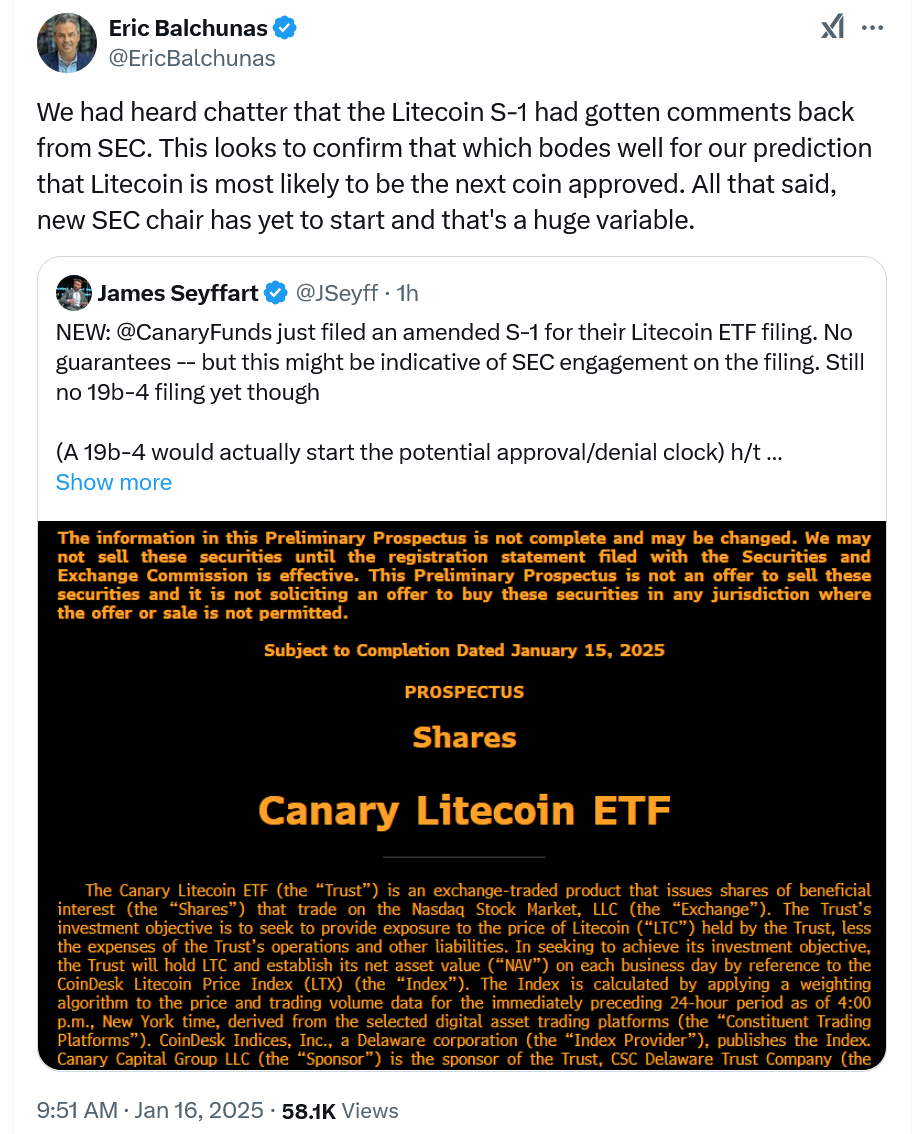
Source: Eric Balchunas
Canary amended provisions in its S-1 form related to its proposed agreements with crypto custodians Coinbase and BitGo in addition to various accounting, marketing, legal and tax matters.
If approved, Litecoin (LTC) would become the third spot crypto ETF approved in the United States after Bitcoin (BTC) and Ether (ETH).
It comes as Litecoin rallied over 15% across Jan. 15-16 — outperforming all cryptocurrencies with a market cap of over $8 billion in that timeframe, CoinGecko data shows.
Blockchain analytics firm Santiment attributed the rise to Litecoin whales and “sharks” scooping up a combined 250,000 Litecoin worth around $29 million since Jan. 9.
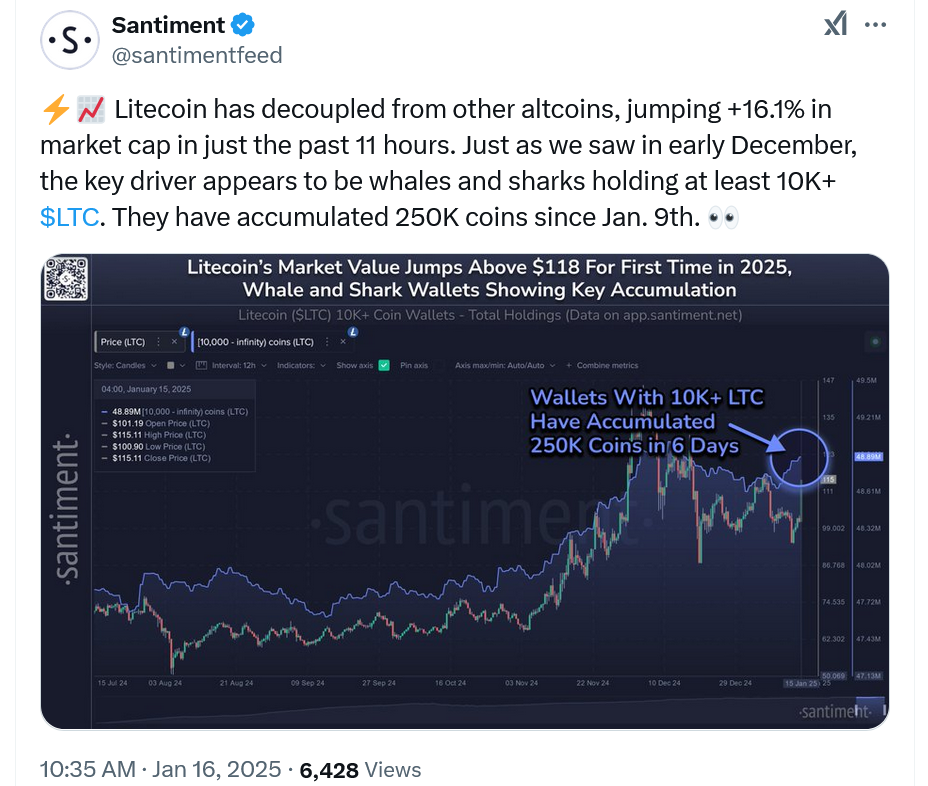
Source: Santiment
The amendment also comes days ahead of the inauguration of US President-elect Donald Trump, who has assembled the most pro-crypto administration to date.
The SEC’s current chair, Gary Gensler, will be replaced on the same day by Paul Atkins, who previously served as an SEC commissioner between 2002 and 2008 — and many expect he will provide a friendlier crypto regulatory environment.
Related: BlackRock launches new Bitcoin ETF on Cboe Canada
XRP (XRP) is also in the running to be approved in spot ETF form by the SEC.
Analysts at JPMorgan predicted an SEC-approved spot Solana and XRP ETFs would attract between $3 billion to $6 billion and $4 billion to $8 billion in net assets over the first year.
Balchunas said spot Solana and XRP ETFs raking up a combined $14 billion in that time was a fairly “reasonable guess.”
Magazine: How crypto laws are changing across the world in 2025
Litecoin X account briefly hacked to promote a fake token
Litecoin’s (LTC) X social media account was briefly hacked on Jan. 11 by a scammer promoting a fraudulent Litecoin token on the Solana network. “LTC is now in Solana,” the hacker wrote in a now-deleted and grammatically incorrect post, which featured a contract address and […]
Litecoin
Litecoin’s (LTC) X social media account was briefly hacked on Jan. 11 by a scammer promoting a fraudulent Litecoin token on the Solana network.
“LTC is now in Solana,” the hacker wrote in a now-deleted and grammatically incorrect post, which featured a contract address and a Pump.fun link to the scam token.
In an update, the Litecoin team announced that it regained control of the account and said the hack was due to a compromised delegated account that has since been removed.
There has been a string of account hacks on X in recent months, resulting in the promotion of fake tokens or phishing links designed to steal funds and sensitive data.
Source: Litecoin
Related: Hacker breaches 15 X accounts, nets $500K boosting bogus memecoins: ZachXBT
X account hacks on the rise
Restaking protocol EigenLayer’s X account was hacked on Oct. 18 to promote a fake airdrop campaign.
The hacker posted several malicious links from the account promoting the “Season 2 Stakedrop” — which the scammer claimed was sourced from reallocated EIGEN tokens — before the EigenLayer team regained control of the account.
On Nov. 3, rapper Wiz Khalifa’s account was compromised. The hacker used the account to advertise a fake celebrity memecoin called WIZ, claiming that the memecoin was associated with the musical artist.
The Cardano Foundation’s X account suffered a similar breach on Dec. 8, when a hacker took control of the social media page to promote a fake token called “ADAsol.”
During the incident, the threat actor falsely claimed that the Cardano Foundation would cease supporting its native asset, ADA (ADA), due to a lawsuit from the United States Securities and Exchange Commission (SEC).
The fake token generated approximately $500,000 in trading volume before the scam was exposed and the price of “ADAsol” plummeted by over 99%.
Yat Siu, co-founder of Web3 company Animoca Brands, was the victim of an X account hack on Dec. 26.
Like the other cases, the scammer used the account to advertise a fraudulent token — a fake memecoin on the Solana network called “Animoca Brands” that has no connection to the well-known Web3 company.
Magazine: Influencers shilling memecoin scams face severe legal consequences
Trump-linked Strive files for ‘Bitcoin Bond’ ETF
Strive, an asset manager founded by Vivek Ramaswamy, asked United States regulators for permission to list an exchange-traded fund (ETF) investing in convertible bonds issued by MicroStrategy and other corporate Bitcoin buyers, according to a Dec. 26 filing. The ETF seeks to offer exposure to […]
Litecoin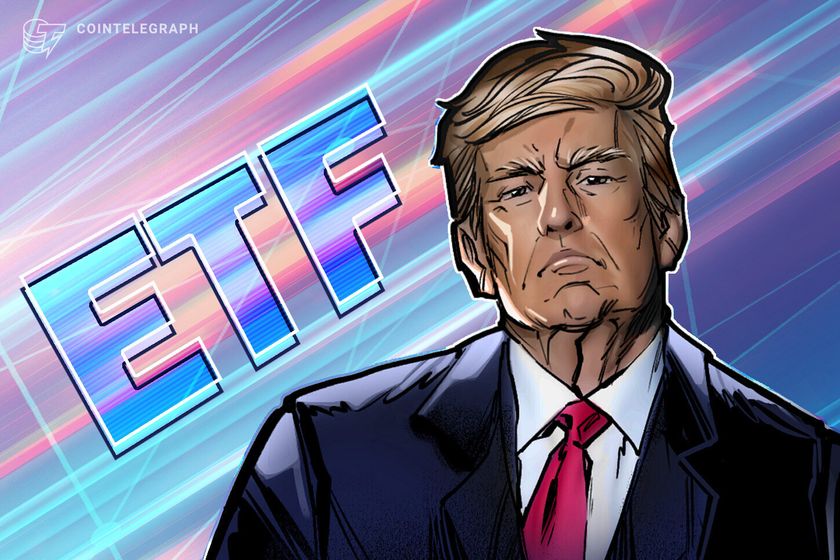
Strive, an asset manager founded by Vivek Ramaswamy, asked United States regulators for permission to list an exchange-traded fund (ETF) investing in convertible bonds issued by MicroStrategy and other corporate Bitcoin buyers, according to a Dec. 26 filing.
The ETF seeks to offer exposure to “Bitcoin Bonds,” described as “convertible securities issued by MicroStrategy” or by other companies that plan to “invest all or a significant portion of the proceeds to purchase Bitcoin,” according to the filing.
The Strive Bitcoin Bond ETF will be actively managed and will gain exposure to Bitcoin bonds either directly or through financial derivatives such as swaps and options, Strive said.
Strive has not yet specified the management fees investors will be charged, but actively managed funds typically charge more than passive index funds.
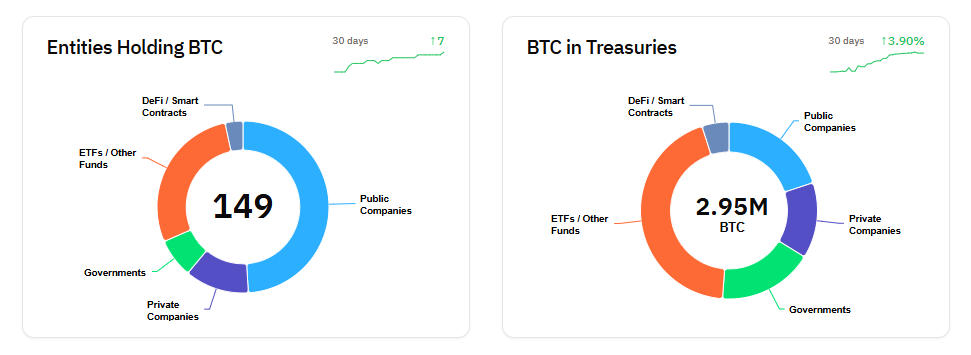
Entities holding Bitcoin in their treasuries. Source: BitcoinTreasuries.NET
Bitcoin bonds
Beginning in 2020, MicroStrategy has spent about $27 billion buying Bitcoin (BTC) as part of a corporate treasury strategy spearheaded by co-founder Michael Saylor.
Its stock, MSTR, has since gained more than 2,200%, outperforming practically every sizeable public company except Nvidia.
MicroStrategy has financed its buys by issuing a mixture of new stock and convertible bonds. Its bonds pay low or no interest but may convert to MSTR shares under certain conditions.
Other companies have followed suit. Corporate treasuries now hold about $56 billion worth of BTC, according to BitcoinTreasuries.NET.NET.
Related: These crypto ETFs are ‘call options’ on the US elections
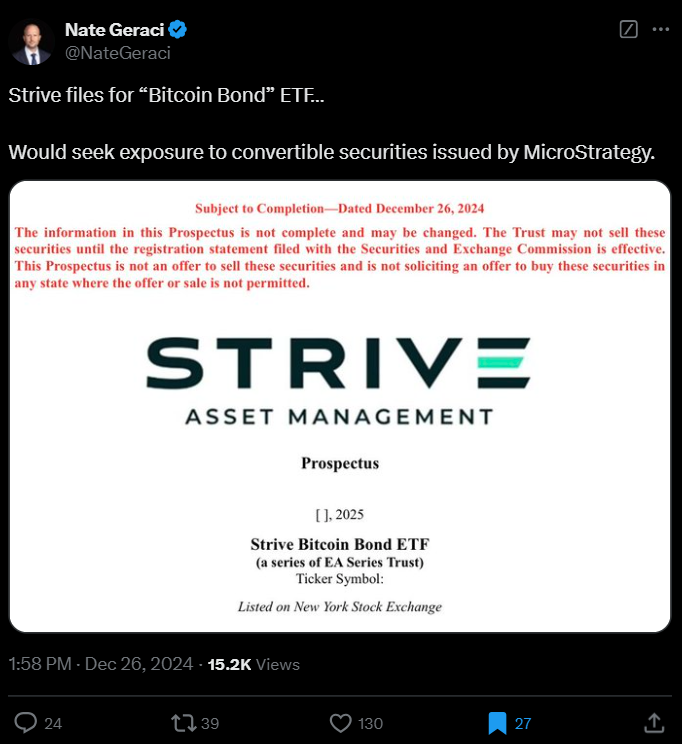
Source: Nate Geraci
Trump connection
Ramaswamy, an outspoken ally of President-elect Donald Trump, founded Strive in 2022. The asset manager aims to help investors “harness the power of capitalism,” according to Strive’s website.
In 2023, Ramaswamy — who earned most of his $1 billion net worth from founding biotechnology startup Roivant Sciences — campaigned against Trump in the Republican presidential primary.
He later endorsed the president-elect. In November, Ramaswamy joined Tesla founder Elon Musk as a leader of the Department of Government Efficiency (DOGE), a private initiative intended to cut wasteful government spending.
Industry analysts see Trump’s presidential win as a green light for more than half a dozen proposed crypto ETFs waiting on regulatory approval to list in the US.
In 2024, asset managers submitted a flurry of regulatory filings to list ETFs holding altcoins, including Solana (SOL), XRP (XRP) and Litecoin (LTC), among others.
Since winning the US presidential election on Nov. 5, Trump has proposed appointing pro-crypto industry leadership for key regulatory agencies.
In December, the President-elect announced former PayPal chief operating officer David Sacks as his “AI and crypto czar,” and former SEC commissioner Paul Atkins as his pick for Securities and Exchange Commission chair.
Magazine: Bitcoin’s $100K push wakes taxman, Vitalik visits real Moo Deng: Asia Express

Betting markets predict bullish 2025 for crypto
Bettors are wagering that 2025 will be a banner year for cryptocurrency markets, according to a Cointelegraph review of data from two popular prediction markets. Traders on Polymarket and Kalshi expect Bitcoin (BTC) and Ether (ETH) to hit record highs in 2025. They also anticipate […]
Litecoin
Bettors are wagering that 2025 will be a banner year for cryptocurrency markets, according to a Cointelegraph review of data from two popular prediction markets.
Traders on Polymarket and Kalshi expect Bitcoin (BTC) and Ether (ETH) to hit record highs in 2025. They also anticipate the United States greenlighting several new types of crypto exchange-traded funds (ETFs) and establishing a strategic Bitcoin reserve.
As of Dec. 26, Kalshi prices more than 60% odds of BTC and ETH reaching at least $125,000 and $5,000 in 2025, respectively. Polymarket sets 50% odds of BTC touching $120,000 before the end of March.
To date, Bitcoin’s record high is around $108,300, and Ether’s is around $4,720.
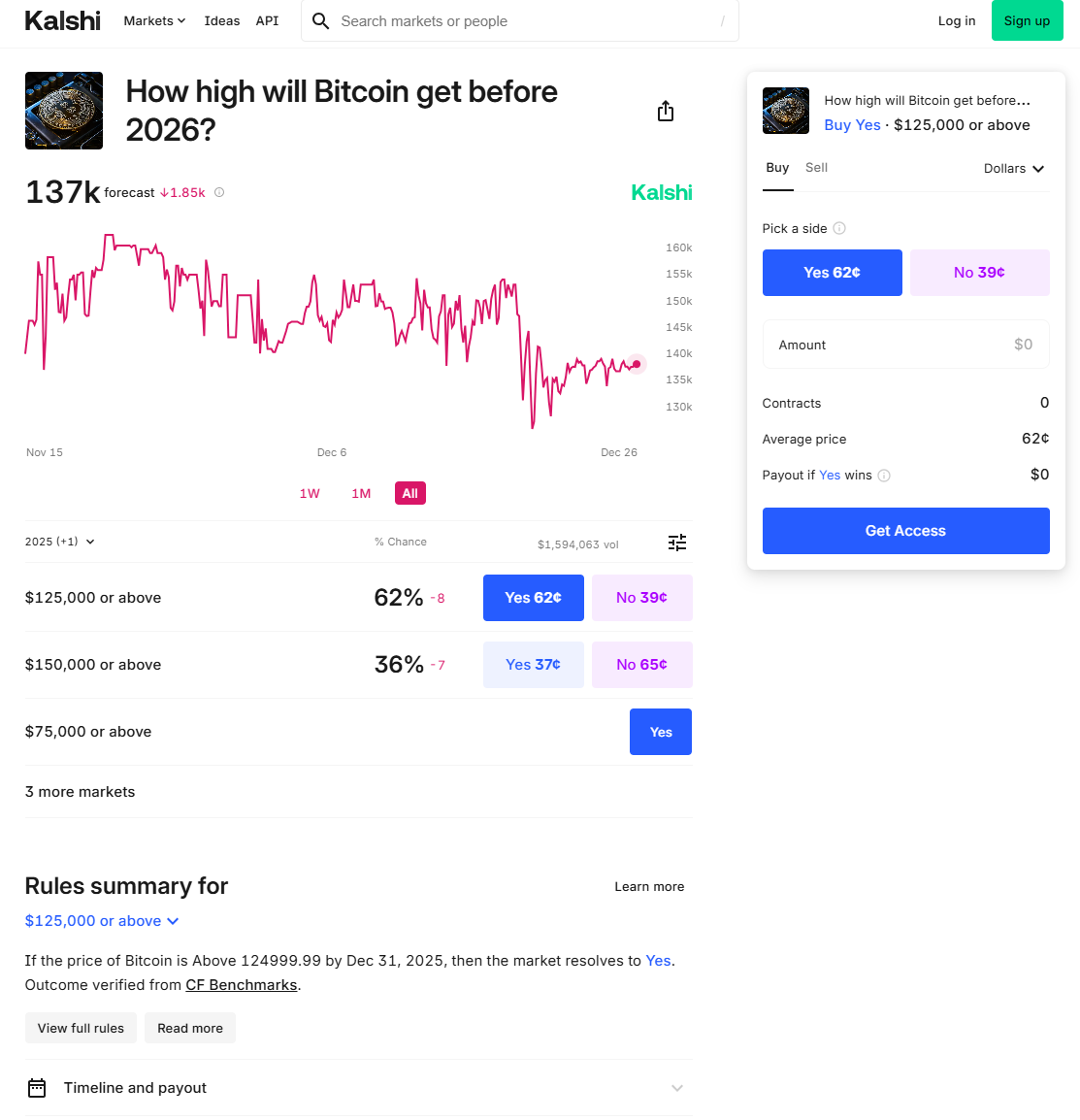
Bitcoin price targets. Source: Kalshi
Related: Kalshi gives Paul Atkins 93% odds to be Trump’s SEC chair pick despite mixed reports
Meanwhile, Polymarket bettors expect US regulators to greenlight XRP (XRP), Solana (SOL) and Litecoin (LTC) ETFs by July 31, with probabilities of around 75%, 69% and 51%, respectively. They set the odds of a Dogecoin (DOGE) ETF approval by then at around 22%.
Additionally, Kalshi users see a 59% chance US President-elect Donald Trump will create a national strategic Bitcoin reserve during his presidency. Polymarket assigns only 29% odds of Trump doing so in his first 100 days in office.
Polymarket and Kalshi rose to prominence in the runup to the US elections in November, with upward of $4 billion in trading volume tied to the US presidential race alone.
Prediction markets work by letting users trade contracts tied to specific events, with prices fluctuating dynamically based on expected outcomes. They proved to be more accurate than traditional polling, forecasting not only Trump’s win but also his party’s sweep of the US House and Senate.
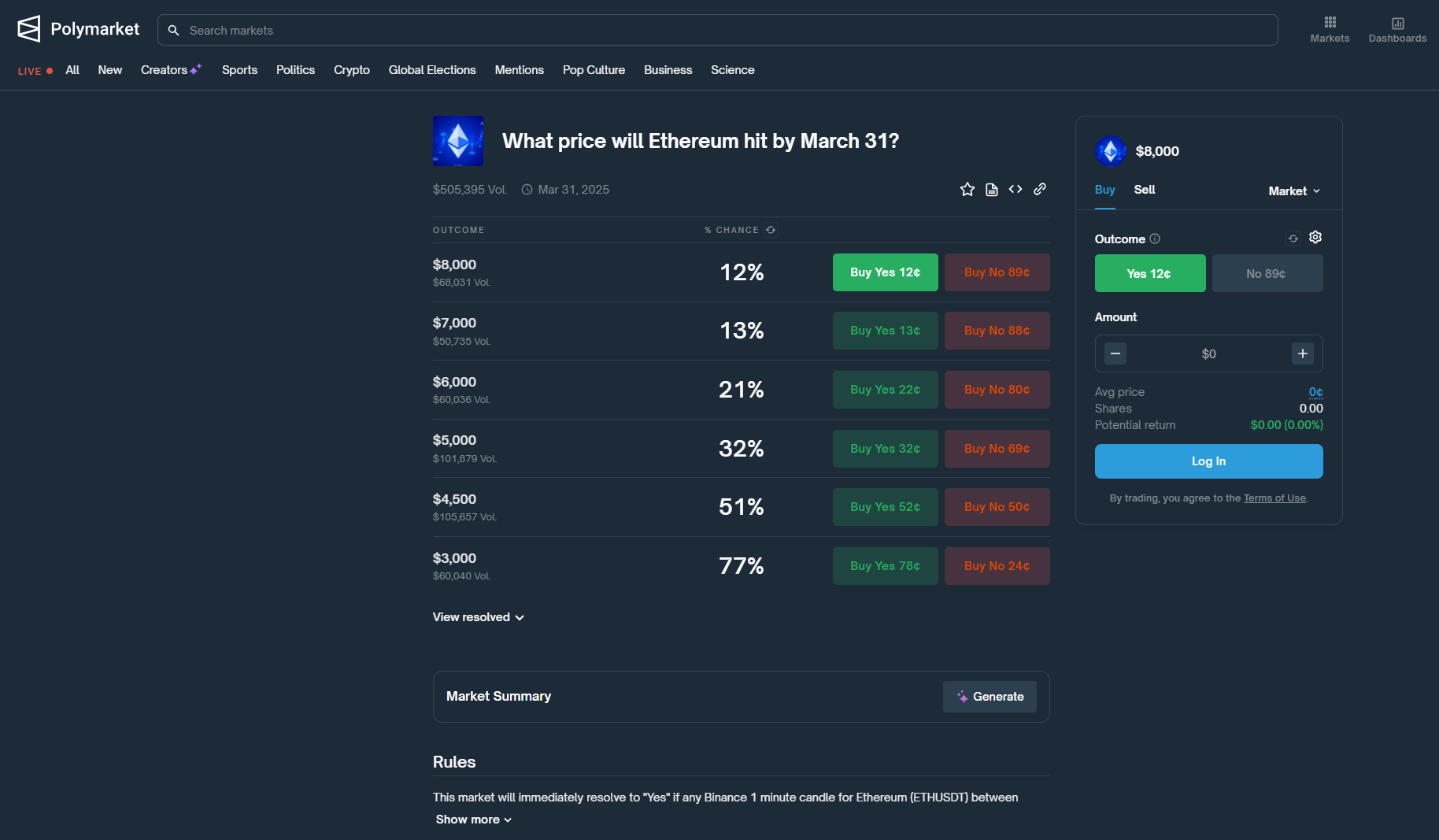
Source: Polymarket
Conflicting signals
Compared to betting platforms, conventional futures markets anticipate more modest gains for cryptocurrencies in the first quarter of 2025.
Traders on the Chicago Mercantile Exchange (CME), one of the US’ largest futures exchanges, are pricing in March spot prices of roughly $98,000 for BTC and $3,500 for ETH.
That’s still up meaningfully from BTC’s and ETH’s Dec. 26 spot prices of around $96,000 and $3,350, respectively. Both cryptocurrencies dropped around 4% as of late morning Eastern Time on Dec. 26.
Futures contracts are standardized agreements to buy or sell an underlying asset at a future date. They play a critical role in hedging strategies and are also popular for speculation.
Related: Why tech giants like Amazon may hesitate to adopt Bitcoin