Cryptojacker gets 1 year prison after admitting to $3.5M fraud
Charles O. Parks III, who admitted to misusing $3.5 million worth of resources from two cloud computing providers to mine crypto, was sentenced to one year and one day in prison.
Litecoin
Exclusive Insights: Stablecoin Adoption Reshapes Local Economies
The post Exclusive Insights: Stablecoin Adoption Reshapes Local Economies appeared first on Coinpedia Fintech News Crypto’s original promise was borderless finance, and stablecoins have delivered the same. In 2025, USDT, USDC, and their competitors have grown from simple trading tools into a new digital payment […]
Research report
Top Performing Crypto Stocks – Exclusive Report
The post Top Performing Crypto Stocks – Exclusive Report appeared first on Coinpedia Fintech News The crypto market is not just about Bitcoin or Ethereum anymore; it’s about the companies building, holding, and integrating these assets into the economy. A new White House order telling […]
Research report
Bitcoin, Ethereum combo fund to lead ‘wave’ of crypto ETFs in 2025: Analysts
An exchange-traded fund (ETF) tracking both Bitcoin and Ether is expected to be the first in a “wave” of new United States crypto funds in 2025, senior Bloomberg ETF analyst Eric Balchunas said. “We expect a wave of cryptocurrency ETFs next year, albeit not all […]
Litecoin
An exchange-traded fund (ETF) tracking both Bitcoin and Ether is expected to be the first in a “wave” of new United States crypto funds in 2025, senior Bloomberg ETF analyst Eric Balchunas said.
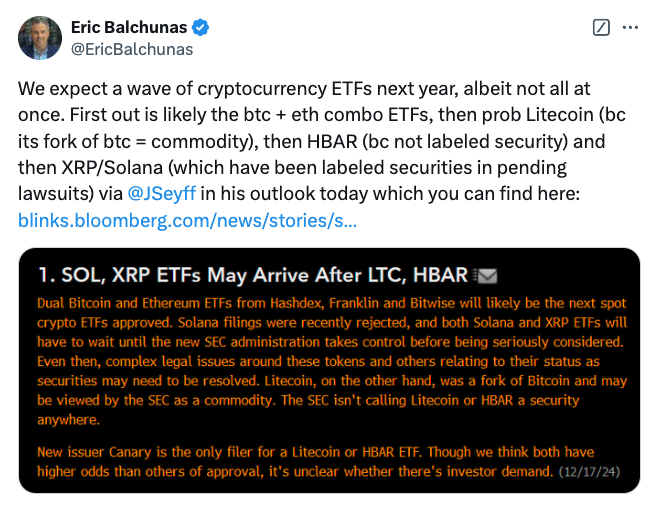
“We expect a wave of cryptocurrency ETFs next year, albeit not all at once,” Balchunas posted to X on Dec. 17, sharing an analysis from fellow ETF analyst James Seyffart.
The duo anticipates the first new Bitcoin (BTC) and Ether (ETH) combo fund to be followed by ETFs tracking Litecoin (LTC) or Hedera (HBAR).
Seyffart noted that the Securities and Exchange Commission rejected multiple Solana (SOL) ETFs on Dec. 7, adding that SOL and XRP (XRP) ETFs would have to wait until President-elect Donald Trump’s SEC chair pick takes control before they will be “seriously considered.”
Source: Eric Balchunas
Balchunas highlighted that regulators view Litecoin and Hedera more favorably, which is the reason the two analysts say they may get ETFs before larger market-cap assets like XRP and Solana.
Litecoin is more likely to be green-lighted because it is a fork of Bitcoin and may be viewed as a “commodity,” he said.
Hedera has not been labeled as a security by the SEC, which makes it easier for an exchange-traded product to receive approval.
Related: Bitcoin ETFs flip gold funds in AUM: K33 Research
XRP and SOL have been labeled as securities by the SEC, with Ripple having been engaged in a years-long legal battle with the agency over the legal status of XRP.
While the analysts see HABR and LTC as having higher odds of approval, they said it’s still unclear whether the funds will see much investor demand.
Many crypto pundits expect the SEC under Trump’s administration to be more receptive to crypto assets.
Trump recently said he intended to nominate pro-crypto businessman and former SEC commissioner Paul Atkins as the next SEC chair, which legal experts say may bring de-regulation amid a more pro-crypto policy.
Current SEC Chair Gary Gensler announced that he would resign from the agency on the day of Trump’s inauguration on Jan. 20, while fellow Democratic commissioner Jamie Lizarrage said he would be stepping down days before that on Jan. 17.
On Dec. 17, SEC Commissioner Caroline Crenshaw had her renomination vote canceled, opening up the possibility of four Trump-aligned and crypto-friendly commissioners.
Magazine: Crypto has 4 years to grow so big ‘no one can shut it down’ — Kain Warwick, Infinex

BIT Mining saw 3X profits mining DOGE, LTC instead of just Bitcoin
Crypto mining company BIT Mining said its move to mine proof-of-work coins Dogecoin and Litecoin has been more profitable than mining only Bitcoin. BIT Mining, which previously only mined Bitcoin (BTC), said on Dec. 4 that its expansion into Dogecoin (DOGE) and Litecoin (LTC) “has […]
Litecoin
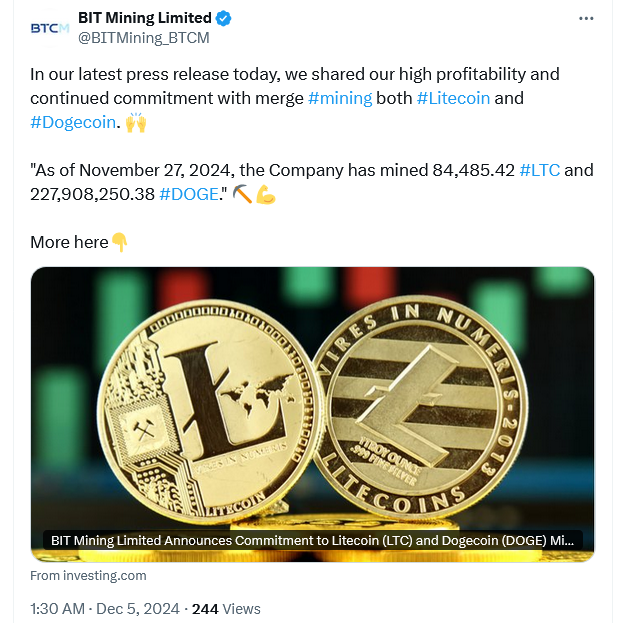
Crypto mining company BIT Mining said its move to mine proof-of-work coins Dogecoin and Litecoin has been more profitable than mining only Bitcoin.
BIT Mining, which previously only mined Bitcoin (BTC), said on Dec. 4 that its expansion into Dogecoin (DOGE) and Litecoin (LTC) “has proved to be nearly three times more profitable than mining BTC alone.”
The company said up until Nov. 27, it had mined 227,908,250.38 DOGE, worth $94.8 million and 84,485.42 LTC, worth $10.7 million. It didn’t say how much of the mined DOGE and LTC it had held onto, as both cryptocurrencies have surged over the past month.
BIT Mining reported holding 22.6 BTC at the end of 2023, currently worth $2.2 million.
Source: BIT Mining
It did note that it benefited from DOGE’s price increase, partly fueled by Donald Trump’s United States election win and Elon Musk’s promise to make a Department of Government Efficiency, or DOGE, an advisory agency to Trump on government cost-cutting.
“Elon Musk’s influence and the changing regulatory landscape in the US after the Trump win has had a major impact on mining profitability,” said BIT Mining’s vice president and chief economist, Youwei Yang.
BIT Mining rallied 10% on the New York Stock Exchange to close Dec. 4 at $3.26, while most other Bitcoin miners rose between 3% and 7%, Google Finance data shows.
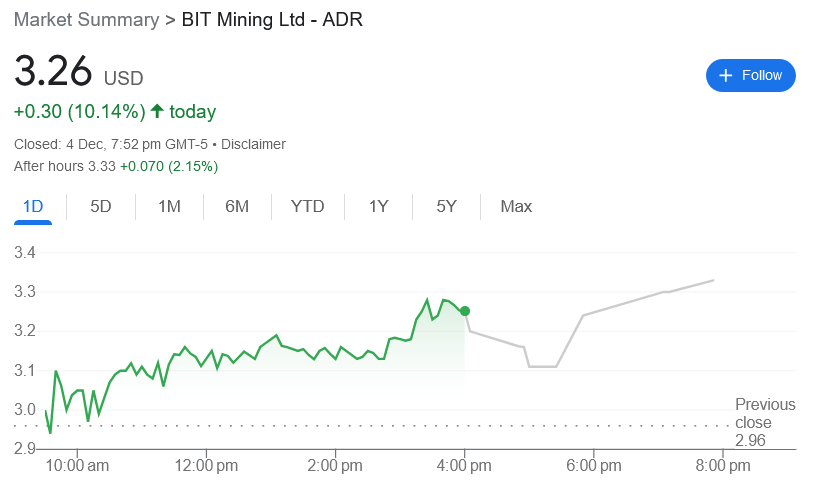
BTCM’s share price on Dec. 4, including a 2.15% increase in after-hours trading. Source: Google Finance
BIT Mining’s shares are down 37% year to date, continuing a decline in the stock price since 2014.
The firm started its DOGE and LTC mining operations in May 2023 — two-and-a-half years after it changed its name from 500.com and started mining Bitcoin, moving away from being an online sports lottery.
BIT Mining now has over 5,550 active machines that can mine DOGE, LTC and Bellscoin (BEL), representing 1.32% of the total network hashrate.
Diversifying from Bitcoin isn’t a foreign idea in the mining industry
Bitcoin mining heavyweight MARA Holdings revealed it started mining Kaspa (KAS) tokens last September, mining $16 million worth by June.
Rival miners CleanSpark and TeraWulf told Cointelegraph that they intend to continue mining only Bitcoin in the foreseeable future.
Related: Bitcoin miner Hut 8 argues to toss ‘short and distort’ shareholder suit
“We are not planning any diversification into other proof-of-work coins,” said CleanSpark senior vice president Harry Sudock, who added Bitcoin’s “long track record” means the company is more comfortable with mining it “for the long term.”
BIT Mining’s latest moves come as it recently admitted it authorized paying bribes to Japanese officials in an attempt to win a bid for a resort and casino license in its former life as 500.com, between 2017 and 2019.
The firm agreed to $10 million worth of fines to the US government to resolve the charges on Nov. 18.
Magazine: Comeback 2025: Is Ethereum poised to catch up with Bitcoin and Solana?

What happened to the top 10 cryptos from when Trump was last president?
Bitcoin has hit new all-time highs as President-elect Donald Trump secured victory in the 2024 United States presidential election. Set to return to the White House after departing in January 2021, Trump now appears to be bringing a pro-crypto stance with him. His campaign made […]
Litecoin
Bitcoin has hit new all-time highs as President-elect Donald Trump secured victory in the 2024 United States presidential election.
Set to return to the White House after departing in January 2021, Trump now appears to be bringing a pro-crypto stance with him. His campaign made several pledges in support of the cryptocurrency sector, marking a difference with the previous administration.
As Trump prepares to resume office, Cointelegraph looks back on how the cryptocurrency landscape appeared during his last term. The industry has seen major shifts since then — half of the top 10 coins from his previous term have fallen out of the rankings.
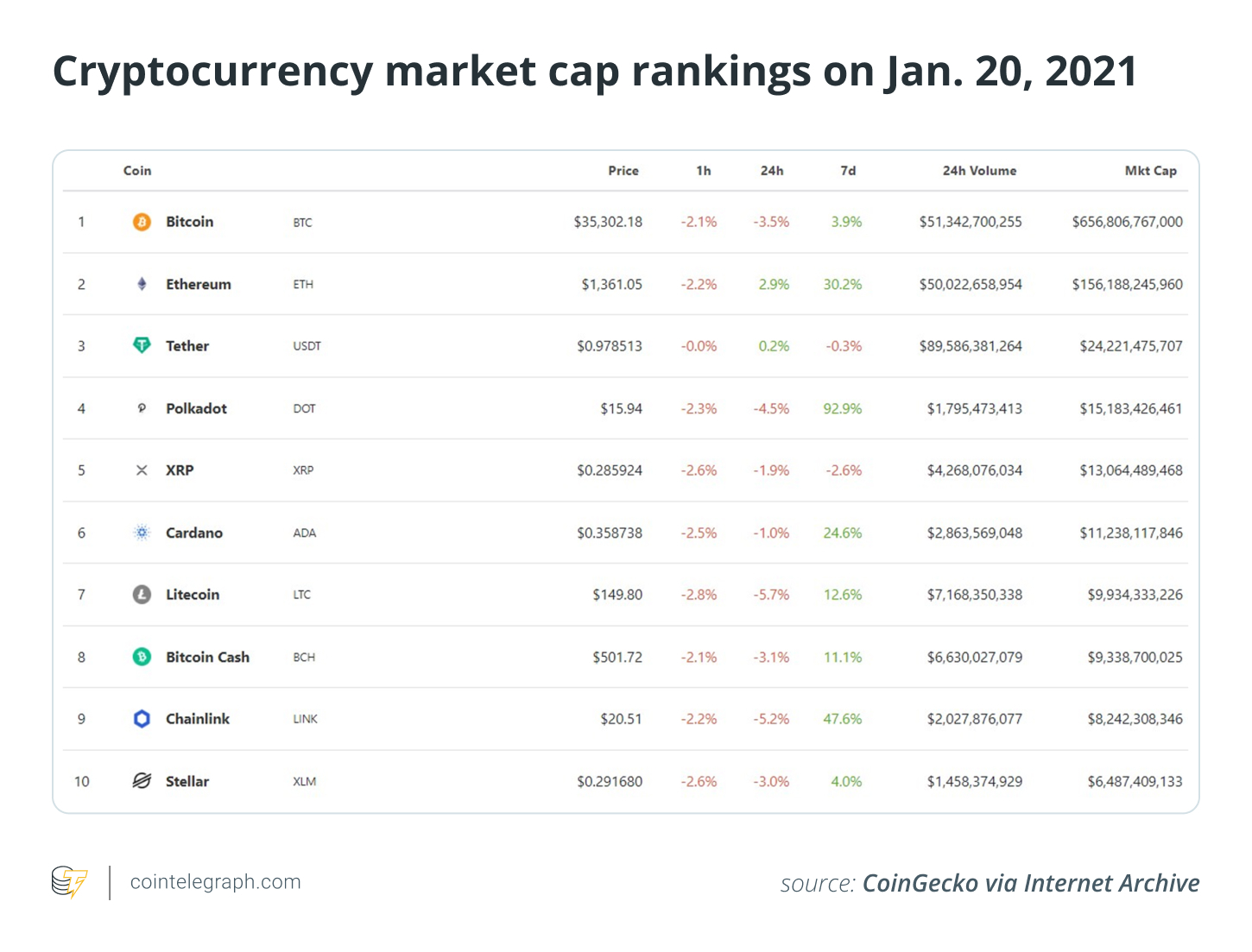
Here’s a look at how the top 10 cryptocurrencies from Trump’s last presidency are faring today.
Bitcoin
Bitcoin price Jan. 20, 2021: $35,302.18
Bitcoin price Nov. 11, 2024: $82,379.60
Since Trump’s last White House stint, Bitcoin has gone through more twists than the president-elect’s path to election victory. First, there was an all-time high of about $67,000 in November 2021. Then came FTX — the seismic crash of November 2022 that took Bitcoin down to $17,000 and left everyone wondering if the ride was over
Fast forward through a bear market for both Bitcoin (BTC) and the global economy, with BTC dragging its feet through most of it.
Still, like any good comeback story, Bitcoin rebounded in 2024 as it became accessible to institutions on the US stock market through those shiny new spot exchange-traded funds (ETFs).
With analysts’ eyes glued to the $100,000 mark as Trump’s victory signals the beginning of the end for crypto’s supervillain, Gary Gensler at the Securities and Exchange Commission (SEC), the asset has already smashed past the $82,000 mark.
In addition, Bitcoin now hosts digital trinkets like Ordinals (an iteration of non-fungible tokens) and some of the internet’s favorite memecoins through Runes. So while Bitcoin remains the gold-standard crypto in the age of Trump 2.0, it’s also found some new ways to keep itself interesting along the way.
From undisputed king to layer-2 lab rat
Ether price Jan. 20, 2021: $1,361.05
Ether price Nov. 11, 2024: $3,175.47
Ether (ETH) was the undisputed monarch of smart contracts, reigning over a kingdom of decentralized applications. Now the crown isn’t quite as secure and the network has some serious competition.
Solana, the fast, flashy upstart is now ranked fourth by market cap, taking the lead among the “Ethereum killer” blockchains.
Ethereum, however, has chosen a different route to stay relevant. Rather than battling it out for raw speed, it opted to expand with layer-2 solutions. This has helped ease the infamous congestion and sky-high fees, but there’s a cost.
These layer-2 networks have drained liquidity and fragmented Ethereum’s ecosystem, transforming its once-unified realm into a sprawling collection of mini-kingdoms.
In its quest to evolve, Ethereum also went green with The Merge in September 2022, swapping out proof-of-work for a more eco-friendly proof-of-stake consensus mechanism.
The upgrade slashed Ethereum’s energy use by 99% and set the stage for future scalability tweaks like sharding. The crypto world applauded, and it was a big step for Ethereum’s sustainability, though it didn’t come with the explosive price surge some investors anticipated.
And while Bitcoin has been busy breaking records, Ethereum was left in the dust despite listing spot ETFs of its own. For now, Ethereum is still hanging on to its No. 2 spot, but simply being a legacy brand might not be enough to keep the crown.
Ignoring the haters
In the wake of the Terra-Luna collapse—an implosion that rattled faith in algorithmic stablecoins everywhere—Tether’s USDT has not only weathered the storm but emerged stronger than ever. Now the third-largest cryptocurrency by market cap, USDT’s valuation has ballooned to about $120 billion.
Despite raking in a net profit of $2.5 billion in the third quarter, bringing 2024’s total to $7.7 billion, the company still hasn’t undergone a full, comprehensive audit. Instead, Tether provides regular attestations.
Related: Tether posts $2.5B in Q3 profits, with 2024 earnings reaching $7.7B
So, what’s driving this profit parade? US Treasury Bills, mostly. Tether’s reserves now claim a comfortable $6 billion buffer, with $102.5 billion in Treasury Bills, making Uncle Sam’s debt Tether’s golden goose.
But with great profits come great questions. Without a formal audit, many are left wondering if Tether’s vaults are as solid as they claim. Tether may be the titan, but trust is still the currency that matters most.
From contender to rebuilder
Polkadot price Jan. 20, 2021: $15.94
Polkadot price Nov. 11, 2024: $5.13
Back in Trump’s last term, Polkadot (DOT) was riding high. With a market value of $17 per token and the fourth spot in the crypto rankings, it looked poised to become the bridge across blockchain ecosystems, promising a future of seamless crosschain communication. In 2024, though, Polkadot’s shine has dulled — a $4.10 price tag and a drop to the 21st spot by market cap.
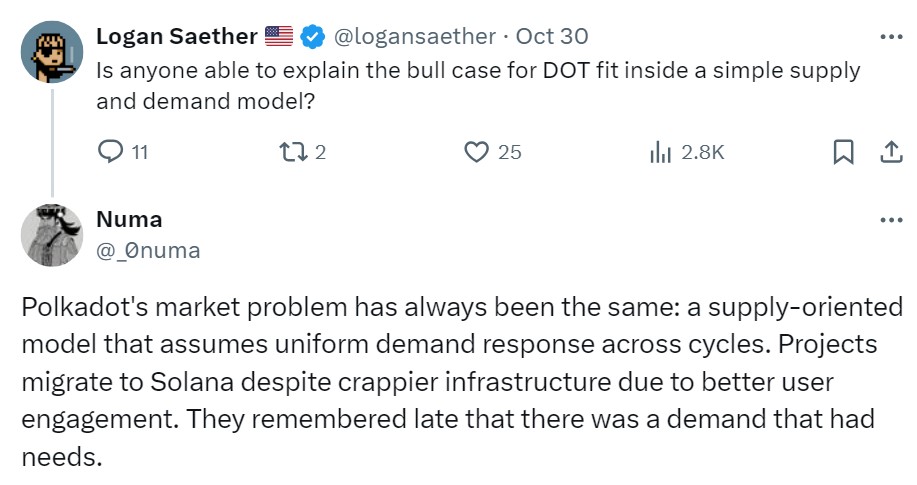
Polkadot is no longer a top 10 crypto. Source: Logan Saether
Still, Polkadot is not waving a white flag. This year, it rolled out Agile Coretime, a new system letting developers buy processing time directly on its core layer. It’s part of the Polkadot 2.0 upgrade, a major pivot from the old auction model.
With the introduction of “inscriptions” — a playful nod to Bitcoin’s Ordinals — Polkadot smashed transaction records in December 2023, clocking in over 17 million transactions.
Still, Polkadot’s got a tough crowd to impress. Ethereum and Solana have cemented themselves as powerhouses in decentralized finance (DeFi), with other advanced chains nipping at their heels.
Clear skies ahead for XRP
XRP price Jan. 20, 2021: $0.285924
XRP price Nov. 11, 2024: $0.581592
XRP held the fifth spot in crypto rankings in January 2021. It has dropped a bit to seventh, but growth has been mostly positive. Its price has jumped from $0.2958 to $0.5355, and its market cap has more than doubled to a cool $30.5 billion. Not bad for a cryptocurrency that’s been through a legal saga intense enough for a courtroom drama series.
Ripple Labs, the San Francisco company that developed technology around the XRP Ledger and advocates for its use in cross-border transactions, scored a partial win in court in 2023.
After years of back-and-forth, the judge ruled that while some private sales of XRP did cross into unregistered securities territory, XRP itself doesn’t qualify as a security. It’s a half-victory for Ripple and a full game-changer for the XRP ecosystem, which has long operated under a regulatory cloud.
Related: SEC’s Ripple appeal doesn’t challenge XRP non-security status
Now, with legal uncertainty clearing up, XRP is even being discussed as a candidate for an ETF — alongside up-and-comers like Solana. An XRP ETF could open doors to a more mainstream audience, sparking fresh excitement among investors who’ve weathered the ups and downs. So, while XRP might have slipped a couple of notches in the rankings, its resilience, steady growth and newfound legal clarity hint at the start of an unlikely comeback.
The ’90s band of crypto fighting for a comeback
ADA price Jan. 20, 2021: $0.358738
ADA price Nov. 11, 2024: $0.592937
Back in the last election cycle, Cardano (ADA) was cruising comfortably in the top 10, with a reputation as an “Ethereum killer” and its roots tracing back to an Ethereum co-founder. Today, Cardano is a bit like that band from the ’90s that’s still hanging around the charts, occasionally slipping in and out of the top 10.
Critics love to call it a “ghost chain,” claiming there’s not much building going on and even fewer users to show up. And the numbers do raise an eyebrow: Cardano’s core developer and active user count have dropped.
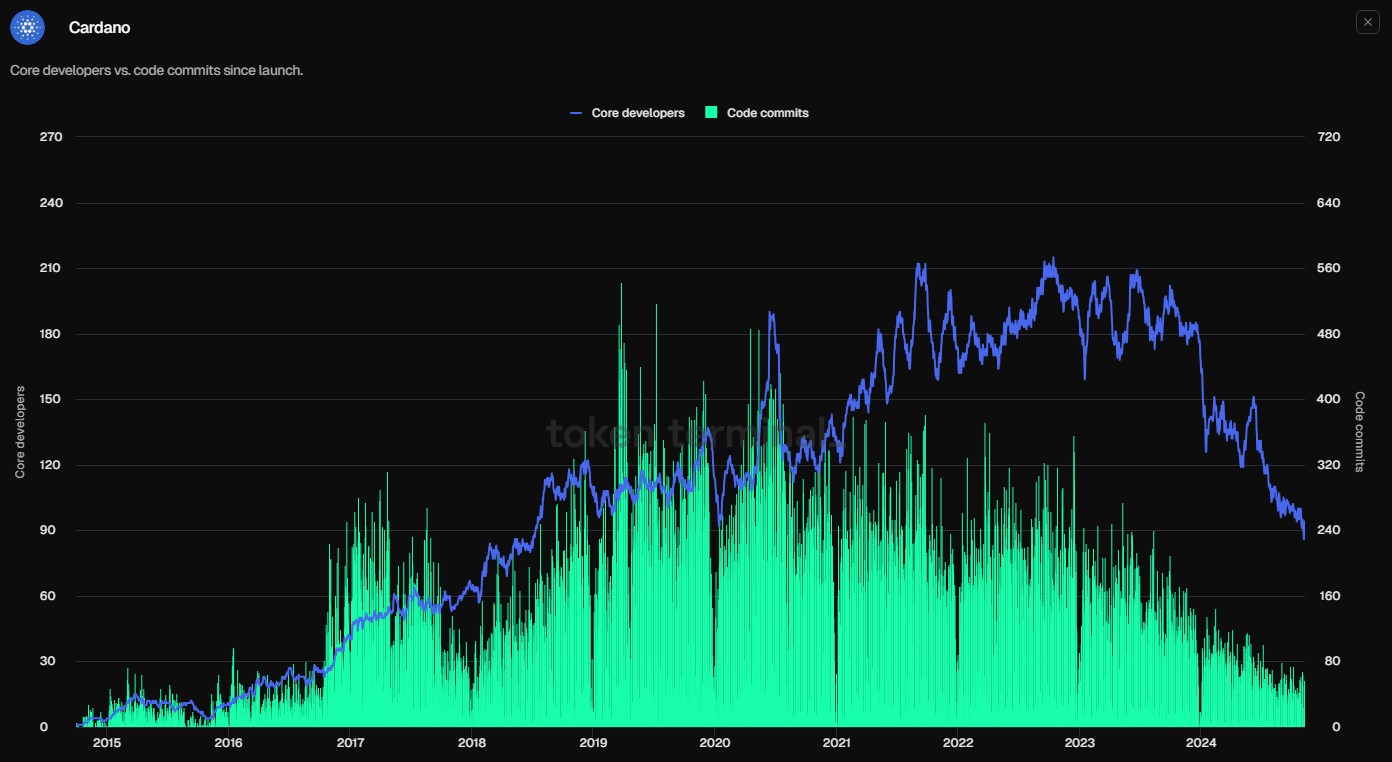
Cardano’s code commits and core developer count drops. Source: Token Terminal
Yet Cardano isn’t sitting back and letting the doubters have their say. The Chang hard fork, completed in September 2024, ushered in fresh features and scalability upgrades, signaling it’s still got some tricks up its sleeve. The network has also entered the Voltaire phase, aiming for a decentralized governance model where users can participate directly in decision-making.
Litecoin and Bitcoin Cash: The original rebels fighting for relevance
Litecoin price Jan. 20, 2021: $149.80
Litecoin price Nov. 11, 2024: $77.38
Bitcoin Cash price Jan. 20, 2021: $501.72
Bitcoin Cash price Nov. 11, 2021: $438.73
In the early days of crypto, Litecoin (LTC) and Bitcoin Cash (BCH) were the champions of “spendable” cryptocurrency — two coins vying to be digital cash for everyday use.
Litecoin, the “lite” version of Bitcoin, offered faster transactions and lower fees, while Bitcoin Cash split off from Bitcoin with a bold promise: to fulfill the original peer-to-peer cash vision of Satoshi Nakamoto by boosting block sizes and reducing fees.
Both coins gained loyal followings and even some merchants, but their paths feel more like nostalgia trips than the revolution they aimed to spark.
In a world where Bitcoin has solidified itself as “digital gold” and newer cryptos offer advanced features like smart contracts and decentralized applications, Litecoin and Bitcoin Cash struggle to stand out.
Countries banning crypto payments and regulatory red tape haven’t helped, either. While some small pockets of adoption persist — think cafes in Townsville, Ljubljana, and parts of Buenos Aires — the broad use case for everyday transactions hasn’t materialized.
Litecoin and Bitcoin Cash have both dropped out of the top 10 cryptocurrencies by market cap, sitting at the 25th and 19th spots respectively.
Behind the scenes of DeFi
LINK price Jan. 20, 2021: $20.51
LINK price Nov. 11, 2024: $13.99
Chainlink (LINK) isn’t here to be “digital cash” or a “smart contract superstar,” but rather the backbone of the crypto world, quietly holding the DeFi universe together.
While other cryptocurrencies chase headlines and retail hype, Chainlink is hard at work feeding price data, weather forecasts and other real-world information to blockchains that need them. Since Trump’s last term, Chainlink’s role as the go-to oracle service has only solidified, making it the ultimate backstage hero of decentralized finance.
The recent rollout of Chainlink 2.0 added even more muscle to its oracle network. This upgrade introduced decentralized oracle networks, enabling dynamic non-fungible tokens, automated blockchain functions and all kinds of new DeFi magic.
With staking finally available, LINK holders can now secure the network and earn rewards — a long-awaited perk that gives a boost to this data-driven ecosystem. Chainlink is now better equipped for complex tasks, proving that it’s not just reliable but versatile too.
LINK’s price hasn’t enjoyed the same steady rise as its reputation. The token has been buffeted by volatility and competition. New oracle providers have entered the scene, and some DeFi projects are building their own oracles.
Not so stellar
XLM price Jan. 20, 2021: $0.291680
XLM price Nov. 11, 2024: $0.109166
Launched by Ripple co-founder Jed McCaleb in 2014, Stellar set out to offer quick, low-cost international transactions, connecting everyone from financial institutions to the unbanked.
Since Trump’s last term, Stellar has made strides in the central bank digital currency (CBDC) arena, particularly with its pilot project in Ukraine to test a digital version of the hryvnia.
Magazine: Real life yield farming: How tokenization is transforming lives in Africa
But Stellar’s journey hasn’t been all, well, stellar. The competition in cross-border payments has only ramped up. Governments exploring CBDCs often look toward centralized solutions or established platforms like Ethereum.
Stellar’s XLM token has suffered as the market increasingly tilts toward DeFi-focused chains with high-profile use cases. It’s dropped from the 10th spot to the 35th spot, as of Nov. 8, 2024.

BlackRock’s Bitcoin ETF flips gold fund
BlackRock’s Bitcoin (BTC) exchange-traded fund (ETF) now holds more assets than the asset manager’s gold ETF despite only launching in January, data from BlackRock shows. iShares Bitcoin Trust (IBIT) exceeds $33 billion in net assets as of Nov. 8, surpassing iShares Gold Trust (IAU), which […]
Litecoin
BlackRock’s Bitcoin (BTC) exchange-traded fund (ETF) now holds more assets than the asset manager’s gold ETF despite only launching in January, data from BlackRock shows.
iShares Bitcoin Trust (IBIT) exceeds $33 billion in net assets as of Nov. 8, surpassing iShares Gold Trust (IAU), which holds just shy of that amount, according to iShares.
It’s an “absolutely wild” feat because IBIT launched only 10 months ago, whereas IAU has been trading since 2005, Nate Geraci, president of The ETF Store, said in a Nov. 8 post on the X platform.
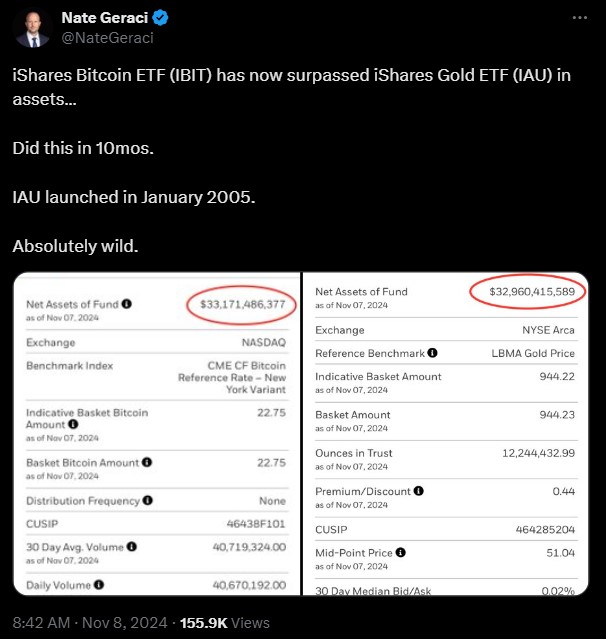
Source: Nate Geraci
Related: BTC investors pour $1.1B into BlackRock ETF as Bitcoin marks another high
The crypto market surged following Donald Trump’s victory in the United States presidential election, as many believe his win will benefit the industry, Cointelegraph Research said.
Nov. 6 was IBIT’s “biggest volume day ever” as investors flocked to cryptocurrencies after Trump’s election win, Bloomberg ETF analyst Eric Balchunas said in a Nov. 6 X post.
On Nov. 7, IBIT clocked $1.1 billion in inflows, reclaiming inflow status after two consecutive days of outflows totaling $113.3 million, according to Farside data.
Meanwhile, Bitcoin continued the trend of consecutive daily all-time highs as BTC’s price traded above $76,800.
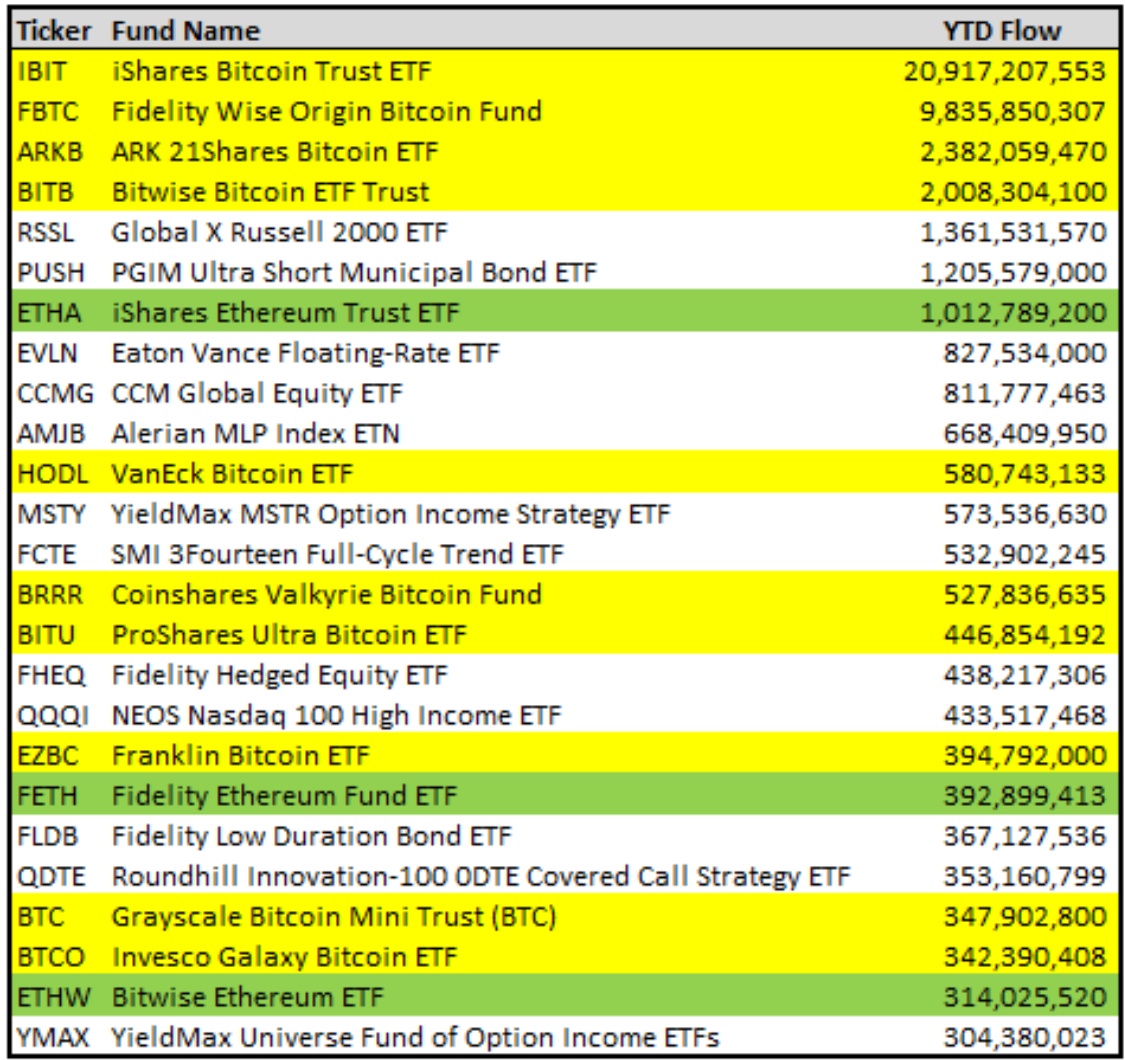
Top ETF launches. Source: The ETF Store
Bitcoin has dominated the ETF landscape this year, accounting for six of the top 10 most successful launches in 2024, Geraci said in an X post.
Of the approximately 400 new ETFs launched in 2024, the four biggest launches by inflows have all been spot BTC ETFs, Geraci said in September.
Trump’s presidential win is a greenlight for more than half a dozen proposed crypto ETFs waiting on regulatory approval to list in the US.
In 2024, asset managers submitted a flurry of regulatory filings to list ETFs holding altcoins, including Solana (SOL), XRP (XRP) and Litecoin (LTC), among others.
Issuers are also waiting on approval for several planned crypto index ETFs designed to hold diverse baskets of tokens.
The filings were effectively “call options on a Trump victory” in the US presidential race, Balchunas said on Oct. 25.
Magazine: Real life yield farming: How tokenization is transforming lives in Africa

These crypto ETFs are ‘call options’ on the US elections
The United States presidential election on Nov. 5 may determine the fate of more than a half dozen proposed cryptocurrency exchange-traded funds (ETFs) waiting on a green light from regulators. In 2024, asset managers submitted a flurry of regulatory filings to list ETFs holding altcoins, […]
Litecoin
The United States presidential election on Nov. 5 may determine the fate of more than a half dozen proposed cryptocurrency exchange-traded funds (ETFs) waiting on a green light from regulators.
In 2024, asset managers submitted a flurry of regulatory filings to list ETFs holding altcoins, including Solana (SOL), XRP (XRP) and Litecoin (LTC), among others.
Issuers are also waiting on approval for several planned crypto index ETFs designed to hold diverse baskets of tokens.
In effect, these filings are “call options on a Trump victory” in the US presidential race, Eric Balchunas, an ETF analyst at Bloomberg Intelligence, said on Oct. 25.
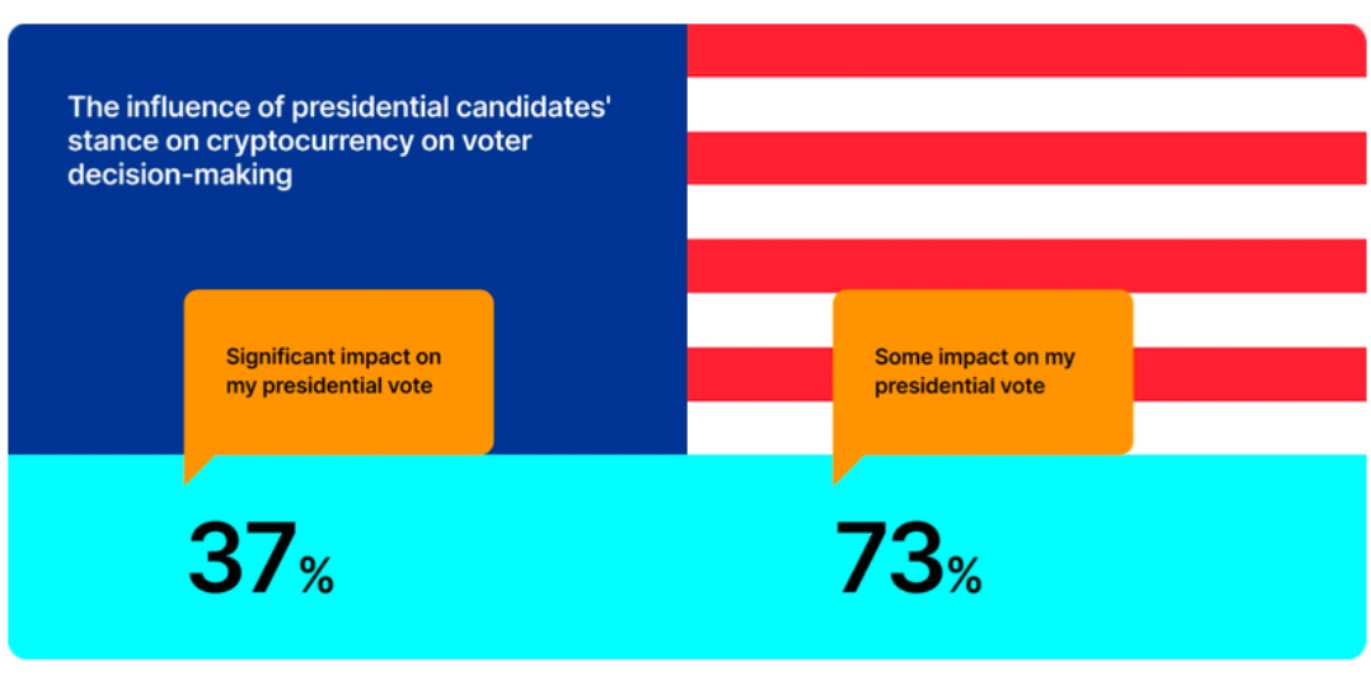
Three in four crypto owners said a candidate’s crypto policy will impact how they vote. Source: Gemini
The election pits Republican nominee Donald Trump — who has said he wants to make America “the crypto capital of the world” — against Democrat Kamala Harris, who has been comparatively quiet on the industry.
Under President Joe Biden — Vice President Harris’s boss — the US Securities and Exchange Commission (SEC) has taken an aggressive regulatory stance toward crypto, bringing upward of 100 regulatory actions against industry companies.
“If you see a Trump victory, watch this space, and if you see a Harris victory, just forget about it for a couple of years,” Balchunas said during the Plan B Forum conference in Lugano, Switzerland.
Here’s what to expect from crypto ETF issuers if Trump wins on Nov. 5.
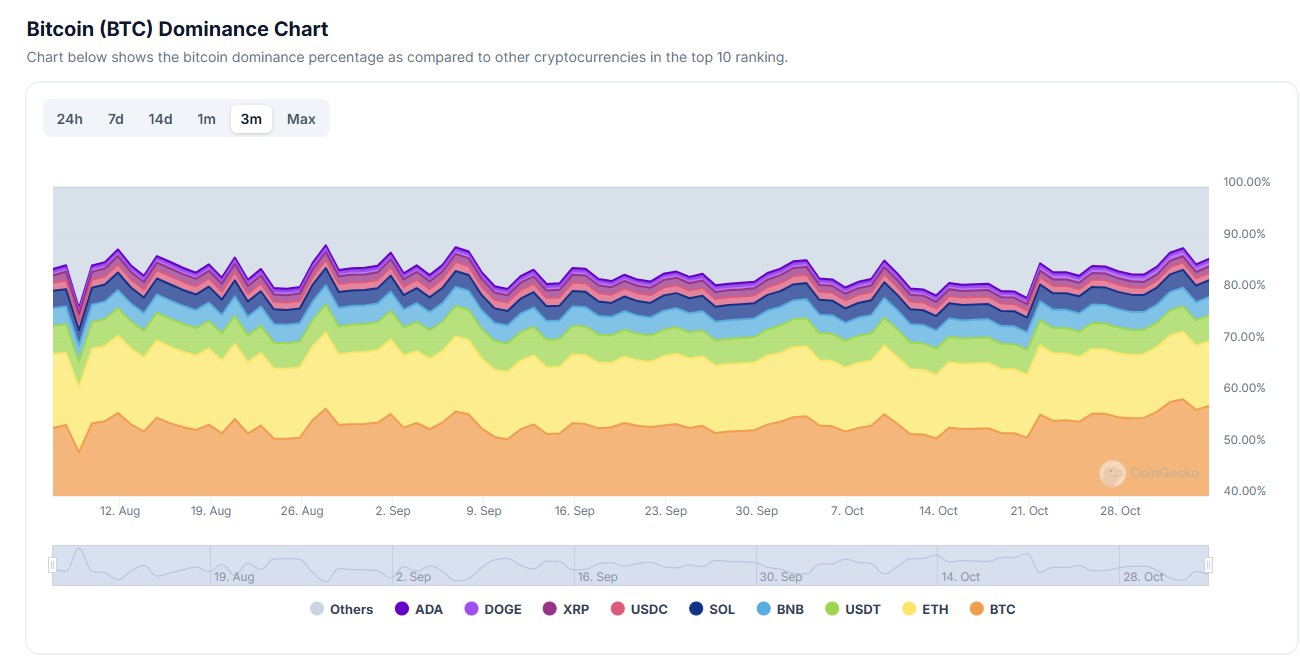
BTC and ETH lead heavily in terms of market capitalization. Source: CoinGecko
Altcoin ETFs
In June, fund issuers VanEck and 21Shares each filed an S-1 to register SOL ETFs with the SEC.
On Oct. 30, crypto asset manager Canary Capital followed suit, filing for a SOL ETF of its own.
The SEC greenlighted spot Bitcoin (BTC) and Ether (ETH) ETFs to list in January and July, respectively.
Even so, “it’s unlikely that the approval of ETH will result in a large wave of approvals” for other types of crypto ETFs, Ophelia Snyder, co-founder and president of 21.co, told Cointelegraph in June. 21.co is the owner of crypto ETF issuer 21Shares.
The SEC has repeatedly asserted that SOL — unlike BTC and ETH — is a security, but plans for a SOL ETF listing are “still in play,” Matthew Sigel, VanEck’s head of digital assets research, said in August.
“VanEck believes SOL is a commodity, much like BTC and ETH,” Sigel said. “We remain committed to advocating this position […] to the appropriate regulators.”
Meanwhile, in October and November, Canary Capital, Bitwise and 21Shares each filed for proposed XRP ETFs. Canary Capital also filed to register a spot LTC ETF.
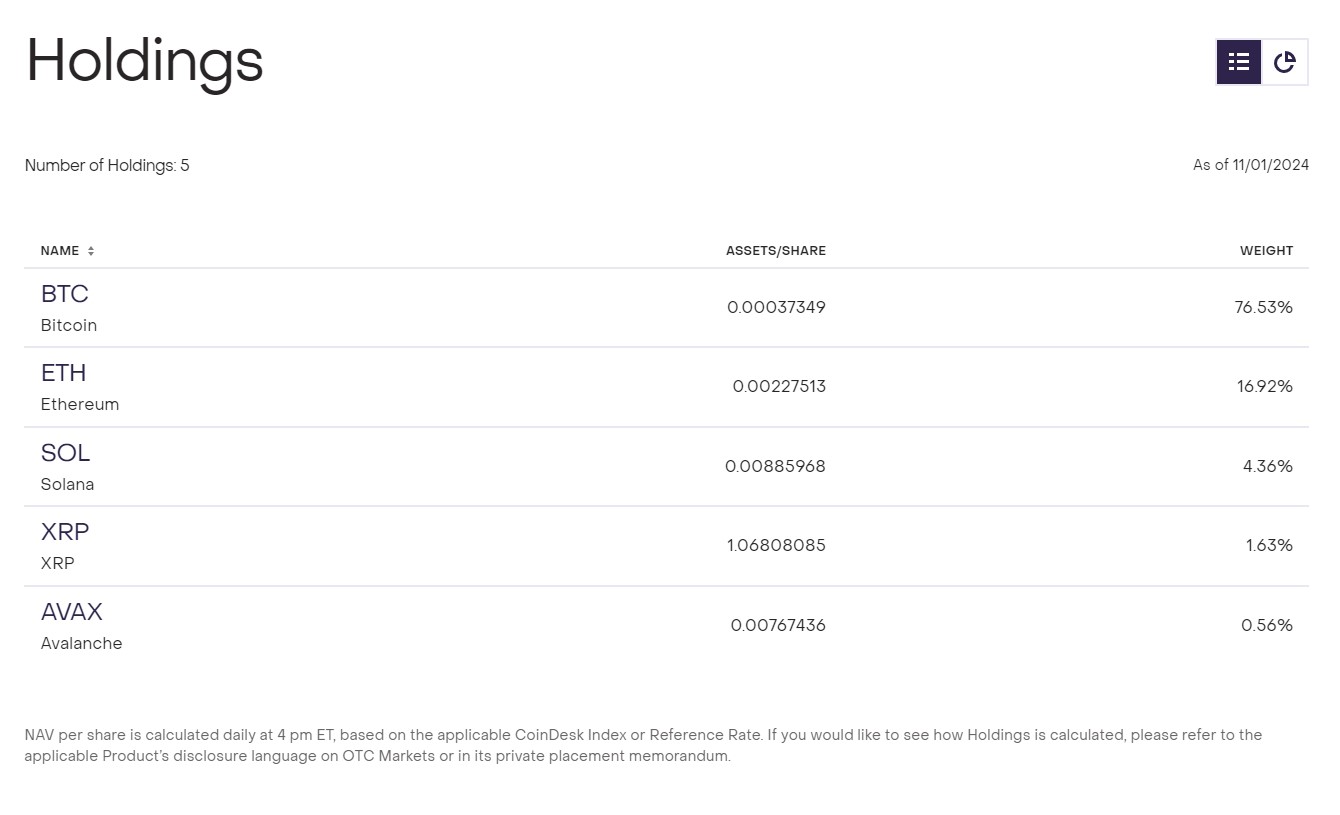
GDLC’s holdings. Source: Grayscale.
Crypto Index ETFs
On Oct. 29, securities exchange NYSE Arca asked the SEC for permission to list shares of Grayscale Digital Large Cap Fund (GLDC).
“[T]he proposed rule change, if adopted, would represent the first national securities exchange ruleset permitting the listing and trading of shares of multi-crypto asset [ETFs],” Grayscale said.
The fund holds a crypto index portfolio comprising BTC, ETH, SOL, XRP and Avalanche (AVAX).
Grayscale faces competition from other proposed index funds, including those from asset managers Hashdex and Franklin Templeton, but GDLC is unique in including altcoins such as SOL, AVAX and XRP.
Crypto index ETFs are currently limited to BTC and ETH because those are the only digital assets the SEC has authorized to be included in ETFs, Katalin Tischhauser, head of investment research at crypto bank Sygnum, told Cointelegraph in August.
“The next logical step is index ETFs because indices are efficient for investors — just like how people buy the S&P 500 in an ETF. This will be the same in crypto,” Tischhauser said.
Magazine: AI agents trading crypto is a hot narrative, but beware of rookie mistakes

Bitcoin looks ripe for a rebound, and so do ETH, DOGE, LTC, and XMR
Bitcoin’s (BTC) rejection near the all-time high earlier in the week may have attracted profit booking by the short-term traders. Although the price has dropped near $68,000, analysts remain positive on the markets. They anticipate Bitcoin to find support between $65,000 and $68,000. The next […]
Litecoin
Bitcoin’s (BTC) rejection near the all-time high earlier in the week may have attracted profit booking by the short-term traders. Although the price has dropped near $68,000, analysts remain positive on the markets. They anticipate Bitcoin to find support between $65,000 and $68,000.
The next major trigger for the cryptocurrency markets is the United States elections. In a market report, FalconX head of research David Lawant said that volatility could increase if “results are too close to call and it takes too much time to reach an outcome.”
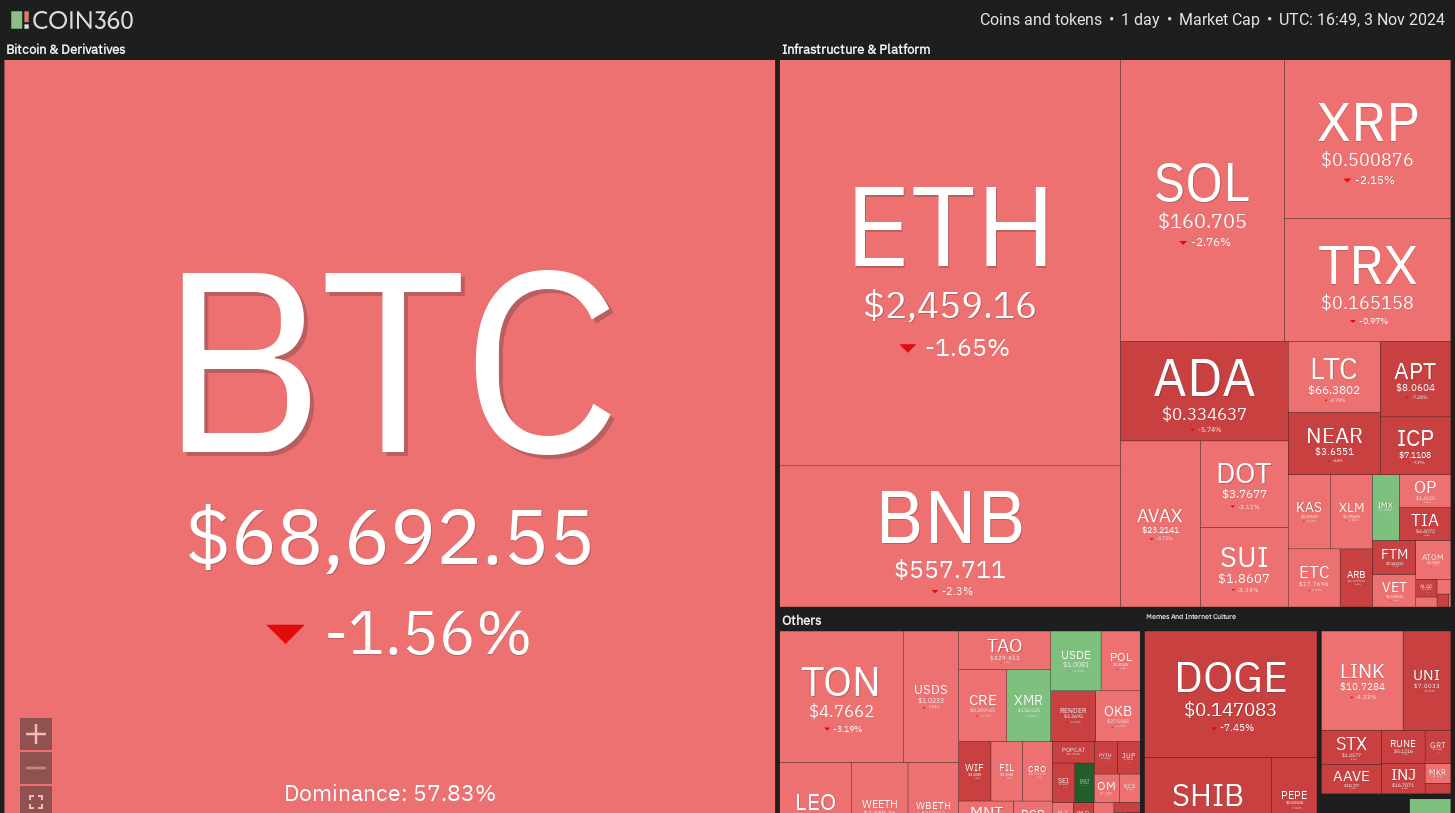
Crypto market data daily view. Source: Coin360
WonderFi President and CEO Dean Skurka said in an interview with Cointelegraph that Bitcoin’s price is likely to go up in the long term, irrespective of the election results. Skurka believes interest rate cuts in the US and Canada could propel Bitcoin higher in the next 6-24 months.
The near-term investor sentiment could improve if Bitcoin rises above $70,000. That could boost buying in select altcoins. Let’s study the top 5 cryptocurrencies that look strong on the charts.
Bitcoin price analysis
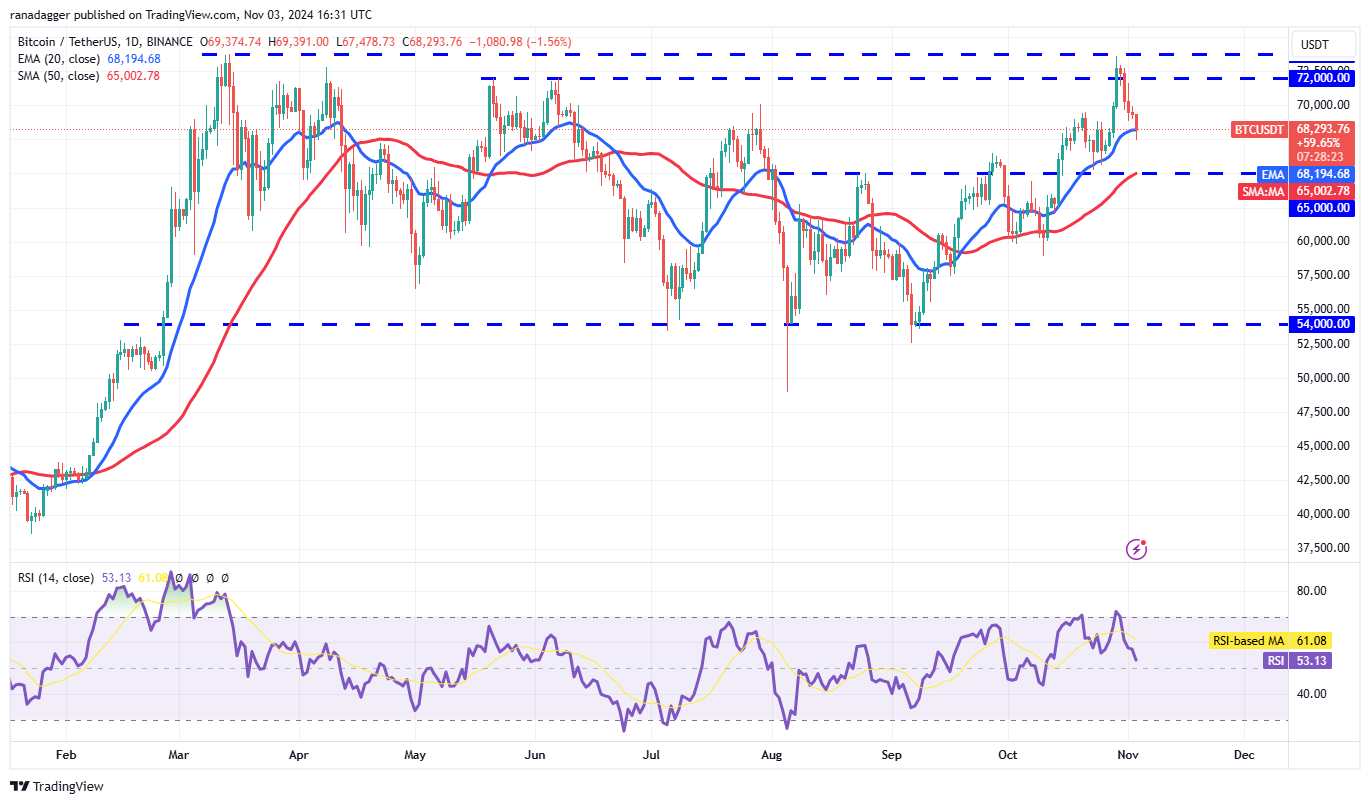
Bitcoin’s pullback has reached the 20-day exponential moving average ($68,194), a crucial support to watch out for in the near term.
BTC/USDT daily chart. Source: TradingView
If the price rebounds off the 20-day EMA and rises above $70,000, it will signal that buyers are attempting a comeback. The BTC/USDT pair could rally to $72,000 and subsequently to $73,777. Sellers are expected to fiercely defend the zone between $72,000 and $73,777, but if the bulls prevail, the pair may start a new uptrend toward the target objective of $93,554.
The bears will have to tug and maintain the price below the 20-day EMA to invalidate the bullish view. The pair could then plunge to the 50-day simple moving average ($65,002).
BTC/USDT 4-hour chart. Source: TradingView
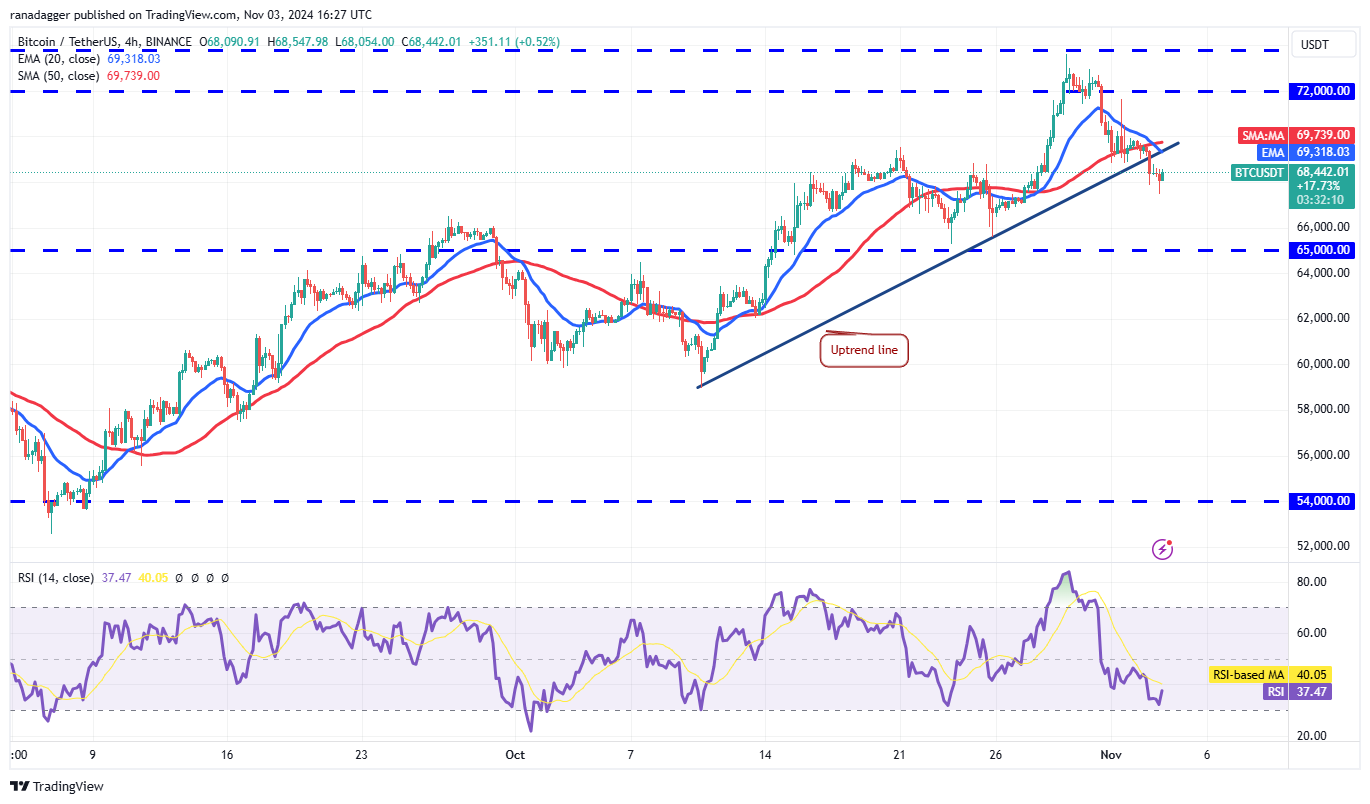
The pair broke below the uptrend line, indicating that the bears have the upper hand. Buyers will try to push the price back above the uptrend line, but they are likely to encounter solid resistance from the sellers.
If the price turns down from the uptrend line, it will signal that the bears have flipped the level into resistance. That increases the risk of a drop to $65,000.
This negative view will be invalidated in the near term if the price rises above $70,000. The pair could then climb to $72,000.
Ether price analysis
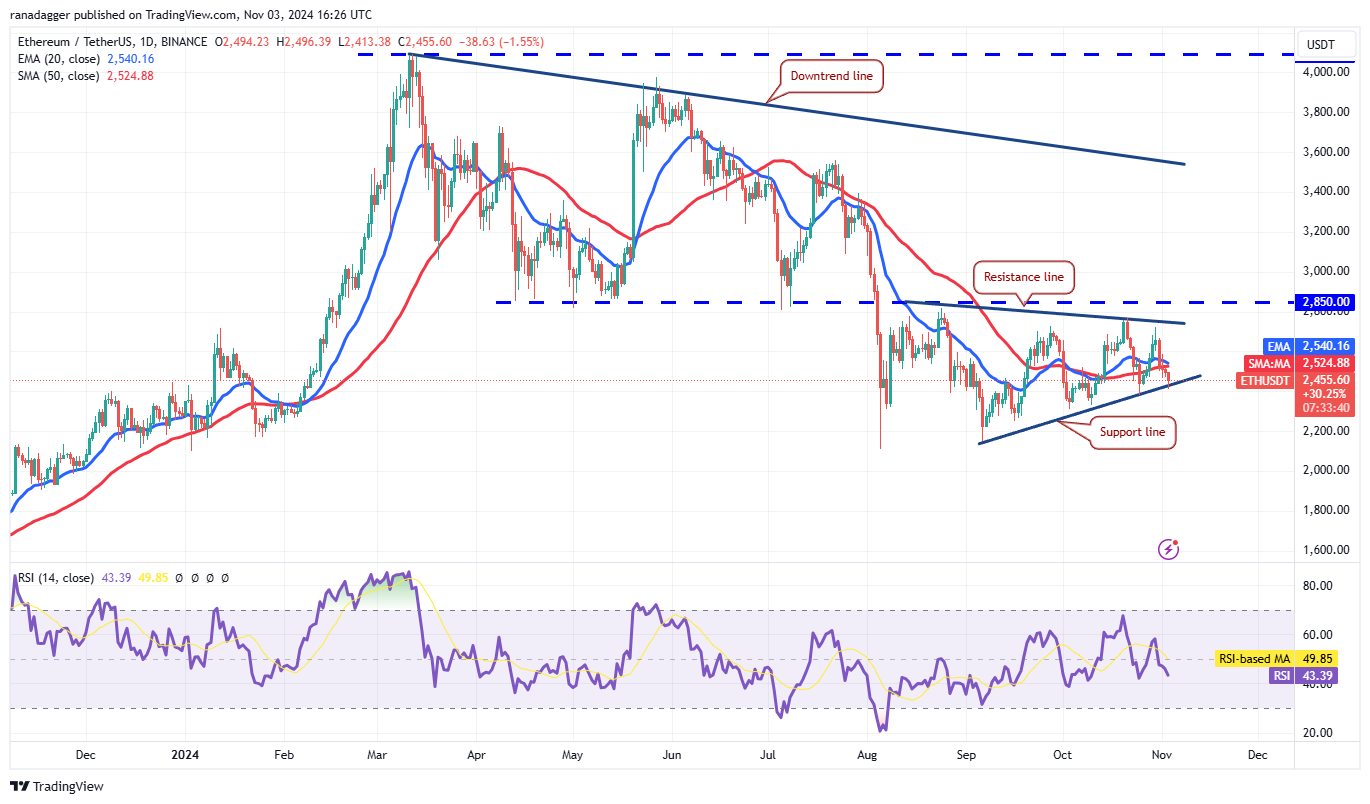
Ether (ETH) has dropped to the support line of the symmetrical triangle pattern, which is likely to attract buyers.
ETH/USDT daily chart. Source: TradingView
If the price turns up from the support line and rises above the 20-day EMA ($2,540), it will signal that the ETH/USDT pair may rise to the triangle’s resistance line. This is an important level to watch out for because a close above it could start a move toward $3,400. The $2,850 level may act as a resistance, but it is likely to be crossed.
The triangle will resolve in favor of the bears if the price breaks and closes below the support line. That could start a decline to $2,150 and eventually to $2,111.
ETH/USDT 4-hour chart. Source: TradingView
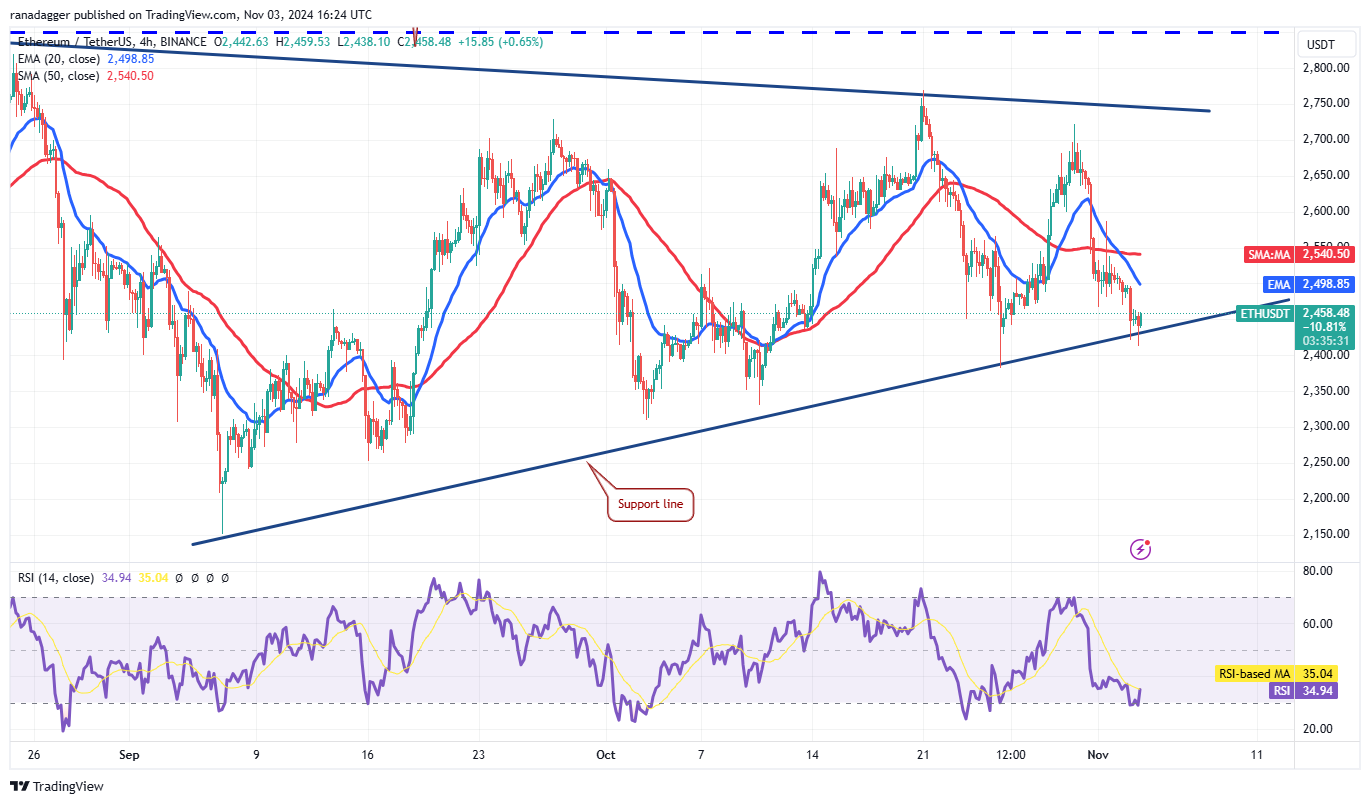
The bulls are attempting to defend the support line. The first sign of strength will be a break and close above the 50-SMA. If that happens, the pair could rise to $2,600 and thereafter to the resistance line.
On the contrary, if the bounce turns down from the moving averages, it will indicate that the bears are in control. That increases the possibility of a break below the support line. The pair may then dive to $2,310.
Dogecoin token price analysis
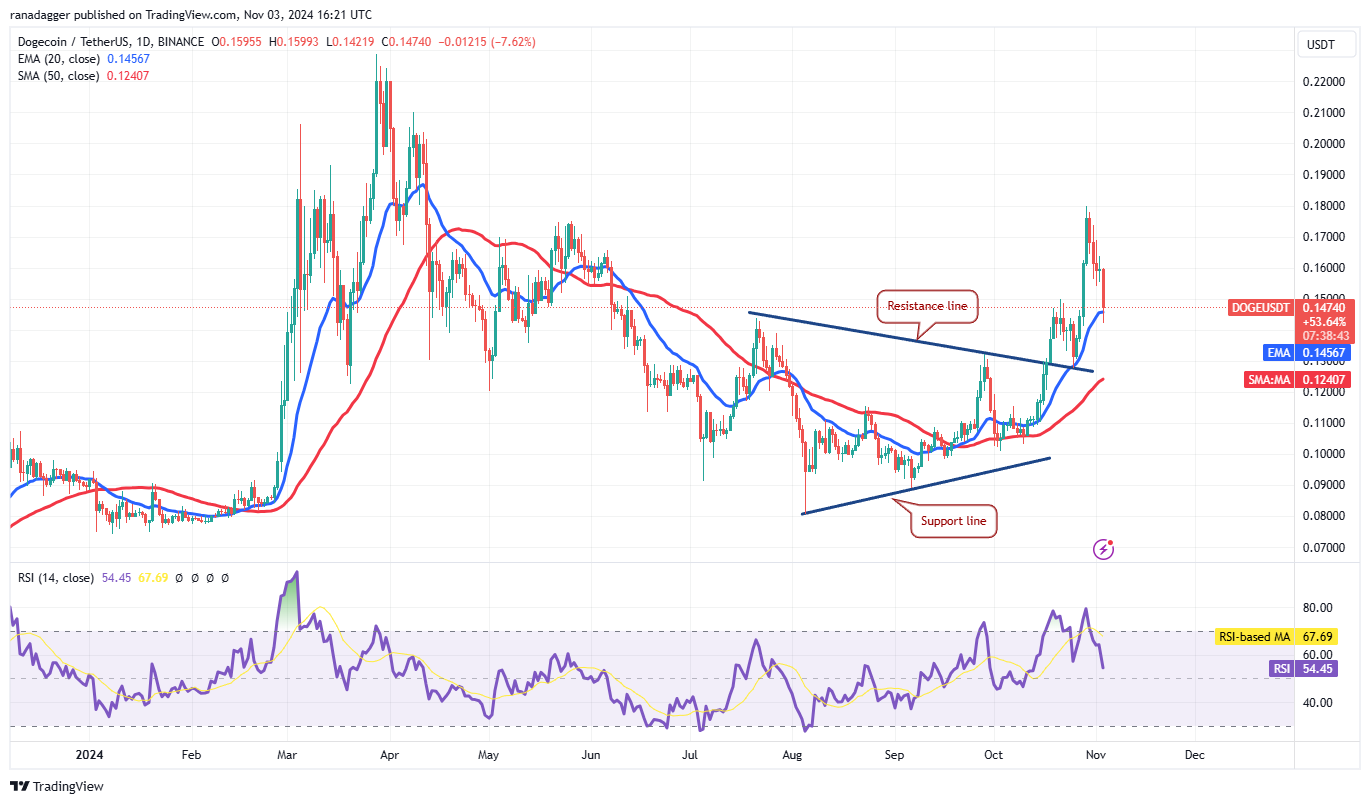
Dogecoin (DOGE) turned down from $0.18 on Oct. 30 and reached the 20-day EMA ($0.14) on Nov. 3.
DOGE/USDT daily chart. Source: TradingView
In an up move, traders usually buy the dip to the 20-day EMA. If the price rebounds off the 20-day EMA, the bulls will again attempt to drive the DOGE/USDT pair above the $0.18 resistance. If they do that, the pair may rally to $0.21.
Conversely, if the price slips and maintains below the 20-day EMA, it will suggest that the bulls have given up. The pair could then plummet to the 50-day SMA ($0.12), which may attract buyers.
DOGE/USDT 4-hour chart. Source: TradingView
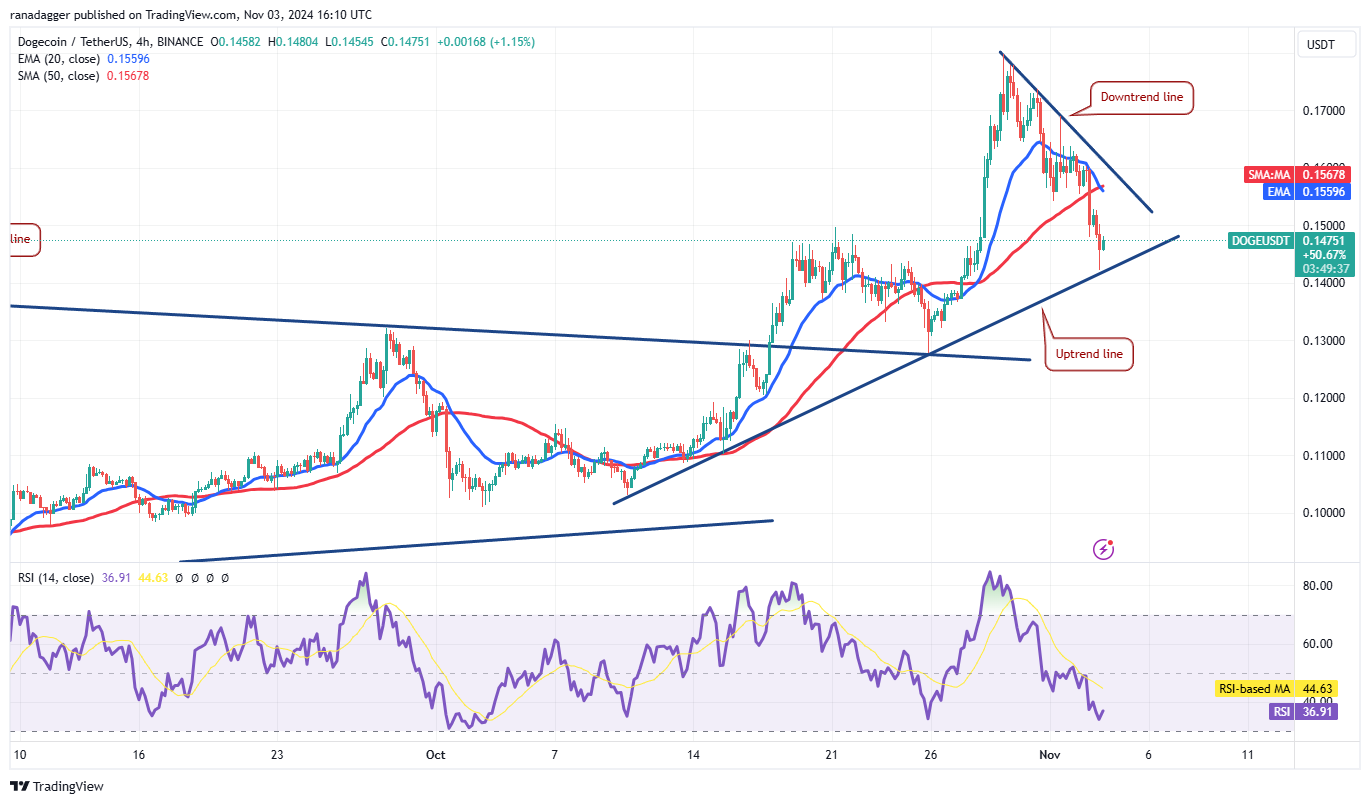
The pair is trying to find support at the uptrend line. If the price rebounds off the uptrend line and rises above the downtrend line, it will indicate that the pullback may be over. The pair may attempt a rally to $0.18. A break and close above $0.18 could start the next leg of the uptrend.
Contrary to this assumption, if the price breaks below the uptrend line, the pair may descend to $0.13 and then to $0.12.
Related: Here’s what happened in crypto today
Litecoin price analysis
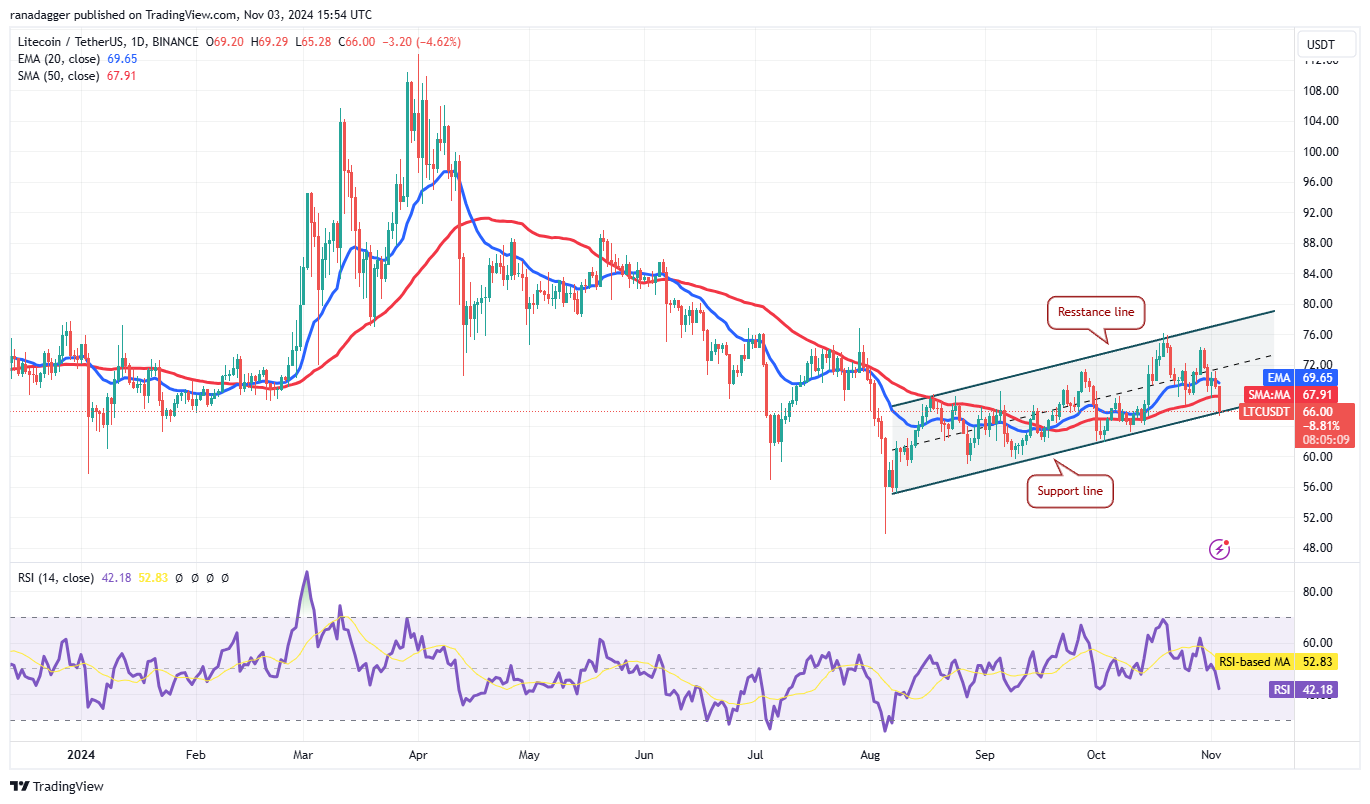
Litecoin (LTC) has been rising inside an ascending channel pattern, signaling a slight edge to the buyers.
LTC/USDT daily chart. Source: TradingView
Traders buy the dip to the support line and sell near the resistance line in an ascending channel. If the price turns up from the support line and rises above the 20-day EMA ($69.65), it will open the doors for a rally to the resistance line near $77. This level is likely to attract selling by the bears.
On the downside, if the price breaks and closes below the support line, it will signal a short-term trend change. The LTC/USDT pair may slide to $62 and subsequently to $59.
LTC/USDT 4-hour chart. Source: TradingView
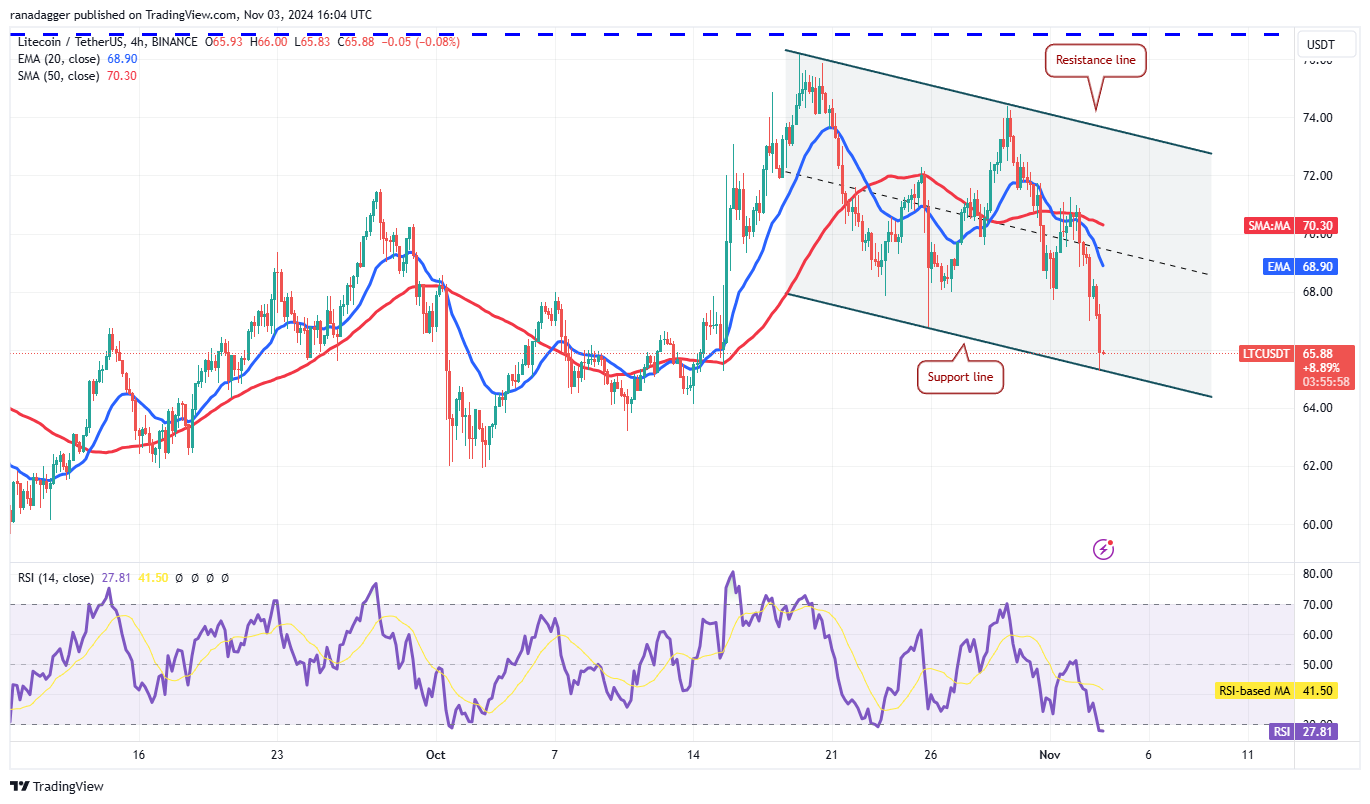
The 4-hour chart shows that the pair is falling inside a descending channel pattern. The price has reached the support line where the buyers are likely to step in. Any recovery attempt is expected to face selling at the 20-EMA. If the price turns down from the 20-EMA, it will indicate selling on rallies. A break and close below the support line could sink the pair to $62.
Buyers will have to drive and maintain the price above the 50-SMA to suggest that the selling pressure is reducing. The pair may then rise to the resistance line.
Monero token price analysis
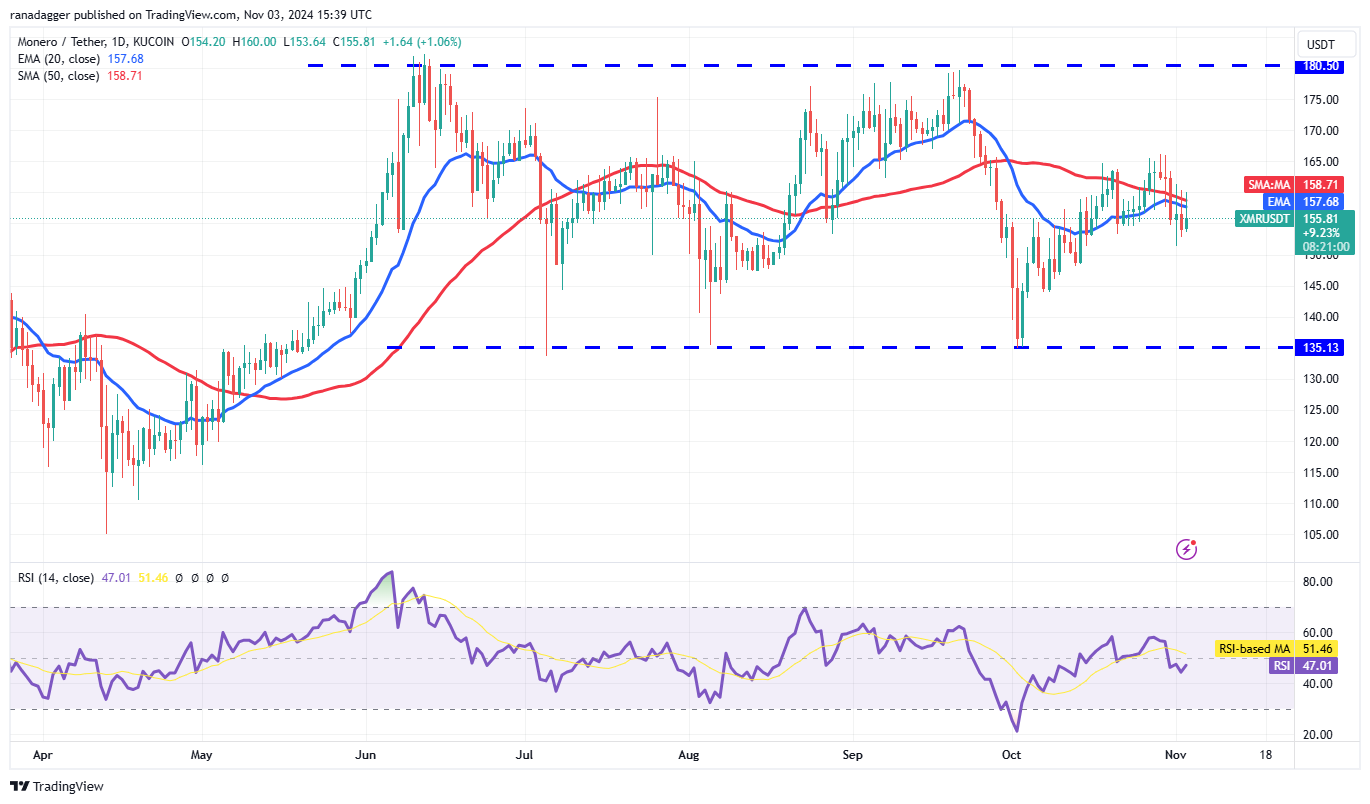
Monero (XMR) has been trading inside a large range between $135 and $180 for several days, indicating buying on dips and selling on rallies.
XMR/USDT daily chart. Source: TradingView
The price fell below the moving averages on Oct. 31, but the bulls have not ceded much ground to the bears. This suggests that selling dries up at lower levels. Buyers are trying to push the price back above the moving averages. If they succeed, the XMR/USDT pair could climb to $166. A break above this level could resume the journey toward $180.
This optimistic view will be negated in the near term if the price turns down and breaks below $150. That could pull the price to $144 and then to $135.
XMR/USDT 4-hour chart. Source: TradingView
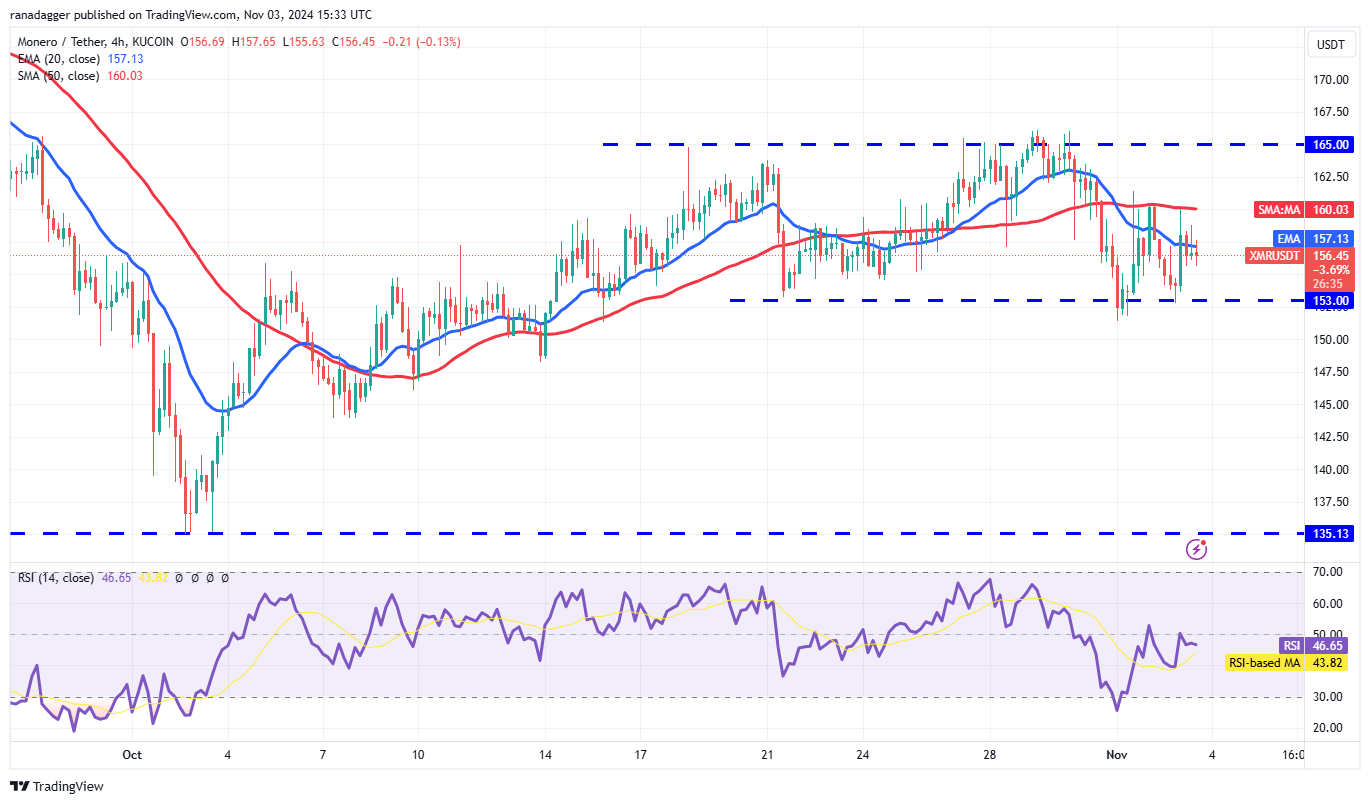
The pair is stuck inside a tight range between $153 and $165. If buyers push the price above the 50-SMA, the pair could again attempt to rise above $165. A close above this resistance could push the pair to $170 and later to $180.
Instead, if the price remains below the 20-EMA, the pair may drop to $153. A break and close below this support will signal advantage to the bears. That may start a downward move to $148.
This article does not contain investment advice or recommendations. Every investment and trading move involves risk, and readers should conduct their own research when making a decision.
SOL, XRP ETF filings are ‘call options’ on Trump win: Bloomberg analyst
The flurry of filings to list alternative cryptocurrency exchange-traded funds (ETFs) in the United States are “call options on a Trump victory” in the upcoming presidential elections, Eric Balchunas, an ETF analyst at Bloomberg Intelligence, said on Oct. 25. “If [former US president Donald] Trump […]
Litecoin
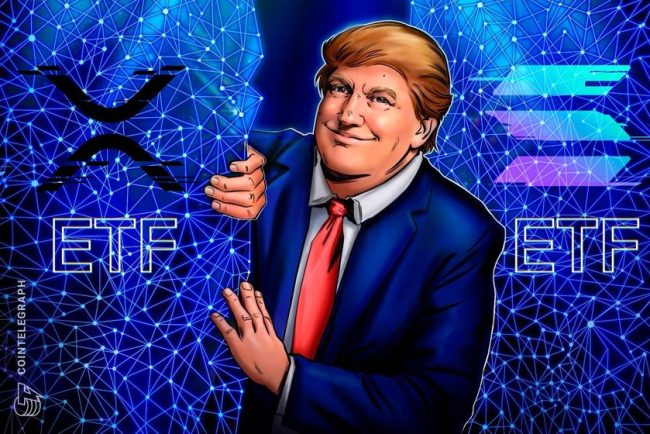
The flurry of filings to list alternative cryptocurrency exchange-traded funds (ETFs) in the United States are “call options on a Trump victory” in the upcoming presidential elections, Eric Balchunas, an ETF analyst at Bloomberg Intelligence, said on Oct. 25.
“If [former US president Donald] Trump wins […] he will definitely put in a more libertarian [Securities and Exchange Commission] chair,” Balchunas said during the Plan B Forum conference in Lugano, Switzerland.
“So if you see a Trump victory, watch this space, and if you see a [Kamala] Harris victory, just forget about it for a couple of years,” Balchunas said.
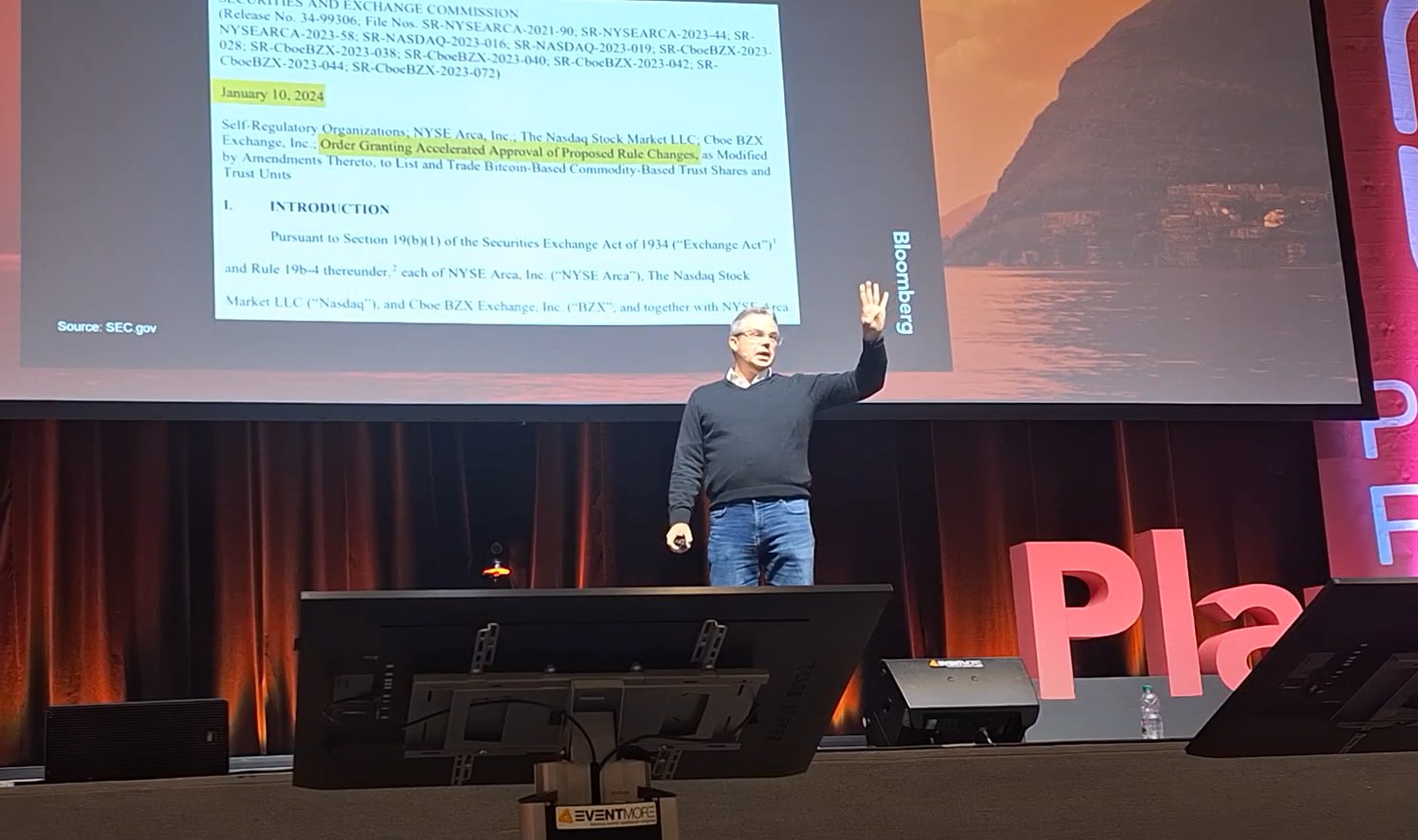
Eric Balchunas speaking at the Plan B Forum in Lugano. Source: Cointelegraph
Related: Harris beats Biden, lags Trump on crypto policy — Galaxy Research
Bitcoin (BTC) and Ether (ETH) ETFs were listed in the US in January and July, respectively, after years of resistance from the SEC.
Now, issuers are seeking to register ETFs for other tokens, including Solana (SOL) and XRP (XRP).
In July, securities exchange Cboe asked regulators for permission to list VanEck’s and 21Shares’ planned SOL ETFs.
In October, ETF issuers Canary Capital and Bitwise both filed for proposed XRP ETFs. Canary also filed to register a spot Litecoin (LTC) ETF on Oct. 15.
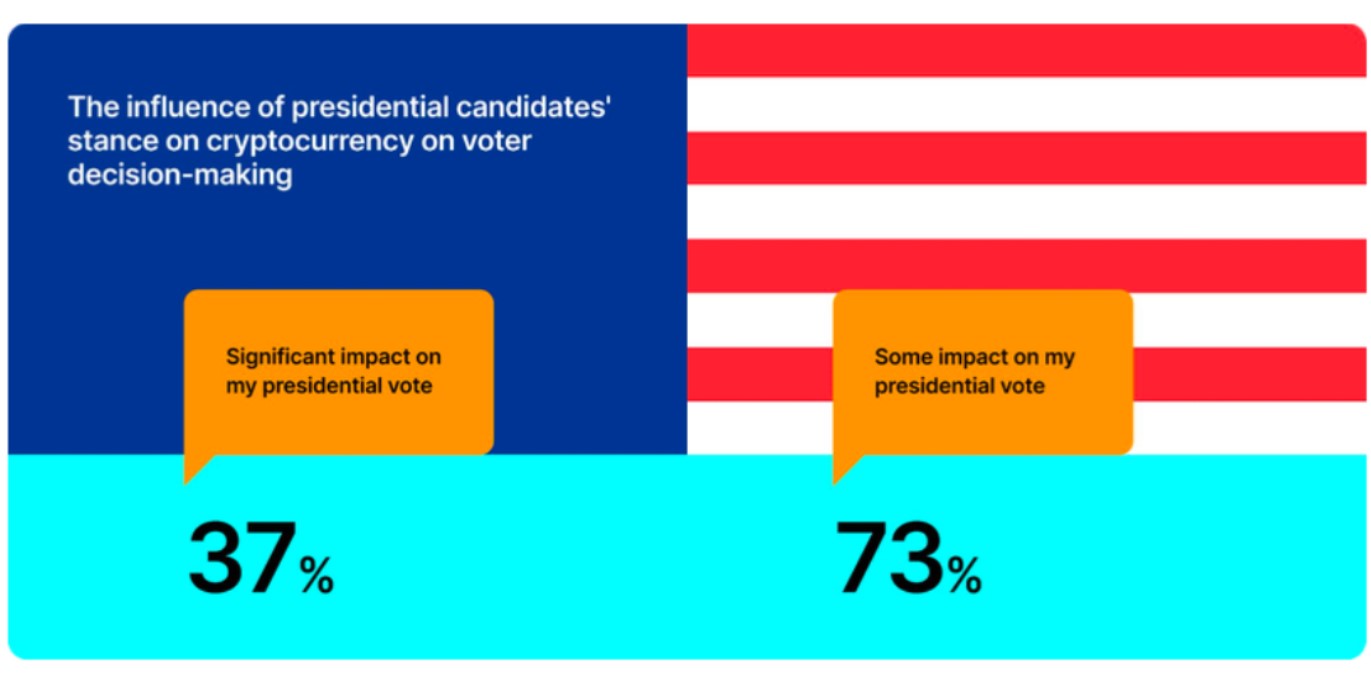
Three in four crypto owners said a candidate’s crypto policy will impact how they vote. Source: Gemini
The November election pits Republican nominee Donald Trump — who has said he wants to make America “the crypto capital of the world” — against Democrat Kamala Harris, who has been comparatively quiet on the industry.
Vice President Harris is friendlier toward cryptocurrency than her boss, President Joe Biden, but not as pro-industry as Trump, Galaxy Research said on Oct. 14.
Under Biden, the SEC has taken an aggressive regulatory stance toward crypto, bringing upward of 100 regulatory actions against industry companies.
In July, Trump promised to “fire” Gary Gensler, who currently heads the SEC, if he wins the election.
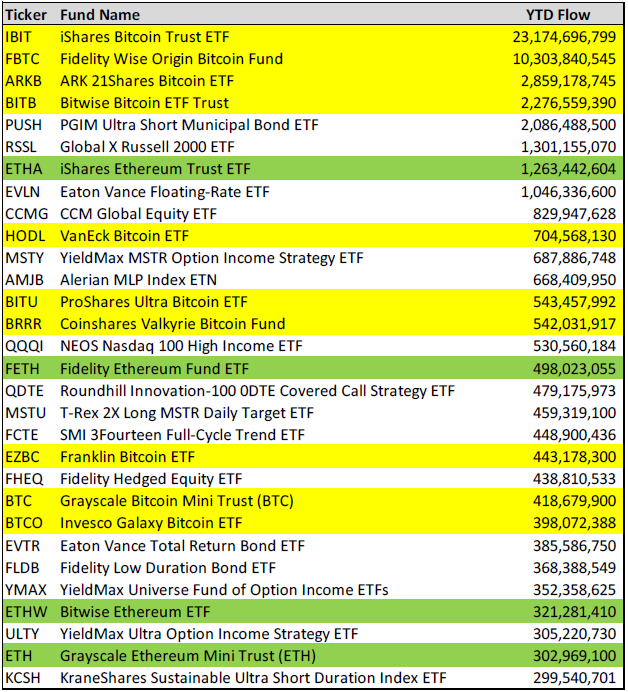
Top ETF launches in 2024. Source: The ETF Store
Cryptocurrency funds accounted for 13 of the 25 largest ETF launches in 2024 by inflows through August, according to a post on the X platform by Nate Geraci, president of The ETF Store, an investment adviser.
Bitcoin has dominated the ETF landscape this year, accounting for six of the top 10 most successful launches in 2024, Geraci said in an X post.
AI Eye: A bizarre cult is growing around AI-created memecoin ‘religions’

Canary Capital files S-1 for Litecoin ETF
Asset manager Canary Capital has filed registration documents for a spot Litecoin (LTC) exchange-traded fund (ETF) with United States regulators, according to Oct. 15 documents. The filing is the latest in a proliferation of proposed ETFs holding alternative cryptocurrencies ahead of the US presidential election […]
Litecoin
Asset manager Canary Capital has filed registration documents for a spot Litecoin (LTC) exchange-traded fund (ETF) with United States regulators, according to Oct. 15 documents.
The filing is the latest in a proliferation of proposed ETFs holding alternative cryptocurrencies ahead of the US presidential election in November.
Canary’s proposed ETF aims to hold spot LTC and closely track the performance of the CoinDesk Litecoin Price Index (LTX), according to the filings.
Litecoin is a decentralized peer-to-peer digital currency often pegged as a faster, lower-cost alternative to Bitcoin (BTC) for small payments.
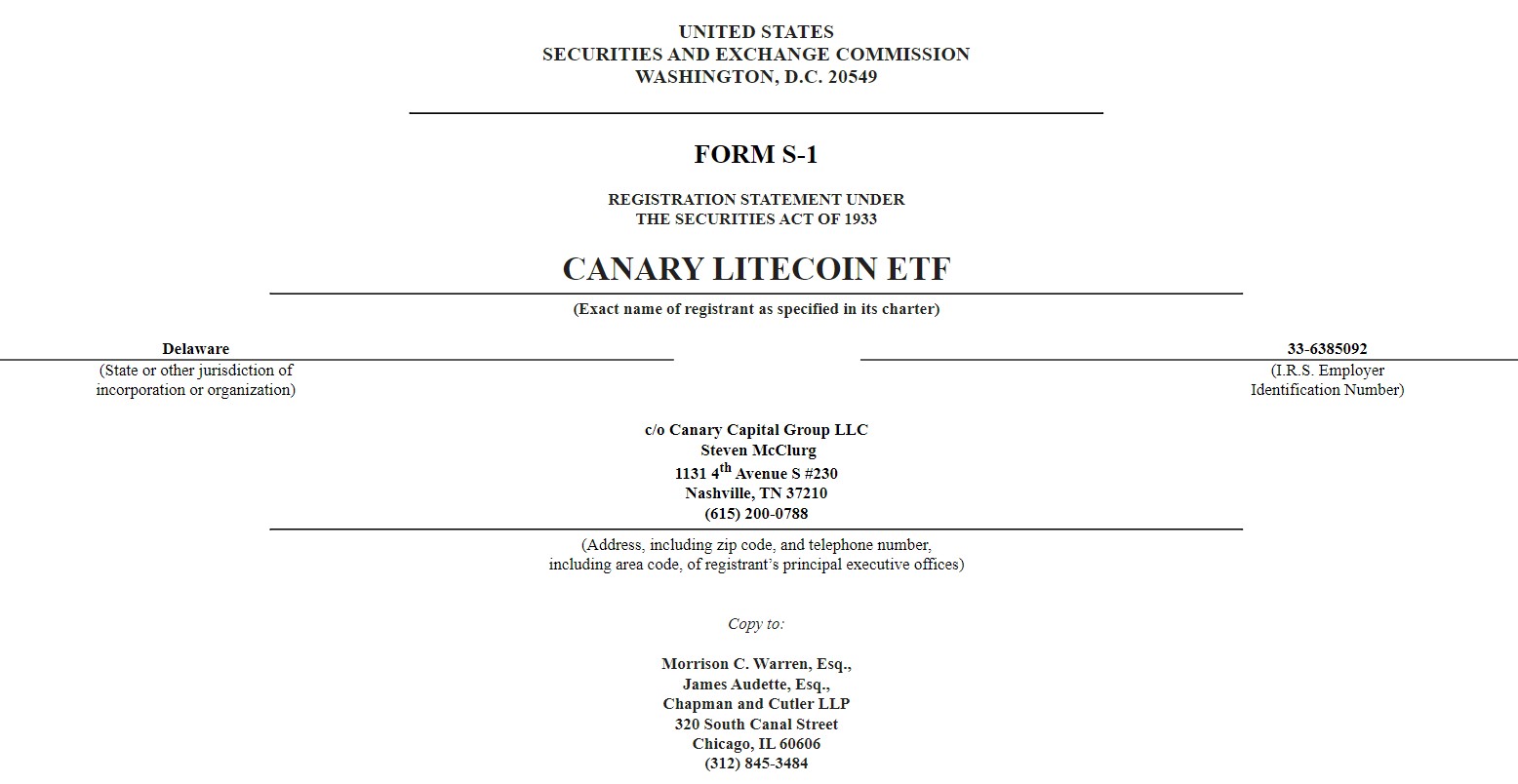
Source: United States Securities and Exchange Commission
Related: Canary Capital follows Bitwise in filing for spot XRP ETF
Canary files for XRP ETF as well
On Oct. 9, Canary filed an S-1 for a proposed spot XRP (XRP) ETF. The filing came only days after crypto fund issuer Bitwise sought to register a similar ETF with the Securities and Exchange Commission.
“In short-term, this is likely [a] call option on November election,” Nate Geraci, president of financial advisory The ETF Store, said in a post on the X platform.
“Politics clearly matter here in short-term, but I think this is all inevitable over time,” Geraci said.
The XRP token was issued by crypto payments protocol Ripple in 2012.
In 2020, XRP became the subject of a hotly contested lawsuit brought by the SEC, which alleged the token launch amounted to an unregistered securities offering.
Filing the S-1 registration form is the first step toward launching an LTC ETF, but Canary must still wait for the SEC to review the documents.
The SEC needs to authorize a rule change permitting at least one national securities exchange to list the proposed ETF.
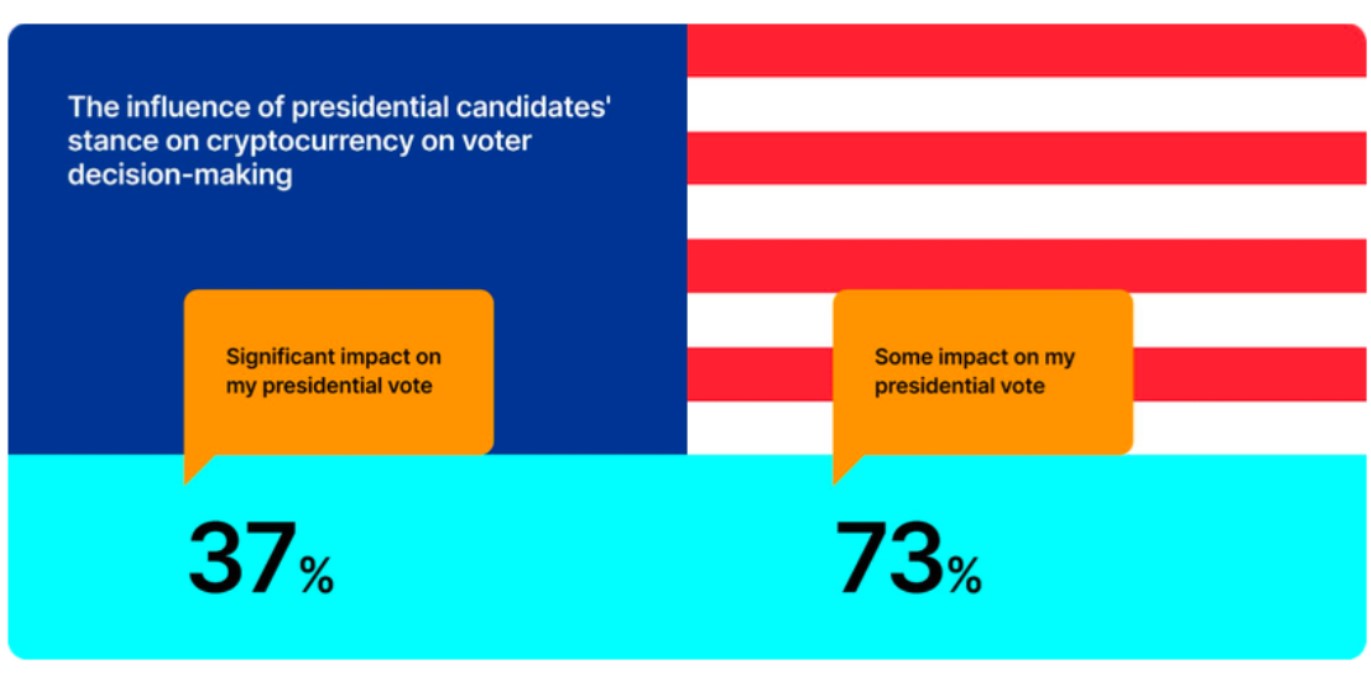
Three in four crypto owners said a candidate’s crypto policy will impact how they vote. Source: Gemini
United States Vice President and presidential candidate Kamala Harris is friendlier toward cryptocurrency than her boss, President Joe Biden, but not as pro-industry as rival and former President Donald Trump, Galaxy Research said on Oct. 14.
Under Biden, a Democrat, the SEC has taken an aggressive regulatory stance toward crypto, bringing upward of 100 regulatory actions against the industry.
In July, Trump promised to “fire” Gary Gensler, who currently heads the SEC.
Starting in September, Harris began to up her crypto game, listing blockchain technology among several emerging sectors where she wants the US to “remain dominant.”
Galaxy said “behind the scenes conversations […] suggest Harris is targeting a slightly more constructive approach” than Biden.
Magazine: Blockchain games aren’t really decentralized… but that’s about to change

Unspent transaction outputs distort BTC fungibility — Litecoin founder
Charlie Lee, the founder of Litecoin (LTC), made an appearance at this year’s Proof of Work Summit in Frankfurt, Germany, to contrast Litecoin’s privacy-enhancing features with the nearly inescapable transparency of the Bitcoin (BTC) network. Lee explained that the unspent transaction outputs (UTXOs), which underpin […]
Litecoin
Charlie Lee, the founder of Litecoin (LTC), made an appearance at this year’s Proof of Work Summit in Frankfurt, Germany, to contrast Litecoin’s privacy-enhancing features with the nearly inescapable transparency of the Bitcoin (BTC) network.
Lee explained that the unspent transaction outputs (UTXOs), which underpin the Bitcoin ledger, carry a history of how the transactions were spent — potentially ruining the fungibility of the digital asset. Lee told the audience:
“Because of the history attached to every Bitcoin that is spent, each Bitcoin is not equal to another Bitcoin — which is something that I think is important for money.”
A hypothetical example of this would be an onchain analytics company attaching labels to a Bitcoin address believed to be associated with illicit activities. The label may dissuade investors or traders from accepting BTC associated with the address — lowering the market price of those particular coins and sats.
Moreover, if the Bitcoin in question passes through centralized exchanges or other institutions with Know Your Customer controls, the assets could be frozen or seized at the behest of government authorities such as the United States Office of Foreign Assets Control (OFAC).
Related: Tornado Cash’s Roman Storm to stand trial after judge denies dismissal
The fight for privacy comes into sharper focus
Privacy on the Bitcoin network is notoriously difficult, but not impossible. On Sept. 20, a mysterious group of developers announced a fork of the privacy-preserving Samourai Wallet.
The Ashigaru Open Source Project uses CoinJoin and other mechanisms to mask Bitcoin transactions and builds on the work of the original Samourai team — though the new Ashigaru team has denied any connection to the previous developers.
Paul Brody, the global blockchain leader at EY, recently told Cointelegraph at Token2049 that a lack of privacy was hindering blockchain adoption. The executive explained that privacy matters, especially for large institutions that must keep certain information private.
Businesses “Are very happy to tell you how many tons of carbon they save,” Brody stated. “They just don’t want you to be able to see that on a week-to-week or a day-to-day basis.”
Magazine: Did Telegram’s Pavel Durov commit a crime? Crypto lawyers weigh in

MicroStrategy’s Bitcoin Holdings: Unraveling a High-Stakes Investment Strategy
The post MicroStrategy’s Bitcoin Holdings: Unraveling a High-Stakes Investment Strategy appeared first on Coinpedia Fintech News Recently, an announcement made by microstrategy microstrategy – Business Intelligence executive chairman Michael Saylor Michael Saylor Michael Saylor is a co-founder of Strategy (formerly MicroStrategy). Before founding Microstrategy, […]
Research report
The post MicroStrategy’s Bitcoin Holdings: Unraveling a High-Stakes Investment Strategy appeared first on Coinpedia Fintech News
Recently, an announcement made by microstrategy 


microstrategy
–
Business Intelligence

executive chairman Michael Saylor

Michael Saylor
Michael Saylor is a co-founder of Strategy (formerly MicroStrategy). Before founding Microstrategy, he was a rocket scientist and studied aeronautics and astronautics at MIT on an Air Force scholarship. He dubs Bitcoin 'Digital Gold'.
He made some early investment in Bitcoin as soon as he realized it was going to be the next big thing in shaping decentralized finance from traditional finance. His firm Strategy has made Bitcoin their primary treasure reserve.
Quick Facts
Full Name
Michael J. Saylor
Birth
04-02-1965 in Lincoln, Nebraska
Education
BSc from MIT
Marital Status
To be updated / Unmarried
Nationality
American
Net Worth
$8.4B (Feb. 20205, Refer for realtime)
As per Forbes, Saylor bought another 17,732 bitcoins for $175 million in October 2020. Forbes covered Michael Saylor on its front page and called him "The Bitcoin Alchemist" as the latter's Net Worth hit a whopping $7.6B in January 2025.
Michael Saylor – Career Timeline
1983–1987: Studied Aeronautics & Astronautics and Science, Technology & Society at Massachusetts Institute of Technology (MIT).
1989: Co-founded MicroStrategy (Strategy).
1998: MicroStrategy IPO – Took MicroStrategy public on the NASDAQ at $12 per share.
2000: Accounting Scandal & Crash – MicroStrategy's stock plunged 62% in a day due to an accounting misstatement, wiping out billions in valuation.
2004–2019: MicroStrategy Rebuilds – Worked towards cloud-based analytics and AI-driven business intelligence, regaining stability.
2020: Bitcoin Strategy & Investment – Led MicroStrategy’s $425M Bitcoin investment. He made it the first publicly traded company to adopt Bitcoin.
2021: Bitcoin Evangelism – Became one of Bitcoin’s most vocal advocates, encouraging corporations and institutions to adopt BTC and blockchain.
2022: Stepped Down as CEO – Transitioned to Executive Chairman to focus entirely on Bitcoin strategy.
With a major focus on blockchain network growth, Saylor is considered one of the architects in shaping the growth of decentralized finance.
Useful Links to connect with Michael Saylor
Platform
Link to connect
Twitter (X)
Michael Saylor
MicroStrategy (Strategy) Official Website
MicroStrategy
Michael Saylor’s YouTube Channel
https://www.youtube.com/c/MichaelSaylor
Hope.com (Bitcoin Education by Saylor)
Bitcoin is Hope
msaylor@microstrategy.com
EntrepreneurCrypto and Blockchain ExpertAuthor


about his $1 billion worth of Bitcoin personal investment created headlines. This move has reignited discussions around Bitcoin holdings, particularly those of public companies. MicroStrategy’s obsession with Bitcoin is well-known, having steadily increased its holdings since 2019.
In this article, we will explore all the major data sets compatible to explain the current Bitcoin Holding scenario in the world. This will primarily focus on the top public companies by bitcoin holdings. Naturally, MicroStrategy is going to be the central point of this, as it is a company that holds nearly 68.45% of the total bitcoins held by the public companies category. This is expected to be a memorable journey. Please join!
Bitcoin Holdings by Category: Who Holds What?
Let’s start by breaking down the Bitcoin holdings by different categories. Of the 21 million Bitcoins, the maximum supply cap, approximately 2,609,343 BTC is held by ETFs, countries, public companies, private companies, BTC mining companies, and DeFi platforms.
| Category | Bitcoin Holding | Bitcoin Holding (%) |
| ETFs | 1,057,839BTC | 5.037% |
| Countries | 539,182BTC | 2.568% |
| Public Companies | 330,862BTC | 1.576% |
| Private Companies | 525,474BTC | 2.502% |
| BTC Mining Companies | 53,848BTC | 0.256% |
| DeFis | 155,986BTC | 0.743% |
The category of ETFs holds over 1,057,839BTC, which is nearly 5.037% of the maximum supply cap of BTC. Thus, this category tops the list in terms of Bitcoin Holdings by Category. The category of countries follows with 2.58% (539,182BTC), and the category of private companies sits in the third position in the list above the category of private companies, with 2.502% (525,474BTC. The category of public companies only holds 330,862BTC, which is just 1.576%. DeFis and BTC Mining Companies show as low as 0.743% and 0.256% Bitcoin Holdings, respectively.
By now, we have learned that the category of public companies do hold a considerable amount of BTC, though not as much as the top three categories like ETFs, countries and private companies.
Top Public Companies by Bitcoin Holdings
Here is the interesting part. Nearly 68.45% of the total bitcoins held by the category of public companies is held by MicroStrategy, which is at least 226,500BTC out of 330,862BTC. This is why we need to analyse MicoStrategy separately.
| Company | Bitcoin Holding | Bitcoin Holding (%) |
| MicroStrategy | 226,500BTC | 1.079% |
| Marathon Digital Holdings Inc | 20,818BTC | 0.099% |
| Tesla, Inc | 9,720BTC | 0.046% |
| Hut 8 Corp | 9,109BTC | 0.043% |
| Riot Platforms, Inc. | 9,084BTC | 0.043% |
| Coinbase Global, Inc. | 9,000BTC | 0.043% |
| Galaxy Digital Holdings | 8,100BTC | 0.039% |
| Block, Inc. | 8,027BTC | 0.038% |
| CleanSpark Inc | 7,082BTC | 0.034% |
| Bitcoin Group | 3,830BTC | 0.018% |
When the category of public companies holds around 1.576% of the total BTC supply cap, Microstrategy alone holds at least 1.079%. The second top in the list of the top public companies by bitcoin holdings, Marathon Digital Holdings Inc. only has 20,818BTC (0.099%). Tesla Inc, Hut 8 Corp and Riot Platforms Inc are the other top companies on the list. Tesla Inc and Hust 8 Corp show 9,720BTC and 9,109BTC respectively, and Riot Platforms Inc display 9,084BTC. Coinbase Global Inc and Galaxy Digital Holdings are also on the list with 0.043% and 0.039% Bitcoin Holdings percentages respectively. The BTC Holdings percentages of other major players like Block Inc., CleanSpark Inc. and Bitcoin Group range between 0.038% and 0.018%.
| Company | % of 330,862BTC (held by The Public Companies category) |
| MicroStrategy | 68.45% |
| Marathon Digital Holdings Inc | 6.29% |
| Tesla, Inc | 2.93% |
| Hut 8 Corp | 2.75% |
| Riot Platforms, Inc. | 2.74% |
| Coinbase Global, Inc. | 2.72% |
| Galaxy Digital Holdings | 2.44% |
| Block, Inc. | 2.42% |
| CleanSpark Inc | 2.14% |
| Bitcoin Group | 1.15% |
| Others | 5.97% |
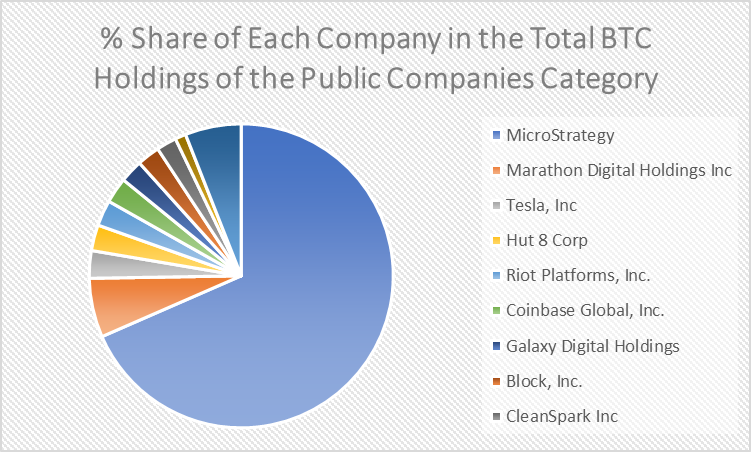
As said earlier, MicroStrategy clearly dominates the category of public companies with 68.45%, that is this public company holds nearly 226,500BTC out of 330,862BTC (which is what the entire category holds). Marathon Digital Holdings Inc, though is the second topmost in the list, only has a 6.29% share in the category of total BTC holdings. Even poorer is the share of Tesla INC and the others. None of the others in the top ten list cross the mark of 3%. Tesla Inc. and Hunt 8 Corp show 2.93% and 2.75% respectively.
The Rise of MicroStrategy’s Bitcoin Holdings
Are you wondering how MicroStrategy has become such a big player in the public companies category in terms of bitcoin holdings? Let’s understand the path through which it has reached such a staggering peak of 226,500. On March 5th, 2021, the Bitcoin holdings of MicroStrategy were just 91,064BTC. In June the same year, it crossed the mark of 100,000BTC. On June 21st, 2021, it was nearly 105,085 BC. By the end of that year, it reached 124,051 BC. In 2022, the growth was slow. On December 24, 2022, it was just around 132,500 BTC.
The year 2023 was different and positive in every way for MicroStrategy’s Bitcoin Holdings. The number of BTC holdings grew from nearly 138,955BTC (on March 23, 2023) to 189,150BTC (on December 27, 2023). In 2024, it crossed another milestone, when it surpassed the mark of 200,000BTC in March. On March 11, 2024, it touched 205,000BTC. From that point, the growth was steady. On June 20, 2024, it recorded 226,331BTC. Now it stands at a peak of 226,500BTC. At present, we see nothing to assume that this range is likely to decrease any time in the near future. There are many who expect the crossing of the 300,000BTC mark by MicoStrategy. Is it possible?
The question can be answered better if we can go through MicroStrategy’s BTC purchase history. Did MicoStrategy make any significant BTC purchases in the recent past?
MicroStrategy Bitcoin Purchase History
Let’s do an analysis of MicroStrategy’s purchase history, and understand what it conveys about the company’s holding strategy.
| Date | BTC Purchased |
| 1st Aug, 2024 | 169 |
| 20th June, 2024 | 11,931 |
| 1st April, 2024 | 164 |
| 19th March, 2024 | 9,245 |
| 11th March, 2024 | 12,000 |
| 26th Feb, 2024 | 3,000 |
| 6th Feb, 2024 | 850 |
| 27th Dec, 2023 | 14,620 |
| 30th Nov, 2023 | 16,130 |
| 1st Nov, 2023 | 155 |
| 24th Sep, 2023 | 5,445 |
| 1st July – 27th July, 2023 | 467 |
| 29th April – 27th June, 2023 | 12,333 |
| 5th April, 2023 | 1,045 |
| 27th March, 2023 | 6,455 |
| 24th Dec, 2022 | 810 |
| 22nd Dec, 2022 | -704 |
| 1st Nov – 21st Dec, 2022 | 2,395 |
| 20th Sep, 2022 | 301 |
| 28th June, 2022 | 480 |
| 15th Feb – 5th April, 2022 | 4,167 |
| 1sth Jan – 31st Jan, 2022 | 660 |
| 30th Dec, 2021 | 1,914 |
| 29th Nov – 8th Dex, 2021 | 1,434 |
| 28th Nov, 2021 | 7,002 |
| 13th Sep, 2021 | 8,957 |
| 21st June, 2021 | 13,005 |
| 18th May, 2021 | 229 |
| 13th May, 2021 | 271 |
| 5th April, 2021 | 253 |
| 12th March, 2021 | 262 |
| 5th March, 2021 | 205 |
| 1sth March, 2021 | 328 |
| 24th Feb, 2021 | 19,452 |
| 2nd Feb, 2021 | 295 |
| 22nd Jan, 2021 | 314 |
| 21st Dec, 2020 | 29,646 |
| 4th Dec, 2020 | 2,574 |
| 14th Sep, 2020 | 16,796 |
| 11th Aug, 2020 | 21,454 |
It was on 11th August 2020 that MicroStrategy made its first Bitcoin purchase. On that day, it made a heavy purchase of 21,454. In that year itself, it made at least two more heavy purchases: the 16,796BTC purchase on 14th Sep and the 29,646BTC purchase on 21st Dec, 2020. What it indicated was that from the beginning stage itself, the public company had a strategy to consistently boost its BTC holdings.
| Year | BTC Purchased |
| 2024 | 37359BTC |
| 2023 | 56650BTC |
| 2022 | 8813BTC |
| 2021 | 53921BTC |
| 2020 | 70470BTC |
This year, 2024, so far, the company has purchased around 37,359 BTC. The highest purchase was made on 11th March. Days before, the BTC price touched an all-time peak of $73,000. Another purchase of similar intensity was made a couple of days after the peak day. On 19th March, nearly 9,245 BTC was purchased. Recently, on 20th June, around 11,931 BTC were purchased.
It was in the year 2020 that the most number of BTC purchases occurred. In that year, over 70,470 BTC purchases took place. The year 2022 was not a good year in terms of MicoStrategy’s BTC Purchases. In that year, the company made no purchase of more than 8,813 BTC. It was the only time a negative purchase happened. On 22nd December 2022, a negative purchase of -704 was reported.
The year of 2021 and 2023 were identical. In both these years, not less than 50,000 BTC were purchased. Interestingly, the nature of purchase in each year was different. In 2021, it was a mix of small and large purchases. The smallest of those purchases was the purchase of 205 BTC, reported on 5th March 2021, and the largest was the purchase of 19,452 BTC, reported on 24th Feb, 2021. In 2023, at least three big purchases were reported: the 14,620 BTC purchase on 27th Dec, the 16,130 BTC purchase on 30th Nov, and the 12,333 BTC purchase between 29th April and 27th June.
Top Private Companies by Bitcoin Holdings
Before going to the conclusion part, we can go through the nature of the BTC holdings of the private companies category and understand how it is different from the public companies category.
| Companies | Bitcoin Holding | Bitcoin Holding (%) |
| Mt. Gox | 200,000BTC | 0.952% |
| Block.one | 140,000BTC | 0.667% |
| Tether Holdings LTD | 75,354BTC | 0.359% |
| Xapo Bank | 38,931BTC | 0.185% |
| BitMEX | 36,794BTC | 0.175% |
| The Tezos Foundation | 17,500BTC | 0.083% |
| Stone Ridge Holdings Group | 10,000BTC | 0.048% |
| Massachusetts Mutual | 3,500BTC | 0.017% |
| Lisk Foundation | 1,898BTC | 0.009% |
| Seetee AS | 1,170BTC | 0.006% |
Here, we can clearly see that unlike the public companies category, there is no domination of the top player. The difference between the number of Bitcoins held by the topmost in the list of the top private companies Bitcoin Holding and the second topmost is just 60,000 BTC. Mt.Gox, the topmost company in the list, holds around 200,000 BTC, and Block.one , the runner-up in the list, has 140,000 BTC. Tether Holdings LTD, Xapo Bank and BitMEX are the other important companies on the list. Tether Holdings LTD has around 75,354 BTC, and Xapo Bank and BitMEX have 38,931 BTC and 36,794 BTC, respectively.
Endnote
MicroStrategy’s aggressive Bitcoin acquisition strategy has positioned it as a key player in the public companies category. Despite a slight slowdown in 2022, the company regained momentum in 2023, with several high-volume purchases. As we move further into 2024, it’s worth watching whether MicroStrategy will surpass its 2020 record for Bitcoin acquisitions and what impact this will have on the broader market.
Also Read: Case Studies of Countries with Significant Crypto Adoption