How a ‘Wrong Number’ message turned into a $3.4M crypto scam
A simple “wrong number” message led to a $3.4 million crypto scam, exposing social engineering tactics, fake investments and fund laundering methods.
Analysis
Why Ethereum developers want ‘one-click staking’ for institutions
Ethereum developers are pushing one-click staking to simplify validator operations, attract institutions and strengthen decentralization across the network.
Analysis
Bitcoin adoption metrics say one thing, price action says another
Bitcoin adoption is surging across institutions, banks and corporations, but the price tells a different story. What explains the divergence?
Analysis
Litecoin feuds with influencer, trades barbs over price… and hairline
After Benjamin Cowen mocked Litecoin’s price action, Litecoin jabbed at his hairline, joking it “reminds me of the great recession.”
Litecoin
After Benjamin Cowen mocked Litecoin’s price action, Litecoin jabbed at his hairline, joking it “reminds me of the great recession.”

Cryptojacker gets 1 year prison after admitting to $3.5M fraud
Charles O. Parks III, who admitted to misusing $3.5 million worth of resources from two cloud computing providers to mine crypto, was sentenced to one year and one day in prison.
Litecoin
Charles O. Parks III, who admitted to misusing $3.5 million worth of resources from two cloud computing providers to mine crypto, was sentenced to one year and one day in prison.
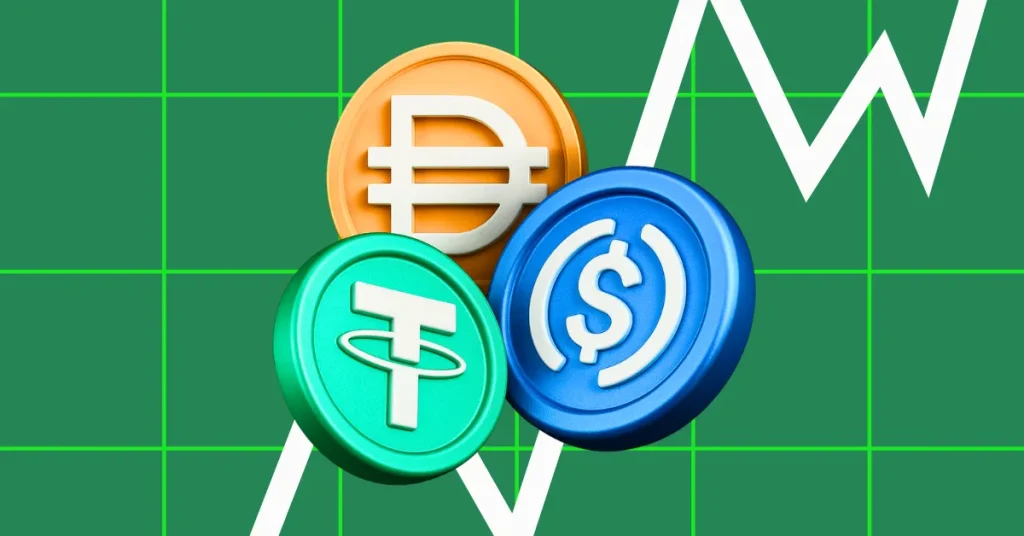
Exclusive Insights: Stablecoin Adoption Reshapes Local Economies
The post Exclusive Insights: Stablecoin Adoption Reshapes Local Economies appeared first on Coinpedia Fintech News Crypto’s original promise was borderless finance, and stablecoins have delivered the same. In 2025, USDT, USDC, and their competitors have grown from simple trading tools into a new digital payment […]
Research report
The post Exclusive Insights: Stablecoin Adoption Reshapes Local Economies appeared first on Coinpedia Fintech News
Crypto’s original promise was borderless finance, and stablecoins have delivered the same. In 2025, USDT, USDC, and their competitors have grown from simple trading tools into a new digital payment modes. This is right from businesses, gig-workers, and ordinary people seeking a haven from inflation. In this report, I talk about how stablecoins are shaping, rather will shape the global economies.
Stablecoins: By the Numbers
| Metric | Value | Notes |
| Annual stablecoin transaction volume | $27.6T | Exceeds Visa/Mastercard Source: fxcintel |
| Share of stablecoin flows cross-border | 64% | Remittances, paymentsSource: fxcintel |
| Argentina stablecoin circulation | $11B | 3%+ of M1 money supply |
| Nigeria stablecoin flows | $24B/Year | Rising despite crackdowns Source: linkedin |
| Turkey stablecoin transfer volume | $63B/Year | 3.7% of GDP Source: linkedin |
How Local Stablecoin Economies Take Root
What is a “Dollarized” Crypto Economy?
A local stablecoin economy forms when people use digital dollars (like USDT, USDC) for saving, spending, and doing business. Which is often outside any traditional bank. In high-inflation nations, stablecoins act like underground “dollarization” but operate 100% via apps, P2P trades, and social media.
How it Works:
- Locals swap out local currency for USDT/USDC on exchanges or informally.
- Stablecoins are used for rent, groceries, business payments, freelance wages, and cross-border trade.
- No bank required; deals happen over messaging apps, in person, or using crypto fintech apps.
Case Studies: Argentina, Nigeria, Turkey
| Country | Annual Inflation | Stablecoin Penetration | Local Highlights |
| Argentina | 140%+ | $11B annual, 3% M1 | Apps like Lemon Cash. Salaries & rent paid in USDT |
| Nigeria | 28% | $24B/year | Remittances & crypto P2P markets on WhatsApp |
| Turkey | 54% | $63B/year, 3.7% of GDP | USDT used as hedge, merchant settlements, B2B payments |
Argentina: The “Cepo” and Stablecoin Survival
Currency controls (cepo) keep dollars scarce. Argentines pay a 30% premium, also called crypto blue rate to buy USDT via apps or WhatsApp groups. Trusted crypto fintechs like Lemon Cash, Buenbit, and Binance have become household names.
“I get paid in USDT by international clients, keep some on Binance, and top up my prepaid crypto card to buy groceries. The banks are irrelevant.”
— Martina Diaz, Buenos Aires freelancer
Nigeria: Remittance Innovation and P2P Evolution
After crackdowns on bank-facilitated crypto transfers, Nigerians turned to P2P. USDT transactions on WhatsApp, Telegram, and street-level cash swaps are the norm. Workers get paid globally in stablecoins, with P2P volumes reaching record highs even after regulatory pressure.
“If I wait for a bank transfer, it takes days and costs too much. With USDT, I get money instantly and sell it to whoever offers the best naira rate.”
— Chinedu E., Lagos e-commerce merchant
Turkey: Stablecoin as a Hedge and Store of Value
Surging inflation and lira volatility make stablecoins a Turkish favorite, not just for savings, but business settlements. Last year, Turkish stablecoin usage equaled 3.7% of GDP, with demand remaining even with easier access to regular USD.
“I price my contracts in USDT because clients and suppliers all trust it, and I dodge daily swings in the lira.”
— Yilmaz K., Istanbul web developer
How Stablecoins Power Cross-Border Payments
“Digital Sandwich” Payment Model
- On-ramp: Convert local cash to USDT/USDC at exchangers, ATMs, or via apps.
- Transfer: Move stablecoins instantly and cheaply worldwide—no middlemen.
- Off-ramp: Spend directly (with crypto cards/vendors), or cash out back to local fiat via P2P.
| Step | Tools/Methods | Speed | Typical Cost |
| On-ramp | Fintech apps, P2P cash | Minutes | 0.5-3% fee |
| Blockchain Tx | USDT/USDC (TRON, Solana) | Seconds | Near zero/transact |
| Off-ramp | ATMs, informal swap, apps | Minutes-Hours | 0.5–3% fee |
“Stablecoins slash payment times from days to seconds. Businesses see instant settlement and clear FX conversion. It is a revolution compared to legacy rails.”
— McKinsey & Co., July 2025
Regulation: The Fight for Control
Recent Headlines
- Argentina (2025): Tax authority steps up crypto transaction reporting rules, requiring local exchanges to disclose stablecoin user balances over $2,000. Rumors of a digital peso pilot, but public demand for USDT/USDC remains rampant.
- Nigeria (Q2 2025): Central Bank reverses total crypto ban, launching a “Crypto Regulatory Sandbox.” New rules target P2P stablecoin dealers, but volumes surge anyway. Licensed crypto exchanges now must report suspicious activities monthly.
- Turkey (2025): Parliament passes stablecoin oversight statute. New national exchanges must screen transactions, verify sources of funds, and adhere to “Supervisory Sandbox” before launch. However, retail traders still flock to offshore apps.
- Global: The U.S. and Europe push for global stablecoin reserves, KYC, and “travel rule” compliance—impacting how even local economies must track stablecoin flows.
Regulatory Timeline (2023–2025)
| Year | Event | Impact |
| 2023 | Argentina: Crypto tax bill passed | “Shadow dollarization” doesn’t slow; usage surges |
| 2024 | Nigeria: blanket crypto ban | P2P markets explode; informal remittances double |
| 2025 | Turkey: Stablecoin law, “sandbox” for fintech | Regulation struggles with offshore/underground activity |
| 2025 | US/EU: new KYC/AML rules for stablecoin issuers | International transactions scrutinized; local adoption undeterred |
The Social Reality: Inclusion, Opportunity, and Risk
Inclusion & Economic Autonomy
Stablecoins offer the unbanked fast, borderless access to global money. Freelancers, international workers, and even vendors break local currency monopolies, saving and transacting in “digital dollars”—protecting wealth from hyperinflation.
Risks on the Ground
- Legal uncertainty: Everyday users can face sudden rule changes, asset freezes, or new taxes.
- Sovereignty threat: Governments worry about losing control over money supply and capital flows.
- Scams and fraud: The “informal” nature of many economies puts users at risk of bad actors and platform hacks.
What’s Next?
Stablecoins have moved from trading tools to everyday digital cash, and governments are racing to catch up. Over the next five years, three outcomes are likely:
- Optimistic — Regulated Integration:
Authorities license issuers instead of banning them. Banks and fintech apps embed USDT and USDC into payment systems, cutting cross-border fees below 1% and boosting financial inclusion. - Pessimistic — Fragmentation and Crackdowns:
Tighter rules and enforcement push usage underground. Some stablecoins face de-pegging or reserve scrutiny, driving users to informal P2P channels with higher costs and fraud risk. - Hybrid — Tolerated but Controlled (Most Likely):
Retail use is allowed under strict KYC, while high-value transfers are heavily monitored. CBDCs roll out, but adoption lags wherever stablecoins are trusted.
Leading Stablecoins in Local Economies (2025)
| Stablecoin | Global Market Cap | Adoption Hotspots | Key Use Cases |
| USDT (Tether) | $107B | LatAm, Asia, EMEA | P2P, commerce, remittance |
| USDC (Circle) | $45B | US, Nigeria, Turkey | Freelance, trade, business |
| PYUSD, EURC | $4.5B (PYUSD) | US/Europe | Remittance, EU corridor |
Final Take
The rise of local, dollarized stablecoin economies is reshaping how the world moves money creating opportunity on the grassroots but also challenging the very foundation of national currencies. As USDT/USDC networks become fintech infrastructure, expect a continued tug-of-war between user demand, institutional adoption, and the imperative of government oversight.
My view: “Stablecoins aren’t a fad. In places where money fails, they have already become everyday digital cash, regulated or not. The question is not if, but how, governments adapt.”
Never Miss a Beat in the Crypto World!
Stay ahead with breaking news, expert analysis, and real-time updates on the latest trends in Bitcoin, altcoins, DeFi, NFTs, and more.
FAQs
What are stablecoins and why are they used for cross-border payments?
They are digital dollars offering fast, low-cost global transfers without banks.
How does the “stablecoin sandwich” payment model work?
Funds convert from local fiat to a stablecoin, move on-chain internationally, then convert to the recipient’s fiat—reducing intermediaries and settlement time. This structure underpins many stablecoin payment products and is widely referenced in industry primers.
Are stablecoin transfers actually faster and cheaper than traditional bank wires?
Yes, stablecoins settle in seconds at near-zero cost vs. days and high fees.
How big is the stablecoin opportunity in cross-border payments?
The $27T annual volume already beats Visa/Mastercard, with growth accelerating.
How do businesses integrate stablecoins into their payment stack?
They use crypto fintech apps, wallets, and APIs to accept, pay, and settle in USDT/USDC.

Top Performing Crypto Stocks – Exclusive Report
The post Top Performing Crypto Stocks – Exclusive Report appeared first on Coinpedia Fintech News The crypto market is not just about Bitcoin or Ethereum anymore; it’s about the companies building, holding, and integrating these assets into the economy. A new White House order telling […]
Research report
The post Top Performing Crypto Stocks – Exclusive Report appeared first on Coinpedia Fintech News
The crypto market is not just about Bitcoin or Ethereum anymore; it’s about the companies building, holding, and integrating these assets into the economy. A new White House order telling regulators to make it easier for 401(k) plans to include cryptocurrencies or privately held companies has pushed crypto company stocks higher. In 2025, some of the biggest names in fintech, payments, and trading have boosted crypto in a big way.
This year, we have seen firms stacking Bitcoin on their balance sheets to companies launching their stablecoins. Here’s a detailed look at top crypto company stocks, their latest moves, and how they’re performing in this market.
Table of contents
1. MercadoLibre (MELI)
Market Cap: $119B
- YTD Stock Return: +12.95%
MercadoLibre is often called the “Amazon of the South”, but it’s more than just an e-commerce giant. Through its Mercado Pago payment platform, the company lets millions of users buy and sell Bitcoin and Ethereum directly.
In 2025, MercadoLibre went a step further by launching Meli Dollar, a USD-backed stablecoin for its vast ecosystem. This makes it one of the first major Latin American companies to integrate a digital dollar alternative into its payments network.
Latest Crypto Moves:
- May 2025: Bought 400 BTC for $40.9M at an average price of $102,250.
- Earlier in Q1 2025: Bought 157.7 BTC for $16M.
- Now holds a total of 570.4 BTC.
MercadoLibre’s acquisition of Bitcoin, stablecoin innovation, and fintech integration puts it in a strong position to lead crypto adoption in Latin America.
2. Strategy (MSTR)
Market Cap: $112B
- YTD Stock Return: +112.88%
Formerly MicroStrategy, Strategy has transformed into what CEO Michael Saylor calls a “Bitcoin Treasury Company.” No other corporation comes close to their BTC stash as it owns roughly 3% of all Bitcoin in existence.
Q2 2025 Highlights:
- $14B operating income, $10B net income.
- 25% BTC yield year-to-date, aiming for 30% by year-end.
- $14B in Bitcoin gains so far in 2025.
Latest Crypto Moves:
- Aug 4–10, 2025: Bought 155 BTC for $18M at an average price of $116,401, its smallest purchase in months due to high prices.
Strategy is basically a Bitcoin ETF disguised as a company. Investors who want direct exposure to BTC’s price often choose MSTR stock for its aggressive accumulation strategy.
3. Robinhood Markets (HOOD)
Market Cap: $88.8B
- YTD Stock Return: +262.12%
Robinhood has moved beyond stock and options trading as crypto is now a major revenue driver. In Q2 2025, crypto revenue hit $160M, up 98% from last year.
Its boldest move was acquiring Bitstamp for $200M in June 2025, giving it over 50 global crypto licenses and access to institutional trading markets across Europe, the UK, and Asia.
Key Developments:
- Launched Robinhood Chain, a layer-2 blockchain for tokenized stock trading in Europe.
- Plans to tokenize private equity, real estate, and more.
Robinhood is now eyeing tokenization, the idea that stocks, real estate, and other assets will be traded like cryptocurrencies. If tokenization takes off, Robinhood could be one of its biggest winners.
4. Coinbase Global (COIN)
Market Cap: $80.12B
- YTD Stock Return: +48%
Coinbase remains the biggest crypto exchange in the U.S., but Q2 2025 earnings disappointed Wall Street. Revenue came in at $1.5B, missing expectations, though net income surged to $1.43B compared to just $36M last year.
Key Strengths:
- $656M in subscription and services revenue.
- $332.5M from stablecoin revenue, up 38% year-over-year.
- Revenue-sharing deal with Circle for USDC interest income.
Latest Moves:
- Bought 2,509 BTC in Q2 2025.
- Expanding into tokenized real-world assets, prediction markets, and decentralized exchange (DEX) trading.
5. PayPal Holdings (PYPL)
Market Cap: $65.5B
- YTD Stock Return: -4.14%
PayPal kicked off its crypto journey in 2020 and hasn’t slowed down. Its U.S. dollar stablecoin, PYUSD, is now central to its strategy.
Recent Developments:
- Added Chainlink and Solana to PayPal and Venmo crypto services.
- Integrated PYUSD with Arbitrum (layer-2 blockchain) and announced plans for Stellar integration for faster, cheaper global payments.
- Partnered with Coinbase for fee-free PYUSD purchases and 1:1 redemption.
PayPal’s focus isn’t on holding Bitcoin but on making stablecoins practical for everyday transactions, from cross-border remittances to merchant payments.
6. Block Inc. (XYZ)
Market Cap: $47.5B
- YTD Stock Return: +19.2%
Block (formerly Square) takes a long-term Bitcoin adoption approach, not just holding BTC but building tools around it.
Key Products:
- Cash App — lets users buy, sell, and send Bitcoin easily.
- Bitkey — a self-custody Bitcoin wallet now available in 95 countries.
- Proto — Bitcoin mining hardware with advanced 3nm chips.
Recent Moves:
- Bought 108 BTC in Q2 2025.
- Signed mining chip supply deals with Core Scientific.
- Joined the S&P 500 in July 2025.
Block is integrating Bitcoin at every level, from payments to self-custody to mining infrastructure.
7. Circle Internet Group (CRCL)
Market Cap: $39.6B
- YTD Stock Return: +186%
Circle is the company behind USDC, the world’s second-largest stablecoin, with $61.5B in circulation. Unlike other companies on this list, Circle doesn’t hold Bitcoin, its revenue comes from interest earned on the U.S. Treasuries backing USDC.
Key 2025 Events:
- IPO in June 2025 raised $1.1B at $31 per share.
- Stock surged over 160% post-listing and has now gained 800% overall.
- Q1 2025 revenue hit $578.6M, with $64.8M in earnings.
As stablecoin adoption grows, Circle stands to benefit directly from interest rates and increased USDC usage across exchanges and payment platforms.
Market Trends and Investment Insights
With Bitcoin above $120,000 in August 2025, companies with large BTC holdings (Strategy, MercadoLibre, Block, Coinbase) are enjoying huge unrealized gains. Strategy alone is sitting on over $14B in profits from its BTC holdings.
The GENIUS Act and other legislative moves are providing clearer rules for stablecoins and crypto markets, helping companies like Circle and PayPal grow more confidently.
Stock Performance Divergence
- Infrastructure & Services Leaders: Circle (+186%) and Robinhood (+262%) have dominated due to stablecoin and tokenization plays.
- Bitcoin Treasury Leaders: Strategy (+112.8%), MercadoLibre (+12.9%), Block (+19.2%) have delivered solid gains tied to BTC’s rally.
- Challenged Performers: Coinbase (+48%) and PayPal (-4%) have faced growth slowdowns despite strategic expansions.
Risk Factors
- Crypto Price Volatility: Companies heavily exposed to BTC prices may see sharp swings in stock value.
- Regulatory Uncertainty: While improving, regulations could still shift unexpectedly.
- Competition: The crypto sector moves quickly, and new innovations can plunge even market leaders.
Impact of ETFs and Altcoin Reserves on Top Crypto Company Stocks
Earlier this year, U.S. President Donald Trump announced that his planned reserve of digital assets will include five cryptocurrencies: Bitcoin, Ethereum, XRP, Solana, and Cardano.
The growth of crypto ETFs and rising corporate altcoin reserves in 2025 have had differentiated effects on the stock prices of the seven leading crypto-focused public companies: MercadoLibre (MELI), Strategy (MSTR), Robinhood (HOOD), Coinbase (COIN), PayPal (PYPL), Block (XYZ), and Circle (CRCL). Below is an analysis of how these market trends have shaped each equity’s performance.
1. MercadoLibre (MELI)
The spot Bitcoin ETF surge raised investor risk appetite for all crypto-adjacent platforms, boosting MELI by roughly 12% from June to August 2025.
MercadoLibre’s stablecoin initiative (Meli Dollar) and small Ethereum reserve (via Mercado Pago integration) got a demand boost following Ethereum ETF trends. Ethereum ETFs drove a late-July uptick, lifting MELI by an additional 5% over two weeks.
2. Strategy (MSTR)
MSTR stock remains tightly correlated with Bitcoin ETF flows. During periods of high ETF inflows (net $3.2 billion in Q2 2025), MSTR outperformed Bitcoin, gaining 28% versus BTC’s 22% over the same window.
Although Strategy has no formal altcoin treasury, ETF-driven altcoin rallies (notably Ethereum’s 60% rebound) reinforced bullish sentiment for leveraged Bitcoin plays, indirectly supporting MSTR by ~4% during the Ethereum ETF launch in July.
3. Robinhood (HOOD)
HOOD’s 262% YTD surge was amplified by ETF-triggered trading volume spikes. Bitcoin and Ethereum ETF debuts boosted retail interest on Robinhood; on launch days, HOOD spiked 7–9% intraday.
Bitstamp acquisition expanded Robinhood’s altcoin offerings (SOL, XRP), enabling exposure to altcoin rallies. Following corporate altcoin reserve announcements in July, HOOD outperformed peers by an extra 6% as users traded SOL and XRP on its platforms.
4. Coinbase (COIN)
As primary custodian for major Bitcoin and Ethereum ETFs, COIN benefited from custody fees and trading volume, mitigating its 15% YTD revenue miss. COIN outperformed the S&P 500 by 10% in July, despite mixed earnings, driven by ETF inflows lifting trading activity 35%.
Coinbase’s own Bitcoin accumulation was supplemented by altcoin custody expansions. Ethereum ETF demand and corporate ETH reserve growth boosted Coinbase’s subscription service revenue by 12%, translating to a 4% stock uptick around ETF approvals.
5. PayPal (PYPL)
PayPal’s PYUSD stablecoin did not directly track ETF flows, and PYPL lagged peers with a 2.5% YTD decline. However, stablecoin yield programs aligned with ETF-driven yield-seeking behavior, stabilizing PYPL and preventing further declines in July.
PayPal’s extension of PYUSD to Stellar and its partnership with exchanges for altcoin conversion modestly boosted investor sentiment, resulting in a 3% rebound during mid-July altcoin rallies.
6. Block (XYZ)
Block’s Bitcoin treasury growth benefited from ETF-induced Bitcoin price appreciation. Block stock gained 9% in June, correlating with $4.7 billion of ETF inflows that elevated BTC by 18%.
Block’s limited altcoin exposure (via Cash App) meant minimal direct altcoin reserve impact. Nonetheless, broad altcoin ETF optimism and staking yields contributed to a 2% incremental gain in July.
7. Circle (CRCL)
As USDC issuer, Circle saw its stock amplify with Ethereum ETF flows that increased USDC demand for settlement. CRCL jumped 15% on peak Ethereum ETF inflows in late July and added another 12% following new ETF applications.
Altcoin Reserve Impact
Although Circle holds no altcoins, its revenue model benefited from corporate altcoin treasury schemes requiring USDC liquidity, contributing to an additional 8% stock rise during corporate ETH and SOL reserve announcements.
The Bottom Line
The seven companies: MercadoLibre, Strategy, Robinhood, Coinbase, PayPal, Block, and Circle, are among the most dominating ones in the crypto market. Those seeking strong ties to Bitcoin’s price might lean toward Strategy or Block, while those preferring more stable, interest-based returns could find Circle and PayPal appealing.
Investors who believe tokenization and global crypto trading may look to Robinhood and Coinbase. No matter the approach, all seven companies are playing a key role in bringing cryptocurrency into the mainstream economy.
Never Miss a Beat in the Crypto World!
Stay ahead with breaking news, expert analysis, and real-time updates on the latest trends in Bitcoin, altcoins, DeFi, NFTs, and more.
FAQs
Which company holds the most Bitcoin?
Strategy (formerly MicroStrategy) owns 3% of all BTC – recently buying 155 more at $116K each – making it essentially a leveraged Bitcoin ETF with $14B in crypto gains.
Which crypto stock offers the best dividend potential?
While not mentioned in the article, mining firm Marathon Digital (MARA) now offers a 3.2% dividend yield from Bitcoin mining profits, with plans to increase payouts as halving effects stabilize in 2025.
Are any traditional banks investing heavily in crypto companies?
JPMorgan recently acquired a 15% stake in Circle (CRCL) for $6B, while Bank of America launched a crypto custody service – developments signaling growing institutional adoption beyond covered stocks.
Which emerging crypto stock isn’t getting enough attention?
Silvergate Capital (SI) has quietly rebuilt its crypto banking services with new regulatory approval, offering institutional services that could challenge Coinbase’s dominance in 2026.
Exclusive: New Crypto ETFs to Change Altcoin Season Forever
The post Exclusive: New Crypto ETFs to Change Altcoin Season Forever appeared first on Coinpedia Fintech News Crypto investing has entered an all-new era. With U.S. regulators greenlighting 19 spot cryptocurrency ETFs, including 11 for Bitcoin and 8 for Ethereum. Successively, traditional and new investors […]
Research report
The post Exclusive: New Crypto ETFs to Change Altcoin Season Forever appeared first on Coinpedia Fintech News
Crypto investing has entered an all-new era. With U.S. regulators greenlighting 19 spot cryptocurrency ETFs, including 11 for Bitcoin and 8 for Ethereum. Successively, traditional and new investors alike can now access digital assets with a click, minus the wallet headaches.
But as we move closer to possible altcoin ETF launches, will this disrupt the classic “altseason” cycle? In this report, I’ll break down the numbers, trends, regulatory pivots, and first-hand opinions (including mine and those of fellow crypto investors). That paints the picture of this ETF-driven transformation.
Table of contents
The Crypto ETF Boom: By the Numbers
Here’s how the U.S. spot ETF landscape looks today (as of August 8, 2025):
| ETF Type | Number Approved | Key Funds (Top Flows) | Combined AUM | % of Market Cap |
| Bitcoin | 11 | IBIT, FBTC, ARKB, BITB | $150.97B | 6.47% |
| Ethereum | 8 | ETHA, FETH, ETHE, EZET | $21.80B | 4.66% |
- In total, U.S. BTC Spot ETF daily inflow: $280.7M
- Cumulative net inflow: $54.02B
- BTC ETF value traded (daily): $3.55B
- ETH Spot ETF net inflow (daily): $222.3M
- ETH ETF value traded (daily): $1.90B
Insight: Bitcoin ETFs command roughly 6.5% of Bitcoin’s global market cap in ETF wrappers. While Ethereum is nearing 5%, a sign that mainstream capital is flooding in, especially as traditional institutions diversify beyond just holding shares or bonds.
Leading Crypto ETFs
When choosing between ETF options, expense ratio, liquidity, and custody arrangements truly matter. Here’s a quick comparison.
| Fund | Asset | Expense Ratio | Custodian | Liquidity | Standout Feature |
| IBIT | Bitcoin | 0.25% | Coinbase | High | #1 for volume, top liquidity |
| FBTC | Bitcoin | 0.25% (0% init.) | Fidelity | Growing | Self-custody, strong brand |
| GBTC | Bitcoin | 1.50% | Coinbase | Dropping | High outflows, former leader, now higher risk |
| BITB | Bitcoin | 0.20% | Not Spec. | Fastest AUM | Cheapest, open-source focus, $1B in assets |
| ETHA | Ethereum | Not Stated | Not Spec. | Very High | Tight bid-ask, precise ETH price tracking |
| FETH | Ethereum | Not Stated | Not Spec. | Good | Fidelity exposure to ETH, strong tracking |
| ETHE | Ethereum | Not Stated | Not Spec. | Good | Trust, not ETF, can trade at a NAV discount |
Redditor wisdom:
“IBIT is very liquid, attracting a lot of trading activity, which means it’s easier for you to trade without big price swings.”
“Lots of ups and downs past few months. Could probably get a good return buying the dips and selling on the bull runs.”
“FETH has shown strong tracking accuracy and is a solid choice for those looking for direct Ethereum exposure.”
“GBTC has been experiencing outflows, meaning people are selling off their investments, which could indicate issues with liquidity or investor confidence.”
Crypto ETF Flows
The crypto ETF flows now actively influence both short and long-term price action in the crypto market. Recent stats show:
- BTC ETF Netflow (Aug 2025):
+$277M in weekly positive flows; FBTC, IBIT, and ARKB take the lion’s share. - ETH ETF Netflow (Recent Weeks):
+$222M cumulative inflow, with ETHF, CETH, and EZET leading.
ETF Flows Table
| Coin | ETF Netflow (YTD) | Netflow Leaders | ETF AUM | Market Cap % via ETF |
| Bitcoin | $962M | FBTC, IBIT, ARKB | $58.28B | 5.61% |
| Ethereum | $287M | ETHF, CETH, EZET | $10.63B | 1.77% |
Potential Upcoming Crypto ETFs
| Crypto ETF Type | Applicants | Expected Approval Window | Notes |
| Solana (SOL) | VanEck, 21Shares, Bitwise, Grayscale, Canary, Franklin Templeton | Q3/Q4 2025 | Regulatory confidence is high, the first staked ETF is already live |
| Dogecoin (DOGE) | Grayscale, NYSE Arca, WisdomTree | Q3/Q4 2025 | Meme coin ETF gaining traction |
| Litecoin (LTC) | Canary, Grayscale, CoinShares | Q3/Q4 2025 | Most likely next altcoin ETF |
| XRP (Ripple) | Grayscale, 21Shares, Bitwise, Canary, Franklin Templeton, CoinShares, RexShares | October 2025 | Multiple filings; Canadian precedent |
| Multi-Asset Index | Bitwise, Grayscale, Hashdex, Franklin | Delayed, expected by Q4 2025 | SEC “stay” on first launches |
| Meme/Novelty Coins | REX-Osprey, Trump Media | Q4 2025–2026 | Regulatory caution, but applications are active |
Impact on Market Cycles
Historically, “altcoin season” has occurred after Bitcoin price surges, as investors rotated profits into smaller coins, hoping for outsized returns. The launch of major BTC and ETH ETFs appears to have deepened their market dominance. This is evidenced by the AUM and ETF netflow metrics above. Should altcoin ETFs for coins like Solana, Dogecoin, Litecoin, Ripple, or Cardano be approved, here’s my take:
- Altcoin ETF launches may catalyze a new, institutional altseason, dragging more speculative capital into the alts space.
- ETF wrappers could bring stability, but also tighter correlation to macro market cycles, potentially muting wild altcoin swings of the past.
- BTC and ETH ETF growth have already compressed their volatility compared to previous years, as large institutions move in.
Regulatory Winds
Regulatory clarity remains central. This year, SEC Chairman Paul Atkins made waves with the “Project Crypto” announcement:
“We’re at the threshold of a new era… Project Crypto is an initiative to modernize the securities rules and regulations to enable America’s financial markets to move onchain. The PWG report is the blueprint to make America first in blockchain and crypto technology. We will not watch from the sidelines. We will lead, we will build, and we will ensure that the next chapter of financial innovation is written right here in America.”
This bold U.S. government push means the ETF pipeline is just beginning, and “America First” in crypto assets could soon be official policy reality.
Regulatory Timeline Table
| Year | Event | Impact |
| 2023 | First BTC ETF Approved | Sparked $50B+ inflow in 12 months; made BTC more accessible |
| 2024 | ETH Spot ETF Greenlight | Additional $10B in ETF AUM, ETH gains increased institutional trust |
| 2025 | “Project Crypto” Announced | New rule reforms expected, altcoin ETF approvals projected as next step |
Why are Crypto ETFs So Attractive?
- Simplicity & Security
- Tax Advantages
- Transparency & Open Source
Potential Risks and Limitations
- Volatility
- High Fees (for some)
- Counterparty Risk
Conclusion
Crypto ETFs have fundamentally reshaped how investors from Wall Street to Main Street access digital assets. The rise of Bitcoin and Ethereum ETFs demonstrated massive demand, driving institutional assets and inflows at breakneck speed.
I believe the next market cycle could see this dynamic replicated in altcoins if and when their own ETFs get the green light. The U.S. government’s “Project Crypto” shows regulatory support isn’t fading, rather, it’s accelerating. As adoption grows, expect increased market stability, but also new patterns in how altcoin cycles emerge, dominated less by retail and more by institutional flows.
My call: Watch the ETF approvals list. The next time an altcoin ETF drops, don’t be surprised if the classic altseason and the old rules get rewritten forever.
Never Miss a Beat in the Crypto World!
Stay ahead with breaking news, expert analysis, and real-time updates on the latest trends in Bitcoin, altcoins, DeFi, NFTs, and more.
FAQs
How do Bitcoin and Ethereum ETFs affect crypto prices?
Bitcoin and Ethereum ETFs channel billions in institutional money into crypto, boosting liquidity and price stability, but also more tightly linking crypto cycles with broader financial markets.
Will altcoin ETFs trigger another altseason?
Yes, altcoin ETFs will likely bring a new wave of institutional investment, fueling fresh altcoin cycles and changing classic market dynamics, though possibly with less volatility.
Which are the upcoming altcoin ETFs?
The upcoming altcoin ETFs most likely to be approved by the U.S. SEC include those for SOL, XRP, LTC, DOGE, ADA, and AVAX.

Bitcoin slumps, but LTC, CRO, ENA and MNT remain strong on the charts
Bitcoin is facing selling near $115,000, but LTC, CRO, ENA and MNT are bucking the trend and showing strength on the charts.
Litecoin
Bitcoin is facing selling near $115,000, but LTC, CRO, ENA and MNT are bucking the trend and showing strength on the charts.

XRP news update: Traders predict consolidation to $2.35 amid ETF speculation
XRP trades in a tight range between $2 and $2.35, but the next price breakout could be driven by ETF speculators.
Litecoin
XRP trades in a tight range between $2 and $2.35, but the next price breakout could be driven by ETF speculators.

Solana futures open interest hits $7.4B amid ETF speculation: Is $200 SOL next?
SOL’s futures open interest hits a 2-year high above $7.4 billion, but neutral funding and declining DEX activity cast doubt on a breakout to $200.
Litecoin
SOL’s futures open interest hits a 2-year high above $7.4 billion, but neutral funding and declining DEX activity cast doubt on a breakout to $200.

Sui’s DeFi Boom Meets Kaanch’s Tokenized Assets: The Altcoin to Buy Now
The post Sui’s DeFi Boom Meets Kaanch’s Tokenized Assets: The Altcoin to Buy Now appeared first on Coinpedia Fintech News Kaanch Network is a leader in the cryptocurrency market, which provides a Layer-1 blockchain solution that is aimed to solve the increased need in real-world […]
Sponsored
The post Sui’s DeFi Boom Meets Kaanch’s Tokenized Assets: The Altcoin to Buy Now appeared first on Coinpedia Fintech News
Kaanch Network is a leader in the cryptocurrency market, which provides a Layer-1 blockchain solution that is aimed to solve the increased need in real-world assets tokenization and decentralized applications scaling. It has already attracted a lot of attention to its presale, making it one of the projects to watch out for in the altcoin sector in 2025. Combining technical infrastructure and strategic market positioning, Kaanch is attracting the attention of investors interested in high-potential opportunities in the developing blockchain ecosystem.
Sui’s Rapid DeFi Growth
Sui blockchain has seen significant growth, and its decentralized finance ecosystem has a total value locked of approximately $2 billion in the middle of the year 25. Sui scalability and efficiency are emphasized by leading protocols such as Suilend, which has already reached $700 million in TVL in 15 months.
With a current price of 3.33, the SUI token has gained 4.47% in the last seven days, indicating high confidence in the market. Sui is a high throughput, low-latency system, which is enabled by its Move programming language, making it a contender in the Layer-1 landscape as a solid foundation to build DeFi, gaming, and NFT applications.
Kaanch’s Presale: A Strategic Investment Opportunity
Kaanch Network is on Stage 6 of the presale, and the price of tokens is $0.32, which will be doubled in the following stage, Stage 7. The presale indicates positive investor sentiment having raised more than $2.13 million. Kaanch has a fixed supply of 58 million tokens, creating scarcity-based potential. Investors will be able to buy tokens with ETH or USDT, and an additional benefit is up to 30% APY live staking during the presale.
Kaanch is audited by SpyWolf and VerifyLab, which adds transparency and security to the project and makes it more attractive to retail and institutional investors. This is emphasized by the upcoming BitMart listing at a fixed price of 30$ per token, which means that investors should act now before the price rises. To get tokens in this hot opportunity, interested investors are advised to visit the Kaanch presale website.
Kaanch’s Technical Superiority
The Kaanch Network blockchain is designed to be high performance, with a throughput of 1.4 million transactions per second and finality in 0.8 seconds. This speed and scale unparalleled by any other Layer-1 blockchain can execute trades instantly and operate smart contracts efficiently. Kaanch is affordable with almost zero gas fees, making it a solution to decentralized applications, microtransactions, and daily payments. The network is secured and reliable with 3,600 decentralized nodes, which make it suitable to businesses and individual users.
Real-World Asset Tokenization
The fact that Kaanch is focused on tokenizing real-world assets, including gold, real estate, and treasuries, makes it a leader in the field of merging traditional finance with blockchain technology. Its platform allows fractional ownership, which allows wider access to high value assets. The fact that Kaanch is interoperable with networks such as Ethereum, Solana, and Binance Smart Chain makes it even more versatile as a regulated DeFi and digital identity tool. The .knch domain system continues to build upon its digital identity system, enabling mass enterprise and retail adoption.
Community-Driven Governance and Developer Appeal
Kaanch Network insists on community-based governance by using an open staking dashboard, where the token holders can be a part of the decision-making process. This model promotes transparency and long-term sustainability.
Its business and developer friendly design enables it to easily integrate with the leading blockchains, thus it is a promising platform to develop scalable decentralized applications. Analysts estimate that Kaanch has a huge growth potential, owing to its ability to ride the market trends of asset-backed digital solutions and its strong technical backbone.
The presale and future listing on Bitmart make Kaanch Network an attractive investment in 2025. Its emphasis on real-world assets tokenization, as well as its better scalability and cheap transactions, make it an outstanding project in the altcoin market.
In the meantime, the DeFi ecosystem built by Sui also shows robust development, so both projects are worth paying attention to in the changing blockchain environment. Any investor looking to take advantage of such trends ought to factor in the strategic benefits of being an early investor in Kaanch presale.
For more information about Kaanch Network ) visit the links below:
Website:https://presale.kaanch.com/
Whitepaper:https://docs.kaanch.network/
Twitter/X: https://x.com/KaanchNetwork
Telegram:https://t.me/kaanchnetwork
Win 1M: https://presale.kaanch.com/win-1-million
How to buy : https://presale.kaanch.com/how-to-buy

Litecoin Forecast Eyes $150, But Investors Flock to Ozak AI for Bigger 2025 Returns
The post Litecoin Forecast Eyes $150, But Investors Flock to Ozak AI for Bigger 2025 Returns appeared first on Coinpedia Fintech News Litecoin (LTC), one of the oldest and most reliable digital assets, is garnering attention for its ability to rally closer to $one hundred […]
Sponsored
The post Litecoin Forecast Eyes $150, But Investors Flock to Ozak AI for Bigger 2025 Returns appeared first on Coinpedia Fintech News
Litecoin (LTC), one of the oldest and most reliable digital assets, is garnering attention for its ability to rally closer to $one hundred fifty. Often called the “silver to Bitcoin’s gold,” Litecoin has advantages from strong liquidity, fast transaction speeds, and a capped supply that appeals to long-term holders.
However, even as LTC’s upside remains attractive to conservative investors, many traders and analysts are moving their cognizance to high-growth opportunities like Ozak AI, currently priced at simply $0.005 in its 4th presale stage and projected to hit $1, indicating a staggering 200x return potential.
Litecoin Price Outlook: Resistance and Support Levels
Litecoin’s bullish scenario hinges on its ability to overcome critical resistance levels at $98, $125, and $150. These levels mark past rejection zones and will require strong buying momentum to break through. On the downside, LTC has solid support at $72, $65, and $58. Maintaining these levels will be essential to prevent a further correction and keep the bullish narrative alive going into 2025.

Pepe Coin’s Chart Shows Symmetrical Triangle Formation
Interestingly, even as Litecoin and Ozak AI dominate funding headlines, Pepe Coin (PEPE) is quietly forming a symmetrical triangle pattern—a widely recognized technical chart setup that suggests consolidation earlier than a breakout. This sample features converging trend lines of higher lows and lower highs, displaying a balance among buyers and dealers.
The breakout direction typically follows the prevailing trend and is often accompanied by high trading volume. If PEPE breaks out upward, it could initiate a strong rally; a downside breakout, however, may signal renewed bearish momentum. Traders often watch symmetrical triangles closely for early entry or exit signals.
Youtube embed:
Why Ozak AI Is Attracting Market-Wide Attention
Unlike traditional altcoins focused on payment or DeFi use cases, Ozak AI is building a robust ecosystem centered around predictive AI and decentralized analytics. The platform’s technological edge is powered by:
- Ozak Stream Network (OSN) – enabling real-time data streaming
- Decentralized Physical Infrastructure Network (DePIN) – for secure and resilient storage
- Prediction Agents (PAs) – AI tools customizable for user-specific needs
- Ozak Data Vaults – secure and decentralized data environments
Currently in its 4th presale stage at $0.005, Ozak AI has already raised over $1.2 million. The project is officially listed on CoinMarketCap and CoinGecko, giving early investors full visibility and transparency. Analysts suggest the token, OZ, could reasonably reach $1 within a bullish market environment, offering a rare chance at early-stage exponential returns.
Litecoin’s path to $150 is built on a foundation of long-term credibility and utility, making it a low-risk choice for portfolio diversification. However, Ozak AI’s innovative model, extremely low entry price, and massive upside potential make it the more compelling pick for investors looking to capitalize on the next big tech-driven crypto trend. As 2025 unfolds, the smart money may well follow the AI wave.
About Ozak AI
Ozak AI is a blockchain-based crypto project that provides a technology platform that specializes in predictive AI and advanced data analytics for financial markets. Through machine learning algorithms and decentralized network technologies, Ozak AI enables real-time, accurate, and actionable insights to help crypto enthusiasts and businesses make the correct decisions.
For more, visit:
Website: https://ozak.ai/
Telegram: https://t.me/OzakAGI
Twitter : https://x.com/ozakagi